2011 Aluminum CNC Machining
CNC machining of 2011 aluminum: the free-machining screw-stock alloy, with collected property envelope, lead-content tradeoffs, and what to send for a quotation.
Last updated: 2026-10-31
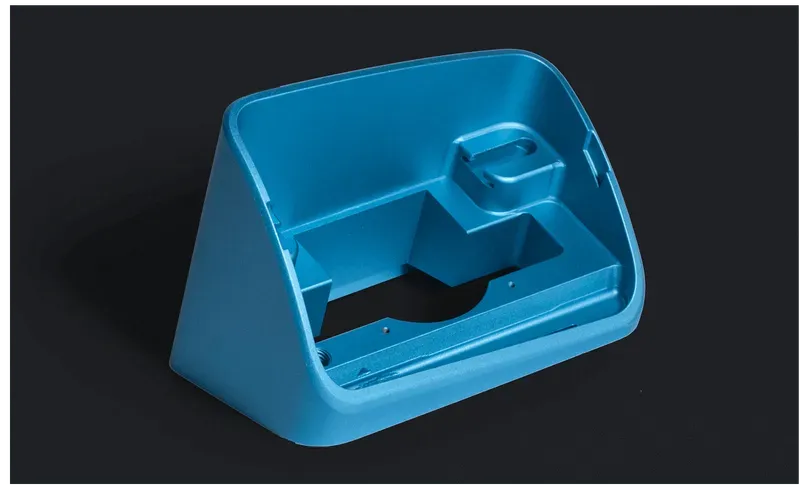
2011 is the free-machining aluminum of the screw-machine world: a copper-bearing 2xxx alloy with controlled additions that break chips into short, clean segments and let lathes run at the top of their feed range. Where the job is volume turned parts — fittings, inserts, connectors, threaded hardware — 2011 exists to make those parts fast and dimensionally tidy, and machining-cost comparisons with other aluminum grades usually end in its favor on complex turned geometry.
The tradeoffs are the price of machinability. 2011 is not the alloy for welded structures, its corrosion behavior is modest next to the 5xxx and 6xxx families, and leaded variants carry restrictions in some markets and applications. It is a component alloy, chosen for what the machining does, not for what the environment does.
Specifications
| Property | Value | Condition |
|---|---|---|
| Tensile strength | 55 ksi (T3) | — |
| Yield strength (0.2% offset) | 43 ksi (T3) | — |
| Hardness | 95 HB (T3) | — |
| Machinability rating | 310% on the chart index | — |
Values above are rendered from the collected model-evidence layer, each carrying the heat-treatment condition it was reported under; fields without collected evidence are stated as not established rather than estimated. Requirements outside the table are confirmed for the specific geometry and batch at quotation.
Applications & Selection Points
High-volume turned parts
Threaded fittings, bushings, spacers, connector bodies and any rotational part with heavy material removal are the natural 2011 territory. The alloy holds size through long runs with minimal built-up edge, produces finish quality that often removes a secondary polishing step, and lets cycle time — the dominant cost on volume turned work — drop to near the floor of what aluminum allows.
Where the weldability and corrosion tradeoffs bite
Parts that get welded into assemblies, see salt spray, or carry structural loads in wet service should not route to 2011. Its corrosion behavior is best described as ordinary, and welded joints in the alloy are not its design intent. When a drawing mixes free-machining components into a welded, corrosion-exposed assembly, the usual fix is to move the welded structure to another alloy and keep 2011 only for the machined-in-the-clear components.
Lead content and regional restrictions
Classic 2011 compositions include lead for chip-breaking, and lead-bearing variants face restrictions in drinking-water, food-contact and some consumer applications, with regional variation in how those restrictions are enforced. Lead-free free-machining alternatives exist for exactly these cases. If the application touches potable water, food or a regulated market, name the restriction on the RFQ so the alloy proposal respects it.
Strength positioning
2011 carries respectable strength for a machining alloy — enough for most fittings and hardware — but it sits below heat-treated structural grades, and heat treatment is not its path to more strength. For load-critical machined fittings, 6061-T6 or the stronger structural alloys hold the line while giving up some of the free-machining economics; for everything else, 2011 buys cycle time with strength most hardware never approaches.
Machining-behavior notes for planning
Plan on the alloy machining like its reputation: aggressive surface speeds, healthy feeds, short chips that evacuate without coaxing, and dimensional stability that tolerates long unattended runs. The same chip-breaking chemistry that makes it fast leaves slightly less forgiving surface behavior in heavy interrupted cuts than 6061, but on the screw-machine work it was designed for, that rarely enters the conversation.
Frequently Asked Questions
Is 2011 the same as 6061 for machining?
No — they optimize different things. 2011 is formulated to break chips and run fast on turned parts; 6061 is the structural generalist with better corrosion, weldability and finish behavior. On simple geometry the machining-cost gap is small; on complex, high-volume turned work it is decisive. The choice is usually volume and environment, not either alloy in isolation.
Does 2011 contain lead, and does that matter for my part?
Traditional 2011 compositions do include a controlled lead addition, and lead-bearing alloys are restricted or prohibited in some applications and jurisdictions — potable-water and food-contact hardware being the common examples. Lead-free free-machining variants exist. State the regulatory environment on the RFQ and the alloy proposal will respect it rather than discovering it late.
Should my 2011 part be anodized?
It can be, with the caveat that the copper-bearing composition anodizes less evenly than the 6xxx family, and the film is protective rather than decorative. Many 2011 parts ship with chemical-film finishes instead, which suit fittings and hardware well. If appearance matters as much as protection, the alloy conversation should include 6061.
What should I send for a 2011 machining quote?
A STEP model, a 2D drawing with tolerances and threads, quantity and batch intent, finish, and any application restrictions — potable water, food contact, regional lead rules. On volume turned parts the batch size drives the economics, so honest quantity bands get materially better pricing than optimistic single numbers.
Ordering & Documentation
Documents
Send a STEP or IGES model with a 2D drawing carrying tolerances and thread callouts. Name any composition restriction explicitly — lead-free versus standard 2011 is a specification decision, not a shop preference.
Quotation
Pricing follows the model and drawing, the named alloy variant, quantity and batch bands, and finish. Volume turned parts quote steeply better at real batch sizes — give the honest band rather than a single optimistic number.
Sample & Supply
First articles on turned hardware are quick and worth running before a volume release: they validate threads, finishes and the chip-evacuation behavior of the specific geometry. Certification against the named variant is available on request.
Storage & Shipping
Machined 2011 ships dry and packed away from corrosive atmospheres. The alloy is not marine-grade; parts stored for long periods in humid conditions keep better with the standard chemical-film or wrapped finish than bare-machined.