440C Stainless Steel CNC Machining
CNC machining of 440C stainless steel: the high-carbon martensitic grade for hardened, wear-resistant parts, with collected property envelope and process limits.
Last updated: 2026-10-31
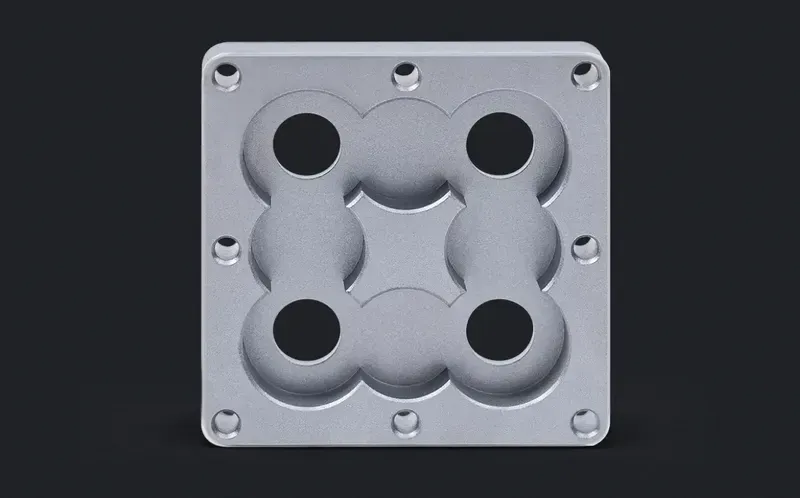
440C is the high-carbon martensitic stainless steel that combines genuine corrosion resistance with the ability to harden to the top of the stainless range. That pairing — a stainless that also takes a heat treatment like a tool steel — is why bearings, valve components, knife-grade cutting edges and mold inserts specify it. Among stainless grades it is the wear-resistance pick; among hardenable steels it is the corrosion-resistance pick.
The same carbon that gives 440C its hardness makes it the most demanding of the common stainless grades to machine, especially after hardening. The economical production routes cut the alloy in the annealed condition, harden it, then finish the precision surfaces by grinding — a sequencing discipline that the quotation should reflect from the start.
Specifications
| Property | Value | Condition |
|---|---|---|
| Tensile strength | 110 ksi | — |
| Yield strength (0.2% offset) | 65 ksi | — |
| Hardness | 58 HRC (heat treated) | — |
| Hardness hrc heat treated | 48–56 HRC (mold-stock condition) | — |
| Machinability rating | Low (mold-stock table) | — |
Values above are rendered from the collected model-evidence layer, each carrying the heat-treatment condition it was reported under; fields without collected evidence are stated as not established rather than estimated. Requirements outside the table are confirmed for the specific geometry and batch at quotation.
Applications & Selection Points
Hardened, wear-resistant components
Ball and roller bearing parts, valve seats and needles, pump shafts in mild service, wear inserts and cutting edges — wherever a hardened surface must also resist staining and mild chemical attack, 440C is the standard stainless answer. It holds a keen edge and a hard surface through abrasive duty that would scar the austenitic grades.
Corrosion positioning: better than carbon steel, not a marine grade
440C resists ordinary atmospheres, fresh water and mild chemicals, but its high carbon content costs it the corrosion performance of the austenitic and the molybdenum-bearing grades. Chloride-rich service pits it eventually. Parts that need both hardness and serious corrosion resistance usually end up as a hardened 440C component with a coating, or a specification conversation about which property actually leads.
Production sequencing: machine soft, finish hard
Annealed 440C machines like a tough alloy steel — reduced speeds, rigid setups, positive tooling. After hardening, cutting is grinding territory: bearing diameters, sealing faces and flat reference surfaces get finished by abrasive processes, while threads and non-critical features are cut before heat treatment. Drawings that mark which surfaces are ground make the sequence — and the quote — unambiguous.
Mold and die work
Corrosion-resistant mold cavities and cores for medical, food and optical molding are a classic 440C use: the alloy hardens into the mold-steel hardness band and resists the corrosive side of some resins and additives. In that trade 440C competes with dedicated mold steels on polishability and with the martensitic precipitation grades on machining economics.
Machining-behavior notes for planning
Expect the slowest material-removal economics of the common stainless grades: low machinability ratings, work-hardening behavior under dwell, and abrasive wear on tooling. Sharp, hard-coated carbide, flood coolant and constant-engagement toolpaths are the countermeasures. Any pass that rubs instead of cuts hardens the surface the next pass must enter — the classic 440C planning trap.
Frequently Asked Questions
How does 440C compare to 316 for corrosion resistance?
They answer different questions. 316 is the corrosion champion among common stainless grades but stays soft; 440C hardens to bearing-grade surface strength with corrosion resistance better than carbon steel but clearly below 316, especially in chloride service. A part needing both properties at once is a design conversation, not a catalog lookup.
Can 440C be machined in the hardened condition?
Only with abrasive or superhard tooling: hardened 440C is ground, honed or CBN-turned rather than conventionally milled. The standard production route machines features in the annealed state, leaves grinding stock on precision surfaces, hardens, then finishes. Attempts to cut full hardness with ordinary carbide usually end in tooling bills.
What hardness should I expect from heat-treated 440C?
The alloy reaches the top hardness band of the stainless family when properly hardened and tempered, and mold-stock practice quotes a slightly lower range for toughened cavity conditions. The exact number depends on the hardening cycle, so the drawing should name the required hardness band and let heat treatment target it, rather than quoting a single datasheet figure.
What should I send for a 440C machining quote?
A STEP model, a 2D drawing with tolerances, the required hardened condition and hardness band, ground surfaces marked as such, quantity, and finishing (passivation, polish) requirements. The grind-before-or-after question is the quote on this alloy — answer it on the drawing and pricing follows cleanly.
Ordering & Documentation
Documents
Send a STEP or IGES model with a 2D drawing carrying tolerances, the heat-treatment callout, and clear marking of ground-class surfaces. Hardness bands belong on the drawing as ranges, not single figures.
Quotation
Pricing follows the model and drawing, the condition sequence (annealed machining, heat treatment, grinding), quantity and finishing. Passivation after machining is standard practice on this grade — include it explicitly where corrosion performance matters.
Sample & Supply
First articles prove the grind finishes and size stability through the hardening cycle. Certification with the heat-treatment lot and hardness verification is available on request — agree scope at quotation.
Storage & Shipping
Hardened, passivated 440C tolerates ordinary warehouse conditions; ground surfaces should ship protected against contact and moisture. Bare machined surfaces keep better with an oil film over any extended storage.