4340 Alloy Steel CNC Machining
CNC machining of 4340 alloy steel: the nickel-chromium-molybdenum grade for ultra-high-strength parts, with heat-treatment-conditioned properties and process notes.
Last updated: 2026-10-31
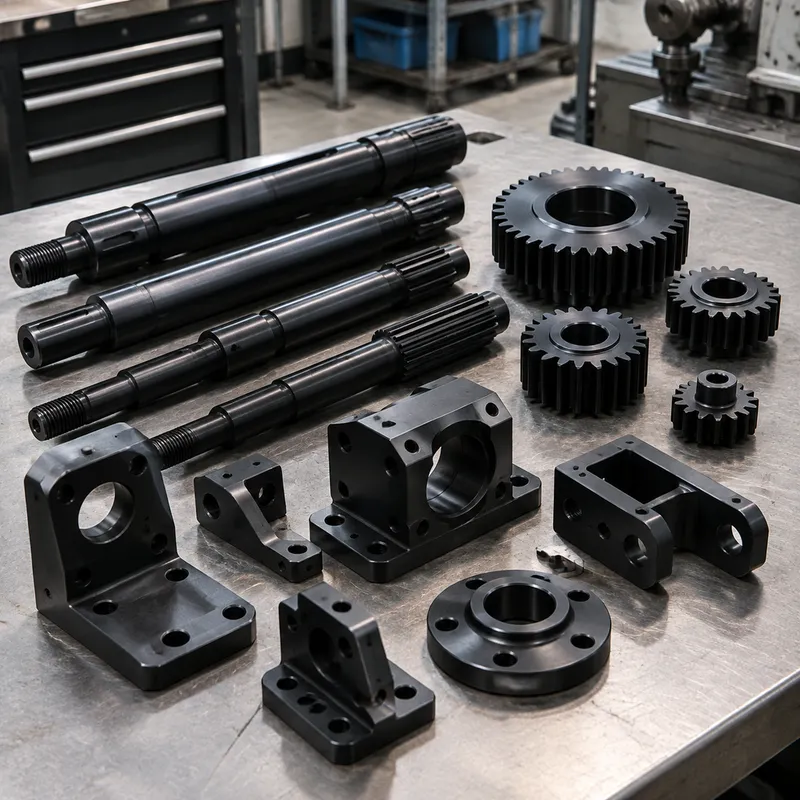
4340 is the deep-hardening, nickel-chromium-molybdenum alloy steel that structural drawings reach for when a part must carry extreme loads through a substantial section: landing-gear-class components, heavy shafts, crankshafts, high-stress pins and gears. The nickel in the composition is what separates it from 4140 — toughness through thick sections and retained strength at the hardening depths where shallower alloys fall off.
The property story of 4340 is inseparable from heat treatment. The same bar can be normalized at a moderate strength or quenched-and-tempered to near tool-steel territory, and the machined part you ship is defined by which condition the drawing ordered. That makes the machining plan a sequencing question: cut soft, then harden, then finish-grind the critical features — or machine pre-hardened stock when the geometry allows.
Specifications
| Property | Value | Condition |
|---|---|---|
| Tensile strength | 745–1860 MPa (heat-treatment dependent); 1,200–1,350 MPa normalized (second source) | — |
| Yield strength (0.2% offset) | 470–1550 MPa (heat-treatment dependent); 830–900 MPa normalized (second source) | — |
| Elongation | 10–20% | — |
| Hardness | 217–460 HB (condition dependent) | — |
| Hardness hrc normalized | HRC 38–40 (normalized); 30–36 HRC (chart condition) | — |
| Machinability rating | 50–57% (chart dependent) | — |
| Weldability | Fair (preheating required) | — |
Values above are rendered from the collected model-evidence layer, each carrying the heat-treatment condition it was reported under; fields without collected evidence are stated as not established rather than estimated. Requirements outside the table are confirmed for the specific geometry and batch at quotation.
Applications & Selection Points
Ultra-high-strength machined components
Heavy-duty shafts, gears, pins, bolts and structural fittings in demanding machinery are the home ground of 4340. Where a 4140 part is running out of strength or a section is too thick for 4140 to harden through, the drawing usually moves to 4340. The alloy earns its cost on load-bearing parts, not on general hardware.
Heat-treatment sequencing decides the process plan
The common production routes: machine in the normalized or annealed condition and harden after roughing, then finish the critical surfaces by grinding; or buy pre-hardened stock and machine to size with carbide rated for the hardness. Either way the drawing must name the condition — properties without the condition are meaningless on this alloy, and the same goes for the quotation.
4340 versus 4140
Both are chromium-molybdenum family alloys with strong machining precedents. 4340 adds nickel, which buys toughness and deeper hardening — it wins on impact-loaded parts and thick sections. 4140 machines somewhat more readily and costs less, which is why it stays the default until the load case genuinely demands the step up. Moving between them is a specification decision, not a shop substitution.
Welding with discipline
4340 welds acceptably under strict practice: preheat, low-hydrogen consumables, and post-weld heat treatment to manage the hardened zone. Uncontrolled welding of a heat-treated 4340 part can crack it. Assemblies that combine welding with this alloy belong in the process plan at quotation, with the weld sequence treated as part of the heat-treatment story rather than an afterthought.
Machining-behavior notes for planning
In the softened conditions 4340 machines with ordinary alloy-steel discipline; in pre-hardened condition it cuts like 4140 at similar hardness — reduced speeds, rigid setups, and tooling graded for abrasive wear. Machinability ratings place it below the free-machining and plain-carbon grades, which is the expected price of the strength it carries. Interrupted cuts on hardened 4340 are where tooling budgets get spent; sequence features so hardened stock sees as few impacts as possible.
Frequently Asked Questions
Which condition should my 4340 part be ordered in?
The condition the load case was designed around: normalized for moderate strength and machinability, quenched-and-tempered for high strength, pre-hardened stock when the geometry can be finished machined at hardness. If the drawing does not name a condition, that is a specification gap worth closing before the quote — properties on this alloy are condition-dependent by design.
Can 4340 be machined after hardening?
Hardened 4340 is ground more often than cut: turning and milling at full hardness demand CBN-class tooling and rigid machines, and the economical route for precise features is harden-then-grind. Threads and non-critical features get cut before hardening; bearing surfaces and sealing faces get finished after. State the critical features on the drawing so the sequence prices correctly.
Why is my drawing changing from 4140 to 4340?
Almost always one of two reasons: the section is too thick for 4140 to harden through, or the load case involves impact where the toughness of 4340 outperforms. The substitution reflects the engineering margin, so keep the grade callout on the drawing even where the alloys look interchangeable on a data sheet.
What should I send for a 4340 machining quote?
A STEP model, a 2D drawing with tolerances and the heat-treatment condition named, critical-finish features identified (grind-class surfaces, bearing fits), quantity, and inspection requirements. On this alloy the condition and the finishing sequence are the quote — everything else prices around them.
Ordering & Documentation
Documents
Send a STEP or IGES model with a 2D drawing carrying tolerances, the named heat-treatment condition, and finish callouts distinguishing as-machined from ground surfaces. Missing condition callouts are the most common specification gap on 4340 RFQs.
Quotation
Pricing follows the model and drawing, the named condition, the machining sequence the condition implies, quantity and inspection. Heat treatment and grinding price as explicit process steps; quoting them as included overheads helps nobody.
Sample & Supply
First articles validate the harden-machine-grind sequence on the specific geometry, and certification with the heat-treatment lot traceability is standard practice on this alloy. Agree the certification scope at quotation.
Storage & Shipping
Finished 4340 parts ship with the coating the drawing defines — the alloy rusts like any steel when bare. Ground surfaces are the sensitive ones: protect bearing and seal surfaces in packaging, since a corroded ground finish is a scrap event rather than a cleanup.