4130 Alloy Steel CNC Machining
Machining 4130 chromoly steel: the collected composition and property envelope, its tube-and-sheet sourcing profile, and why weld-heavy fabrications pick it over 4140.
Last updated: 2026-10-29
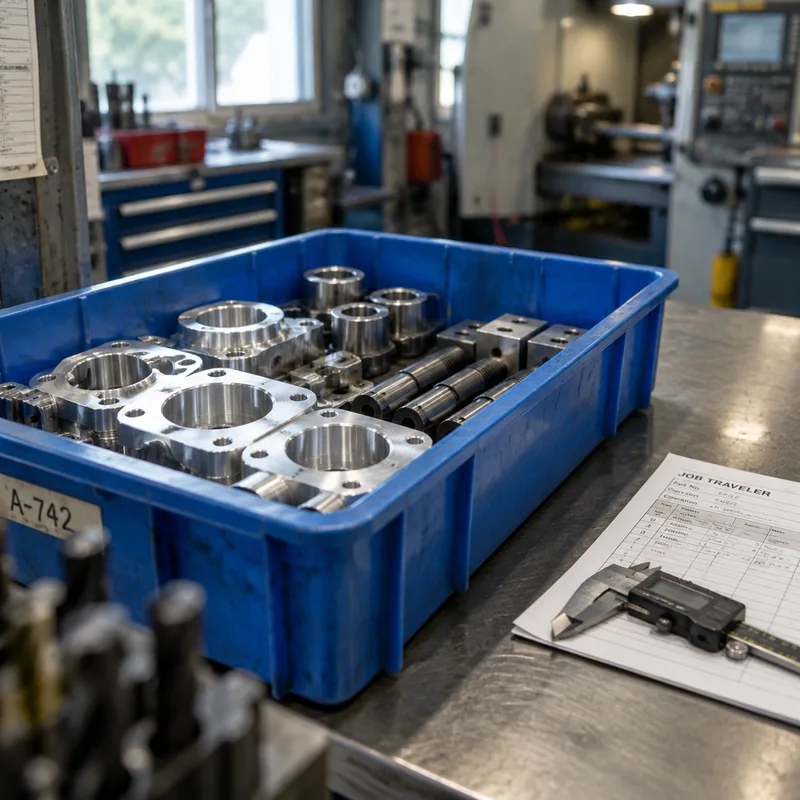
4130 is the lower-carbon end of the chromoly family: the same chromium-molybdenum alloy system as its 4140 sibling, with carbon held in the low threes-of-a-percent band. That compositional step down trades some ultimate strength for a practical property buyers care about — the alloy welds and fabricates with far less ceremony, which is why it owns the welded-structure side of the 41xx world.
Sourcing shape follows the role. Where the higher-carbon sibling dominates bar and plate, 4130 is the tube and sheet grade: aircraft-style structural tubing, roll cages, frames and pressure-bearing shells start here, and machined features — bosses, threaded ports, precision bores — get added by CNC work on the fabricated form.
Specifications
| Property | Value | Condition |
|---|---|---|
| Carbon content | 0.28–0.33% | chromoly (41xx) low-alloy steel with Cr and Mo; source contrast: 4140 at 0.38–0.43% C — the lower carbon is what buys the weldability |
| Tensile strength | 97,200 PSI, C20 on the Rockwell scale | impressive tensile strength per the source with great ductility in the annealed state |
| Stock forms | more commonly tube and sheet (4140 bar and plate) | form availability shapes which 41xx grade a drawn or welded part can use |
| Weldability condition | weld-heavy fabrication: better choice than 4140 (lower carbon) | weldability is also tied to the heat-treatment process the joint undergoes |
| Yield strength (0.2% offset) | 415–475 MPa (normalized); 480–590 MPa (cold drawn) | condition-dependent |
| Machinability rating | ≈70% | Good; AISI 1212 = 100% |
| Hardness hrc heat treated | Not established in the collected evidence — confirm at quotation. | |
Values above are rendered from the collected model-evidence layer, each carrying the heat-treatment condition it was reported under; fields without collected evidence are stated as not established rather than estimated. Requirements outside the table are confirmed for the specific geometry and batch at quotation.
Applications & Selection Points
Welded structural tubes and frames
Roll cages, chassis members, aircraft-style truss structures and handrails are the classic 4130 territory: the alloy takes normal welding practice far more forgivingly than the higher-carbon grade, keeps good strength after a normalized or stress-relieved cycle, and machined joints can be added where the tubes meet. If the part is mostly welding with machining at the interfaces, this is usually the right 41xx.
Machined features on formed stock
A common pattern is 4130 tube or sheet formed and welded first, then machined: thread ports, bearing seats and precision bores added to the assembly. The machining plan should respect the heat-treatment state — features cut before hardening move when the structure is treated, so tight features belong after, or the whole sequence belongs in the quotation conversation.
When the higher-carbon sibling wins
Parts that live on wear resistance, surface hardness or maximum strength from heat treatment — gears, crankshafts, high-load shafts — belong to the higher-carbon grade. The carbon gap is what those properties are made of. Likewise bar-and-plate stock availability favors the sibling when the part is machined from solid rather than fabricated.
Corrosion protection expectations
Like the whole chromoly family, 4130 rusts without a finish. Zinc plating, phosphate coating, paint or powder coat belong on the drawing for any wet or outdoor service, and machined surfaces exposed after coating should be identified so the protection plan covers them.
Frequently Asked Questions
Why choose 4130 over the higher-carbon chromoly grade?
For two practical reasons: weldability and stock form. The lower carbon content makes welding far less demanding — heavily welded fabrications are the standard case for this alloy — and the supply chain stocks it preferentially as tube and sheet rather than bar. If the part is a welded structure with machined interfaces, that combination usually decides it.
Does 4130 heat treat well?
It responds to the same treatments as the family — normalizing, annealing, quench-and-temper — and gains strength and hardness, just not to the same ceiling as the higher-carbon grade. For a welded structure the usual cycle is normalize or stress-relieve after welding; the drawing should state the condition the final properties are wanted in.
What should an RFQ for 4130 parts include?
The model and drawing with tolerances, the stock form (tube diameter and wall, or sheet thickness), the welding scope if any, the heat-treatment condition called out, and the coating. Machined features on welded assemblies should state whether they are finished before or after treatment — it changes both the sequence and the price.
Ordering & Documentation
Documents
Send a model or drawing with the stock form called out, weld locations and any heat-treatment condition, plus the machined features with tolerances. Coating requirements belong on the same document so finishing prices into the plan.
Quotation
A quote is priced from stock form and size, fabrication content, machining content, heat treatment, coating and quantity. Parts that combine welding with tight machined features should carry the sequence explicitly — ambiguity there is the usual source of a requote.
Process plan
Expect fabrication first, then stress relief or normalization, then finish machining on the critical features. Hardness verification and material certification are available on request where the drawing carries a condition requirement.
Sample & Supply
First articles on fabricated-and-machined parts validate the joint quality and the machined feature locations together — the combination is where distortion shows. Agree the inspection scope and any documentation at quotation.