5083 Aluminum CNC Machining
CNC machining of 5083 aluminum: the marine-grade, weldable 5xxx alloy, with collected property envelope, temper notes, and what to send for a quotation.
Last updated: 2026-10-31
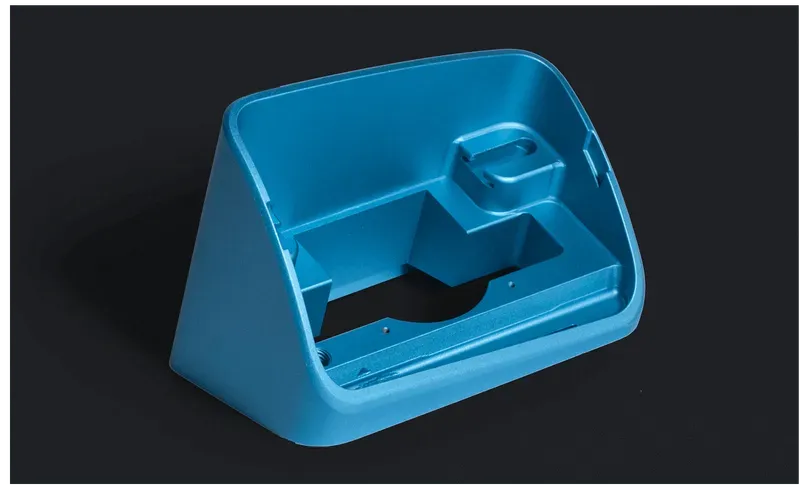
5083 is the high-magnesium workhorse of the 5xxx family: non-heat-treatable, strengthened by strain hardening, and renowned for holding up in saltwater. It is the default structural alloy for marine plating, pressure vessels, cryogenic tanks and any welded aluminum structure that spends its life in wet or corrosive service — and it stays tough and ductile at temperatures where most alloys are stronger but far less forgiving of impact.
Machining 5083 is straightforward for a structural alloy: it cuts cleanly with sharp tooling and flood coolant, and its gummier chips relative to the 6xxx grades are the main planning note. Because it cannot be heat treated, temper selection happens at the mill — H116 or H321 for marine service, O or H111 where deep forming follows — and the temper on the drawing fixes the strength the finished part carries.
Specifications
| Property | Value | Condition |
|---|---|---|
| Tensile strength | 317 MPa (H116); 46 ksi (second source, same temper) | — |
| Yield strength (0.2% offset) | 228 MPa (H116); 33 ksi (second source, same temper) | — |
| Elongation | 16% (H116) | — |
| Density | 2.66 g/cm³ (H116) | — |
| Hardness | 80 HB (H116); 75 HB (second source) | — |
| Youngs modulus | 70.3 GPa | — |
Values above are rendered from the collected model-evidence layer, each carrying the heat-treatment condition it was reported under; fields without collected evidence are stated as not established rather than estimated. Requirements outside the table are confirmed for the specific geometry and batch at quotation.
Applications & Selection Points
Marine and saltwater-exposed structures
Hull fittings, deck hardware, pump housings and structural brackets that live around seawater are the classic 5083 territory. The magnesium content gives the alloy its standing against pitting and stress corrosion in marine service, which is why drawings for boat and coastal equipment name 5083 where a 6xxx structural alloy would need coatings to survive the same environment.
Pressure vessels, cryogenic and transport tanks
The alloy keeps its toughness down to cryogenic service and welds with minimal strength penalty relative to its class, so tank shells, pressure equipment and cryogenic hardware specify it routinely. Machined components for these assemblies — ports, fittings, valve bodies — inherit the alloy choice and machine from rolled plate or forged stock in the matching temper.
Welded assemblies where 6xxx loses strength
Every weldable aluminum loses some strength in the heat-affected zone, but a non-heat-treatable 5xxx alloy loses proportionally less of its as-delivered strength than a fully heat-treated 6xxx does. For fabricated structures that are welded after machining, 5083 is often the engineering answer when the joint, not the fastener, carries the load.
Heat limits worth knowing
The flip side of strain-hardened temper is thermal sensitivity: sustained service well above the moderate range slowly anneals the temper away and takes strength with it. Parts that run hot — engine-adjacent brackets, exhaust-neighborhood hardware — belong to a 6xxx or 2xxx alloy instead. State the operating temperature on the RFQ when it is anything beyond ambient.
Machining-behavior notes for planning
Expect softer, gummier chips than 6061 and plan tooling geometry and clearance accordingly — sharp positive-rake cutters, generous polish on flutes, and coolant that keeps swarf from welding to the tool. Machinability ratings place 5083 below the free-machining 6xxx grades, which shows up as slightly reduced cutting speeds rather than any special process. Stress-relieved plate helps hold flatness on wide, thin machined panels.
Frequently Asked Questions
What is the difference between 5083-H116 and 5083-H321?
Both are strain-hardened tempers with corrosion performance qualified for marine service; the difference lies in the mechanical-property requirements each guarantees and the testing behind them. For a machined part the practical advice is to name the temper the drawing was designed around and let the quote confirm availability of that temper in the required form.
Can 5083 replace 6061 in a machined part?
Sometimes — but they are different tools. 5083 wins on corrosion, weld-zone strength retention and low-temperature toughness; 6061 wins on machinability, heat-treatable strength and anodized cosmetics. Substitution should be an engineering decision driven by environment and joining, approved on the drawing side, and declared on the RFQ.
Does 5083 anodize well?
It anodizes acceptably for protection, but high-magnesium alloys tend toward a duller, less cosmetically even film than the 6xxx grades. Parts whose anodized appearance matters usually route to 6061 or 6063, while 5083 accepts coating systems — paints and marine coatings are the standard finish on 5083 structures.
What should I send for a 5083 machining quote?
A STEP model, a 2D drawing with tolerances and finish, the temper named explicitly, the stock form you expect (plate, bar or forging), quantity, and the service environment — especially if the part will be welded, sees saltwater, or operates away from ambient temperature. Environment statements change material proposals on marine parts more than any other input.
Ordering & Documentation
Documents
Send a STEP or IGES model with a 2D drawing carrying tolerances, threads and finish. Name the temper — H116, H321, H111 and O machine and perform differently, and the temper is part of the specification, not a shipping preference.
Quotation
Pricing follows the model and drawing, the named alloy and temper, stock form, quantity and finish. Service environment belongs in the RFQ for 5083 specifically: marine and cryogenic duty affect material proposals, certification expectations and finishing.
Sample & Supply
Prototype quantities from one piece are normal, and a first article validates how the specific plate or forgings machine before production. Material certification including temper verification is available on request — agree the scope at quotation.
Storage & Shipping
Ship and store machined 5083 dry and separated from carbon-steel handling contact to avoid free-iron staining. The alloy tolerates ordinary warehouse conditions; standing water trapped against the surface is the usual cause of the staining that finishing would otherwise have prevented.