5052 Aluminum CNC Machining
CNC machining and fabrication of the forming-and-welding aluminum: collected property envelope with temper condition, sheet-metal selection points, and quotation inputs.
Last updated: 2026-10-29
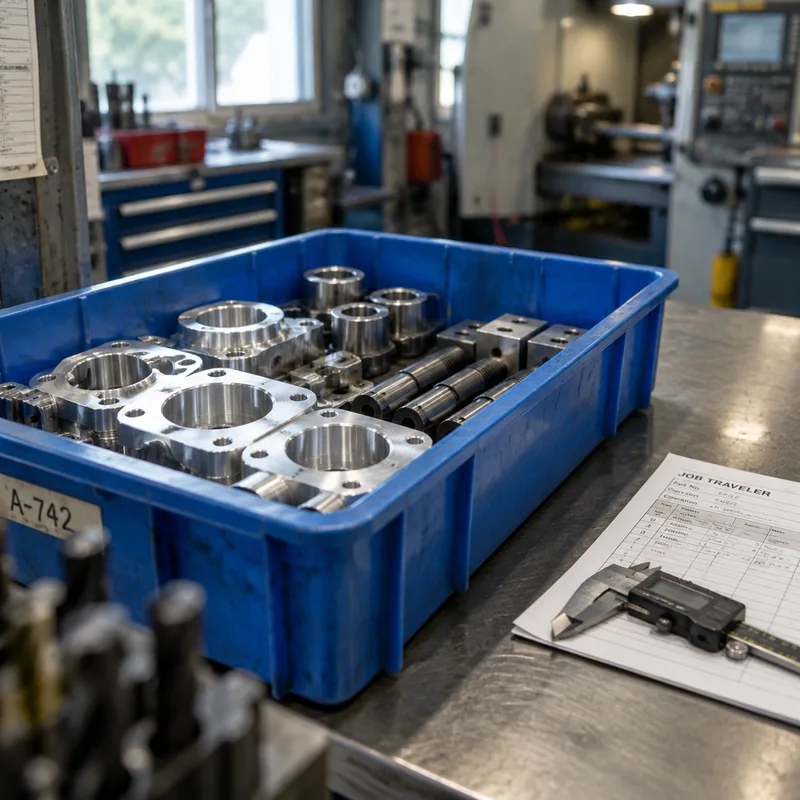
This is the forming-and-welding aluminum: a magnesium-bearing, non-heat-treatable alloy chosen for what it tolerates rather than how hard it is. It bends deeply without cracking, welds across every common process, and resists saltwater well enough to own marine hardware, fuel tanks and hydraulic tubing.
The trade is machinability: in the soft condition it is gummy and gives poor chip control, improving as the temper hardens. Parts that mostly machine route to the heat-treatable grades; parts that bend, deep-draw or weld route here. That single split answers most aluminum-selection questions before any property table is opened.
Specifications
| Property | Value | Condition |
|---|---|---|
| Tensile strength | 170–305 MPa | temper-dependent (O through H38) |
| Yield strength (0.2% offset) | ≥ 90 MPa | σ0.2, temper-dependent |
| Elongation | 12 | H32 temper |
| Hardness | 60 | Brinell, H32 temper |
| Density | 2.68 | H32 temper |
Values above are rendered from the collected model-evidence layer, each carrying the heat-treatment condition it was reported under; fields without collected evidence are stated as not established rather than estimated. Requirements outside the table are confirmed for the specific geometry and batch at quotation.
Applications & Selection Points
Formed and welded sheet assemblies
Enclosures, brackets, panels and chassis that bend to sharp radii without cracking — this is the alloy the bending and stamping trades default to. It also draws well: fuel tanks, containers and housings formed from sheet are classic applications.
Marine and wet service
Saltwater resistance among the aluminum family is a standout: boat hardware, railings, tank fittings and coastal equipment spec it for bare or painted service. If the part lives in spray or immersion, this is usually the aluminum answer — say the environment on the RFQ so the choice is deliberate.
Machined parts with formed features
Hybrid parts — machined pockets on a bent blank, threaded bosses on a drawn shell — play to its strengths. In harder tempers it machines acceptably; plan the sequence so forming happens in the right temper state and machining follows.
Where it is the wrong call
Heat treatment does not strengthen it — strength comes from cold work only, so strength-critical machined fittings belong to the heat-treatable grades. And where a design is mostly machining with no forming at all, the general-purpose structural alloy machines better and prices competitively.
Frequently Asked Questions
Why is this alloy recommended for bending when 6061 is not?
Formability, not strength. The magnesium chemistry in the right tempers bends to tight radii without cracking, while the heat-treated structural alloy fractures at sharp angles. Fabrication drawings that show bends and flanges usually intend this alloy — confirm the temper, because the very-hard tempers give up some of that formability.
What temper should I order?
It follows the process: deep forming wants the soft annealed condition; general bending and panel work uses the stabilized quarter-hard tempers that balance formability and stiffness; flat, mainly-machined parts can take harder tempers. If the sequence is form-then-machine, say so — the temper decision follows the route, not the catalog.
What does a quote need for parts in this material?
The flat pattern or model, material thickness, the full designation with temper, bend radii and angle callouts, finish (conversion coat, paint, anodize), and quantity. Note which holes and features must hold position relative to bends — that tolerance conversation is where formed-part quotes go wrong.
Ordering & Documentation
Documents
Send the flat pattern (DXF/DWG) or model with thickness, temper and bend callouts marked. State which surfaces carry finish and which holes are position-critical relative to bends.
Quotation
Priced from the pattern, thickness, temper, finish and quantity, with bend count and tooling notes where parts exceed standard tooling. Formed-and-machined hybrids should say which operations come first — it changes both price and lead time.
Sample & Supply
First articles confirm bend radii, hole distortion and finish before a batch releases — approve a formed sample, not just a flat one. Repeat batches run to forecast; confirm inspection cadence at quotation.
Storage & Shipping
Formed parts nest poorly — pack with separators to protect finished faces. The alloy stores well in ordinary conditions; bare surfaces for marine service should be rinse-water free of steel-contact residue before packing.