C17200 Beryllium Copper CNC Machining
CNC machining of C17200 beryllium copper: the strength-plus-conductivity copper alloy, its temper-dependent property envelope, machining behavior, and where it earns its premium.
Last updated: 2026-10-31
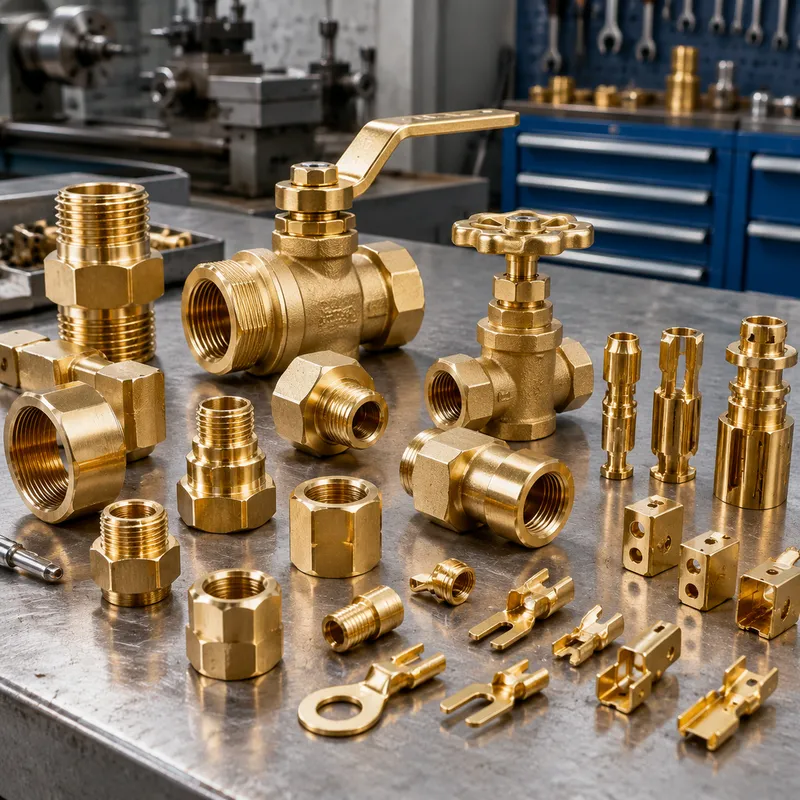
C17200 is the extreme member of the copper family: a copper alloy that heat treatment pushes to strengths overlapping alloy steel while it keeps a useful fraction of copper conductivity. No other machinable metal combines spring-grade elasticity, non-magnetic behavior, corrosion resistance and real electrical/thermal performance in one bar. Molds for plastics, electrical connectors, instrument springs and welding equipment are its home ground — wherever steel is too dead a spring or copper too soft a conductor.
The alloy is specified by temper, and the temper changes what the data sheet says: the solution-treated state machines at its best and is ready for the user to age-harden, while the fully aged state delivers top strength with reduced ductility. That split — machine first and harden after, or buy it hard — is the first decision on any C17200 drawing, and it drives both process order and final properties.
Specifications
| Property | Value | Condition |
|---|---|---|
| Tensile strength | 68–200 ksi temper dependent; 1000–1400 MPa aged (second source) | — |
| Yield strength (0.2% offset) | 30–175 ksi (temper dependent) | — |
| Hardness | ~120–200 HB (aged) | — |
| Machinability rating | ≈20% (as supplied; age-hardens after machining) | — |
| Electrical conductivity | 22% IACS (chart); 16–25% band (second source) | — |
| Thermal conductivity | ~105–125 W/m·K | — |
Values above are rendered from the collected model-evidence layer, each carrying the heat-treatment condition it was reported under; fields without collected evidence are stated as not established rather than estimated. Requirements outside the table are confirmed for the specific geometry and batch at quotation.
Applications & Selection Points
Plastic-mold components
Cavity cores, inserts, guide elements and cooling-critical mold details use C17200 where steel molds run hot spots or where mold life and heat transfer both matter. The alloy pulls heat away from the molding surface several times better than tool steel, and polished C17200 holds a mold-grade finish. The hardness envelope covers the range mold work needs, age-hardened.
Electrical and thermal hardware
Connector bodies, contact hardware, resistance-welding electrodes and holders, and thermal-bus components pick C17200 for the conductivity-strength pair: current-carrying parts that also take mechanical load or spring deflection. Pure copper conducts better but deforms; phosphor bronze springs but conducts far less. C17200 is the point between them, and the drawing names it when that point is the requirement.
Springs and instrument elements
Aged C17200 is a genuine spring alloy — elastic hardware, instrument flexures, switch blades, bellows and precision contact elements. It is non-magnetic, which matters inside sensors and measurement devices, and its fatigue behavior under elastic cycling is the reason instrument makers accept the premium over bronze alternatives.
Machining-behavior notes for planning
In the solution-treated (as-solutionized) state the alloy cuts at its friendliest, which is why the classic process order is: machine the solution-treated bar to final form, then age-harden — the aging distortion is small and predictable. The fully aged condition is gummy and abrasive on tooling by comparison. Machinability ratings place C17200 far down the standard chart — it cuts slowly, with sharp positive tooling and flood coolant — so cycle-time quoting must treat it as a specialty alloy, not a copper.
Safety and handling boundary
Solid C17200 bar is handled like any copper alloy; the occupational attention is on airborne dust or fume from grinding, welding or melting — not on normal cutting-fluid machining of solid stock. Shops keep abrasive and hot work on this alloy under documented controls. Specify finishing processes with that boundary in mind; conventional machined components in the delivered state are standard commercial practice.
Frequently Asked Questions
Should I order C17200 solution-treated or age-hardened?
The classic route: machine in the solution-treated state, then age-harden to final strength — the hardening step distorts little, so tolerances survive. Ordering fully hardened bar makes sense when the part is simple or will be finish-machined lightly anyway. Complex precision parts are the textbook case for machine-then-age.
Why does C17200 cost what it costs?
Three stacks: the alloy itself carries beryllium and commands a specialty-material price; it machines slowly, so cycle time runs long against its strength class; and the safety controls around any dusty secondary operation add process cost. What it buys back is a property combination no cheaper metal offers — strength with conductivity, spring with corrosion resistance.
Is machined C17200 safe to handle and use?
Solid finished components are standard commercial hardware across mold-making, electronics and instrumentation — the occupational controls concern airborne particles from grinding, welding or melting, not touching or machining-with-coolant of solid stock. Follow shop practice on any secondary hot or abrasive process, and parts in service present no special handling requirement.
What should I send for a C17200 machining quote?
A STEP model, a 2D drawing with tolerances and finish, quantity, and critically the temper: name the starting condition and whether age-hardening happens in your process chain or ours. For mold and electrical work, state the thermal or current duty so the temper choice is engineered rather than assumed.
Ordering & Documentation
Documents
Send a STEP or IGES model with a 2D drawing carrying tolerances and finish. The temper callout is not optional on this alloy — the same geometry prices and processes differently by condition.
Quotation
Pricing follows the model and drawing, quantity, temper and any post-machining heat treatment in scope. Expect specialty-alloy cycle time: the rating chart places C17200 among the slower-cutting metals, and honest quotes reflect that.
Sample & Supply
First articles confirm finish and dimensional stability across the age-hardening step when the process chain includes it. Material certification to the temper specification is standard; agree certificate scope at quotation.
Storage & Shipping
Finished parts ship dry and separated; the alloy resists ordinary corrosion in storage. Solution-treated parts destined for later aging should be kept free of surface contamination that could mark during heat treatment.