Titanium Grade 2 CNC Machining
CNC machining of Grade 2 commercially pure titanium: corrosion-first titanium with collected property envelope, machining behavior, and its boundary against Ti-6Al-4V.
Last updated: 2026-10-31
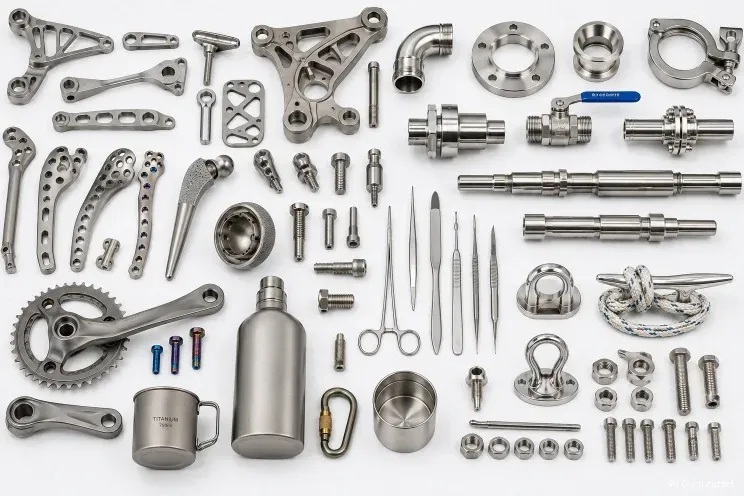
Grade 2 is the unalloyed, commercially pure titanium — the corrosion-first member of the family. Where Ti-6Al-4V is chosen for strength, Grade 2 is chosen for what nothing else in the machinable-metal palette quite delivers: broad chemical resistance including chloride environments that pit stainless, full biocompatibility, and formability and weldability that the alloyed grades give up. Chemical equipment, medical hardware and marine components that touch the aggressive world specify it.
Its strength is moderate — this is not the structural titanium — and its machining behavior is the titanium signature in milder form: low thermal conductivity that concentrates heat at the cutting edge, springback under tool pressure, and a fire-safety discipline around fine chips. With sharp tooling, rigid setups, generous coolant and constant chip evacuation, it machines predictably and repetitively.
Specifications
| Property | Value | Condition |
|---|---|---|
| Tensile strength | 340–480 MPa | — |
| Density | 4.5 g/cm³ | — |
| Max service temperature | 300°C (strength limited) | — |
| Corrosion behavior | Excellent in chloride/marine exposure | — |
Values above are rendered from the collected model-evidence layer, each carrying the heat-treatment condition it was reported under; fields without collected evidence are stated as not established rather than estimated. Requirements outside the table are confirmed for the specific geometry and batch at quotation.
Applications & Selection Points
Chemical and chloride service
Pump components, valve internals, heat-exchanger hardware and vessel fittings for chemical plant are the defining territory of Grade 2: the alloy shrugs off seawater, wet chlorine chemistry and oxidizing acids that consume stainless grades. Where a 316 part shows pitting within a service season, the drawing typically moves to Grade 2 rather than climbing the stainless ladder again.
Medical and biocompatible hardware
Commercially pure titanium carries the biocompatibility credentials that implants and body-contact instruments require, and Grade 2 serves in non-load-bearing medical hardware, instrument components and dental work. Load-bearing implants move to the alloyed grades; everything else in the medical catalog is legitimate Grade 2 territory, with the documentation expectations that accompany medical work.
Grade 2 versus Ti-6Al-4V
The decision is usually one question: does the part carry structural load? Grade 2 wins corrosion, formability, weldability and cost within the titanium family; Ti-6Al-4V wins strength by a wide margin. Chemical equipment stays Grade 2, airframe fittings stay with the alloy. Drawings occasionally name the alloy by habit — the load case, not the habit, should decide.
Machining-behavior notes for planning
The titanium machining signature — heat that will not leave through the chip, springback that closes on clearance surfaces, and sharp chips with combustion risk — applies to Grade 2 in a manageable form. The countermeasures are textbook: positive-rake sharp carbide, abundant coolant directed at the cut, non-stop feeds that never dwell, and housekeeping that keeps titanium swarf segregated from sparks. Shops with titanium practice price it routinely; shops without it should not be discovering the material on your order.
Joining and finishing
Grade 2 welds well within titanium practice — inert-gas shielding front and back — and welded Grade 2 assemblies are standard chemical-plant construction. It anodizes decoratively and accepts passivation; coatings are rare because the oxide surface is the protection. Machined-then-welded parts should plan the heat input near precision features, as with any titanium.
Frequently Asked Questions
Is Grade 2 titanium strong enough for structural parts?
It carries moderate strength — respectable against common stainless in yield terms but well below the titanium alloy used for airframe work. Fittings, housings and equipment hardware are within its range; primary structure is not. If the drawing needs titanium strength, that is Ti-6Al-4V territory; if it needs titanium corrosion behavior, Grade 2 is usually the right and cheaper call.
Why does titanium machining cost what it costs?
The physics: low thermal conductivity keeps heat at the cutting edge instead of the chip, so speeds stay low and tooling works hard; springback demands rigidity and clearance; and the fire discipline around fine chips adds housekeeping. None of it is exotic to a shop with titanium practice — but it is real process, and quotes reflect it.
Does Grade 2 need any surface treatment?
Usually none — the native oxide film is the corrosion protection and rebuilds itself instantly after abrasion. Anodizing is used for identification and appearance rather than protection. Machined parts ship as-machined or lightly passivated; painting titanium is almost always a sign the alloy was the wrong choice.
What should I send for a Grade 2 machining quote?
A STEP model, a 2D drawing with tolerances and finish, quantity, service environment, and any documentation requirements — medical and chemical work often carries traceability and certification expectations. For welded assemblies, include the weld map so shielding and sequencing price into the quote.
Ordering & Documentation
Documents
Send a STEP or IGES model with a 2D drawing carrying tolerances and finish. Name the alloy precisely — Grade 2 and Ti-6Al-4V are different materials with different prices, and drawings sometimes blur them.
Quotation
Pricing follows the model and drawing, quantity, service environment and documentation. Titanium quotes hinge on shop titanium practice: a shop that machines the alloy routinely quotes confidently and delivers predictably.
Sample & Supply
First articles validate tool life and finish on the specific geometry before production. Material certification including grade verification is standard on titanium work — agree the scope at quotation.
Storage & Shipping
Finished Grade 2 ships as-machined or passivated; the surface needs no protection against ordinary storage. Dry, separated packaging is normal practice — more for surface protection of precision features than for the alloy itself.