POM (Acetal / Delrin-type) CNC Machining
CNC machining of POM: collected property envelope with service conditions, precision-mechanism selection points, and quotation inputs.
Last updated: 2026-10-29
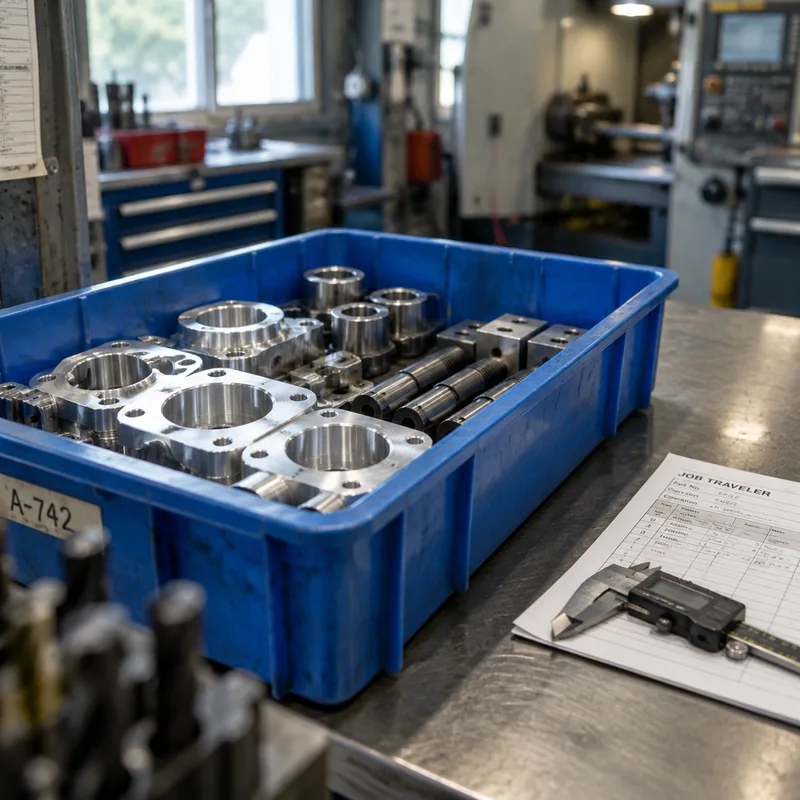
POM — polyoxymethylene, the acetal family — is the precision-mechanism plastic: hard, stiff, slippery, and dimensionally stable enough to machine gears, cams, sliders and snap-features that work straight off the machine. Low friction and good wear behavior are its signature, and it shrugs off solvents and repeated impact better than most commodity plastics.
Know its boundaries: continuous service temperature is moderate, the material is notably flammable in unspecified grades, and adhesives barely bond it — design joints as mechanical, not glued. Within those lines it is the default answer for any plastic part that moves, slides or clicks.
Specifications
| Property | Value | Condition |
|---|---|---|
| Density | 1.45 g/cm³ | — |
| Tensile strength | 62 MPa (yield) | — |
| Elongation | 10% | at yield |
| Hardness | 135 MPa (Rockwell ball) | — |
| Continuous use temperature | -50 to +90 °C | continuous service |
| Yield strength (0.2% offset) | 62 | yield tensile strength |
Values above are rendered from the collected model-evidence layer, each carrying the heat-treatment condition it was reported under; fields without collected evidence are stated as not established rather than estimated. Requirements outside the table are confirmed for the specific geometry and batch at quotation.
Applications & Selection Points
Gears, cams and sliding mechanisms
The core territory: spur gears, cam followers, sliders, bushings and latch mechanisms. Low friction and wear resistance do the work quietly, and machined prototypes behave like production molded parts closely enough to qualify the mechanism.
Dimensionally critical plastic parts
Snap-fits, thread bodies, valve components and instrument parts that must hold tolerance across batches. The material machines crisply with sharp tooling and holds dimension through ordinary humidity swings far better than the nylons.
Electrical and insulating hardware
Good dielectric behavior and dimensional stability make it useful for insulators, coil forms and connector bodies. Note the flame-rating boundary: unspecified grades carry a basic flammability class only — parts with a flame requirement need a rated grade and should say so on the drawing.
Where it is the wrong call
Hot service, structural load paths, and anything that must be glued belong elsewhere: high-temperature plastics, loaded composites, or jointing-friendly materials. Bonded assemblies are the classic trap — plan a mechanical joint or select a bondable polymer.
Frequently Asked Questions
POM, nylon or PEEK — which for my mechanism?
POM for low friction, dimensional stability and cost in ordinary temperature service; nylon where toughness and impact dominance matter but watch moisture-driven dimension drift; the high-temperature plastics where service heat or certification demands it. Mechanisms that must stay dimensionally honest usually stay with POM.
Why will glue not stick to my acetal part?
The polymer’s surface chemistry is famously bond-resistant — solvent cements and common adhesives peel off. Design mechanical joints: heat staking, press-fits, screws, or molded-in inserts. If bonding is unavoidable, surface treatment exists but should be a quoted, tested process — not an assumption.
What does a quote need for machined POM parts?
The model with tolerances, the specific grade (copolymer or homopolymer behaves slightly differently), any flame-rating or food-contact requirement, quantity, and the mating-part context — mechanism parts are always quoted against what they slide on, click into or seal against.
Ordering & Documentation
Documents
Send the model with tolerances and named grade; mark running-clearance surfaces and mating references. Flame or food-contact requirements belong on the drawing, not in conversation.
Quotation
Priced from the model, grade, tolerance class and quantity. Mechanism parts should arrive with their mating context — a gear quoted without its meshing partner is a guess.
Sample & Supply
First articles go straight into the mechanism trial — the material’s virtue is that machined samples behave like production parts. Confirm batch tolerance expectations at quotation.
Storage & Shipping
Store dry and away from sustained heat; the material is stable in ordinary warehouse conditions. Parts scratch less than acrylic but still pack better separated for cosmetic faces.
Request a quote for POM (Acetal / Delrin-type) CNC Machining →