ABS CNC Machining
CNC machining of ABS: collected property evidence with processing window, prototyping and housing selection points, and quotation inputs.
Last updated: 2026-10-27
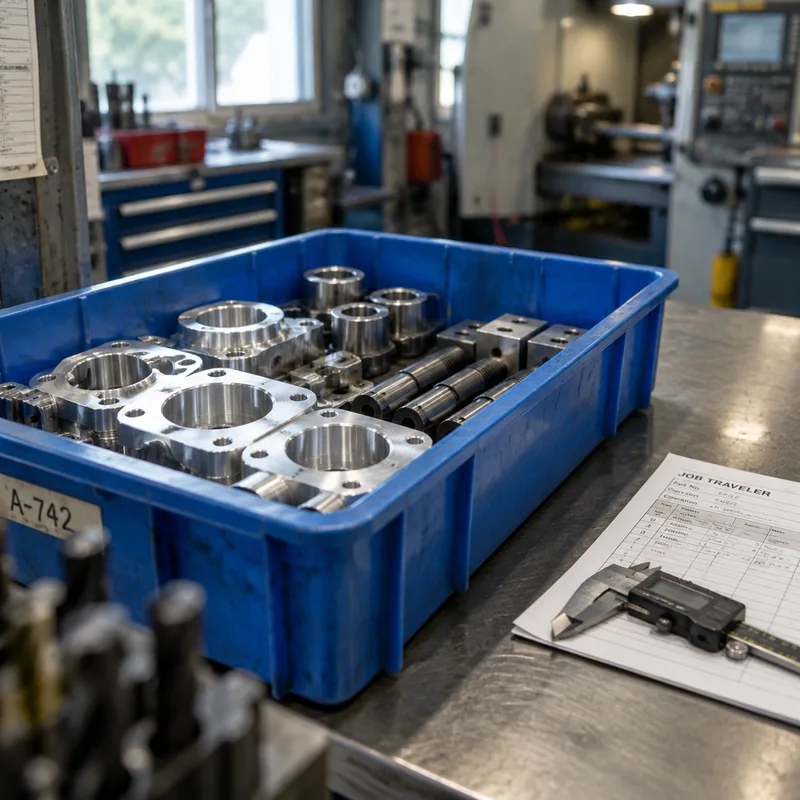
ABS is the utility thermoplastic of rapid prototyping: tough, cheap, easy to machine, and forgiving of design changes. Blends that pair it with polycarbonate borrow that resin’s heat and impact performance while keeping the processing flow ABS is loved for — the combination covers most enclosure, jig and prototype work.
Its boundaries are thermal and structural: service temperature is modest, strength is far from engineering metals, and the material is heavier and a poorer heat conductor than it looks. Where a prototype must predict a production part, match the material to the production process — ABS machined today and molded tomorrow behave alike enough for form-and-fit, not for certification.
Specifications
| Property | Value | Condition |
|---|---|---|
| Molding temperature | 240–265 °C | PC+ABS alloy processing window (above the window the ABS phase decomposes; below it the PC phase flows poorly) |
| Tensile strength | Not established in the collected evidence — confirm at quotation. | |
| Yield strength (0.2% offset) | Not established in the collected evidence — confirm at quotation. | |
| Hardness | Not established in the collected evidence — confirm at quotation. | |
| Density | Not established in the collected evidence — confirm at quotation. | |
Values above are rendered from the collected model-evidence layer, each carrying the heat-treatment condition it was reported under; fields without collected evidence are stated as not established rather than estimated. Requirements outside the table are confirmed for the specific geometry and batch at quotation.
Applications & Selection Points
Enclosures, jigs and prototype housings
The core use: form-and-fit prototypes, click-together housings, fixture bodies and low-load brackets. It machines with ordinary wood-like feeds, takes paint and adhesive well, and glues cleanly with solvent cements — assembly-friendly in ways engineering plastics are not.
Impact and wear service
Impact toughness is a genuine strength, holding on at low temperatures where brittle plastics fail, and the material wears acceptably in medium-load sliding duty. Gears and bearings are occasional uses — but for continuous wear duty the acetal family usually outlasts it.
Temperature-bounded work
The processing window is real: too hot and the blend decomposes, too cool and the polycarbonate phase will not flow. For machined parts the practical consequence is heat in service — near heat sources or under sustained load at elevated temperature, the polycarbonate family or other engineering plastics take over.
Where it is the wrong call
Certification-grade mechanical prototypes, high-temperature service and optical or food-contact surfaces all point elsewhere. State the end-use environment in the RFQ — "it is a prototype" and "it is a production part in a hot enclosure" are different material conversations.
Frequently Asked Questions
Is machined ABS the same as molded ABS?
For form, fit and most functional checks, close enough — that is why machined ABS prototypes are standard. But molding conditions set internal stresses and shrinkage that machining does not reproduce, so dimensional behavior under load or heat can differ. Treat machined prototypes as geometry validation, and qualify the molded part on molded samples.
ABS, PC or the PC-ABS blend — which for my part?
Ambient-temperature housings and cost-driven prototypes: ABS. Impact plus higher temperature service: polycarbonate. Both at once: the blend. The blend machines like ABS but carries the polycarbonate thermal behavior — say which property the part actually needs rather than defaulting to the middle.
What does a quote need for machined ABS parts?
The model or drawing with tolerances, the specific material (ABS or a named blend), finish and cosmetic requirements — plastics show tool marks differently than metals — plus quantity and any assembly method that affects edge quality. Note Service temperature if the part lives anywhere warm.
Ordering & Documentation
Documents
Send the model with tolerances and the material named precisely — "plastic" quotes badly. Call out cosmetic surfaces, glue or paint areas, and any snap-fits whose tolerance matters.
Quotation
Priced from the model, material selection, tolerance class and quantity. Plastics machine fast, so quantity curves flatter — but cosmetic finishing is a real line item; say where appearance matters and where it does not.
Sample & Supply
First articles confirm fit and finish; assembly trials on snap-features are worth doing before batches. Repeat batches run to forecast; confirm packaging — plastics scratch more easily than anodized metal.
Storage & Shipping
Store away from heat and direct sun; the material ages under UV. Pack to prevent abrasion of cosmetic faces — loose bulk shipment is the most common way a good plastic part arrives looking bad.