Polycarbonate (PC) CNC Machining
CNC machining of polycarbonate: collected property envelope with service conditions, impact and temperature selection points, and quotation inputs.
Last updated: 2026-10-29
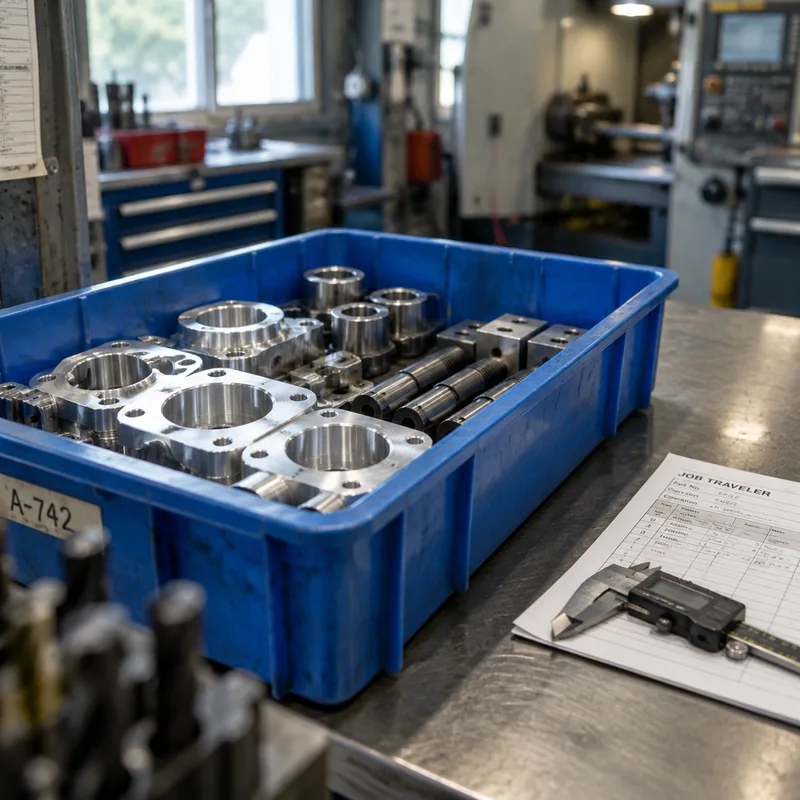
Polycarbonate is the tough transparent engineering plastic: it survives impacts that shatter acrylic and glass, works from deep cold to genuinely warm service, and self-extinguishes with a basic flame rating even unmodified. Machine guards, sight glasses, electrical housings and impact-facing panels are its home ground.
Its trade-offs are surface and stability: it scratches more readily than acrylic — cosmetic transparent parts usually need a hard coat — and it holds dimension well but not infinitely. In transparent grades it may haze slightly with handling; in all grades it is the material to specify when failure mode is "something hit it".
Specifications
| Property | Value | Condition |
|---|---|---|
| Density | 1.18–1.22 g/cm³ | — |
| Heat deflection temperature | 135 °C | — |
| Low temperature limit | -45 °C | service low-temperature bound |
| Tensile strength | 55–75 MPa | ultimate tensile strength, generic PC resin |
| Hardness | M70 | Rockwell, generic PC resin |
| Yield strength (0.2% offset) | Not established in the collected evidence — confirm at quotation. | |
Values above are rendered from the collected model-evidence layer, each carrying the heat-treatment condition it was reported under; fields without collected evidence are stated as not established rather than estimated. Requirements outside the table are confirmed for the specific geometry and batch at quotation.
Applications & Selection Points
Machine guards, sight windows and impact faces
The signature uses: safety guards, inspection windows, pump covers, light lenses in exposed locations. Transparency plus impact survival is a combination no metal offers and acrylic cannot safely deliver — this is the default material for it.
Electrical and flame-rated housings
Inherent flame behavior without additives, good dielectric properties and temperature range make it a standard electrical housing and connector material. Parts with a formal flame requirement should carry the rating on the drawing so the correctly-rated grade gets sourced.
Cold and thermal-span service
It stays functional in deep cold where brittle plastics crack, and carries heat-deflection performance suited to warm enclosures. Outdoor units, cold-chain hardware and equipment that sees thermal cycling are natural fits — with UV-stabilized grades for sun exposure.
Where it is the wrong call
Wear and sliding duty belong to the acetal family; optical purity at a price point belongs to acrylic; and clear cosmetic parts without hard coating will disappoint — the surface marks under the first wipe. Also note bonding is mediocre; design joints mechanically.
Frequently Asked Questions
Polycarbonate or acrylic for a transparent cover?
Ask what will hit it. Impact, cold, or flame requirements: polycarbonate. Optics, scratch behavior and weathering at rest: acrylic. Polycarbonate survives the blow and scratches in service; acrylic stays clearer and cracks under impact. Hard-coated polycarbonate buys both, at a finishing cost.
Why does my clear polycarbonate part scratch so easily?
Surface hardness is the material’s weak axis — among transparent plastics it sits in the middle-to-lower band. The fix is a hard coat on cosmetic faces, quoted as a finishing step. Untreated clear parts are fine inside equipment; they are not fine as handled exterior surfaces.
What does a quote need for machined polycarbonate?
The model with tolerances, the grade (standard, UV-stabilized, flame-rated — they are not interchangeable), which faces are optical or cosmetic, quantity, and the service environment: temperature span, impact exposure and any flame requirement all steer grade selection.
Ordering & Documentation
Documents
Send the model with tolerances and named grade; flame and UV requirements belong on the drawing. Mark optical and cosmetic faces so finishing gets quoted rather than assumed.
Quotation
Priced from the model, grade, tolerance class, finishing (hard coat where specified) and quantity. Note the service environment in the RFQ — it is the input most likely to change the grade proposal.
Sample & Supply
First articles confirm fit, finish and clarity under real lighting. Impact-critical parts may warrant a functional drop check on samples — agree the acceptance method at quotation.
Storage & Shipping
Pack with interlayers on clear faces; the surface marks readily in bulk transit. Store dry and out of direct sun unless the grade is UV-stabilized.