Stainless Steel 201 CNC Machining
CNC machining of stainless steel: collected property table for the economical austenitic grade, where the substitution risk sits, and what to confirm before quoting.
Last updated: 2026-10-27
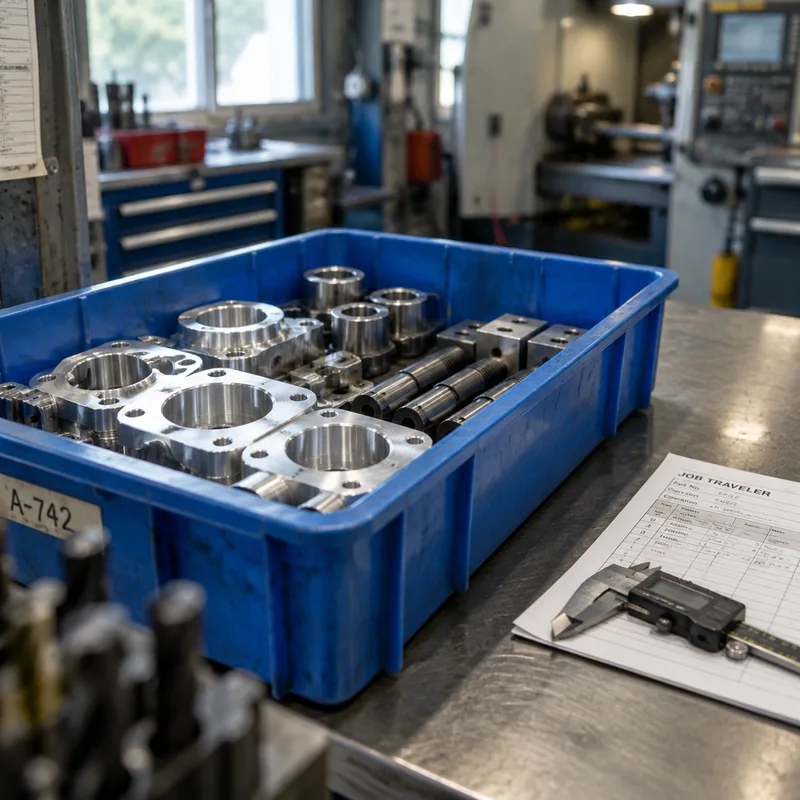
Stainless steel exists to cut cost from the austenitic family: it substitutes part of the nickel with nitrogen and manganese, landing at a lower price point while keeping much of the formability and the non-magnetic character. Decorative trim, architectural fittings, kitchenware and consumer hardware are where it earns its keep.
The engineering trade sits in corrosion behavior. In benign indoor service the grade performs well, but its resistance in chloride and acid exposure is meaningfully below that of the mainstream austenitic grades, and it work-hardens in the same way — sharp tooling and steady feeds keep the cut ahead of the hardening. Treat it as an indoor, cosmetic-duty decision, and the economics are real; treat it as a drop-in substitute outdoors, and the risk is yours.
Specifications
| Property | Value | Condition |
|---|---|---|
| Tensile strength | 520 MPa | tabulated typical value |
| Yield strength (0.2% offset) | 275 MPa | Rp0.2 |
| Elongation | 55–60% | A50mm / A5 |
| Elastic modulus | 203 GPa | room temperature |
| Hardness | HRB ≤ 100 | Rockwell B requirement |
| Density | 7.93 g/cm³ | |
| Fatigue strength | Not established in the collected evidence — confirm at quotation. | |
| Melting point | Not established in the collected evidence — confirm at quotation. | |
Values above are rendered from the collected model-evidence layer, each carrying the heat-treatment condition it was reported under; fields without collected evidence are stated as not established rather than estimated. Requirements outside the table are confirmed for the specific geometry and batch at quotation.
Applications & Selection Points
Decorative and architectural hardware
Handrails, door handles, stair fittings and trim profiles are the core application: the grade polishes to a bright finish, resists the ordinary indoor environment, and lands at a visibly lower cost than the mainstream grade. For visible consumer hardware, the finish specification matters more than the last increment of strength.
Kitchenware and consumer equipment
Utensil bodies, appliance trim and furniture frames use the grade where washing and handling — not chemical service — define the environment. Parts that see food-contact regulation deserve a compliance check before the grade is locked in, since approvals do not transfer automatically between family members.
Where the substitution risk is real
Cost-driven substitution from the mainstream austenitic grade to this one is a documented failure pattern in sheet work: the part passes inspection and fails in service through pitting in an environment the buyer never stated on the RFQ. If your part came in over budget as stainless, say the service environment when asking for the cheaper grade — the honest answer is sometimes that the cheaper grade is the wrong answer.
Machining behavior
Expect austenitic behavior: work hardening, stringy chips, and heat that wants somewhere to go. Positive rake tooling, adequate feed and flood coolant are the standard kit. It forms and welds readily, which makes it a frequent choice for machined-then-formed hybrid parts.
Frequently Asked Questions
Can I just substitute this grade for the mainstream austenitic grade to save cost?
Only when the service environment is genuinely benign. Corrosion resistance is the axis the substitution trades away, and it fails by pitting in chlorides rather than by any property a drawing usually checks. State the environment on the RFQ and let the material decision be made against it — that is the one input that changes the answer.
Is this grade magnetic?
Essentially non-magnetic in the annealed state, like its family relatives — but cold working can induce some magnetism, so a magnet test on a formed or machined edge is not a reliable grade check. Ask for the material certificate instead.
What should a quote request for this grade include?
Model and drawing with tolerances, the named grade and standard, the service environment stated in one sentence, the finish (polished, brushed, passivated), quantity and inspection needs. The environment sentence is what stops a well-priced quote from being the wrong material.
Ordering & Documentation
Documents
Send the model with the drawing naming grade, standard and finish. Decorative faces should be called out explicitly so polishing is quoted rather than assumed.
Quotation
Price follows the model, finish class, quantity and tolerance on visible faces. Confirm the environment in the RFQ — it is the input that decides whether the economical grade is also the correct one.
Sample & Supply
First articles on cosmetic parts should be approved under the light they will ship under, not on the bench. Material certification is available on request — agree it at quotation.
Storage & Shipping
Pack cosmetic faces with interlayers; the surface scratches in bulk transit like any austenitic sheet product. Store dry; the grade tolerates warehouse conditions but not prolonged damp contact with carbon steel, which stains it.