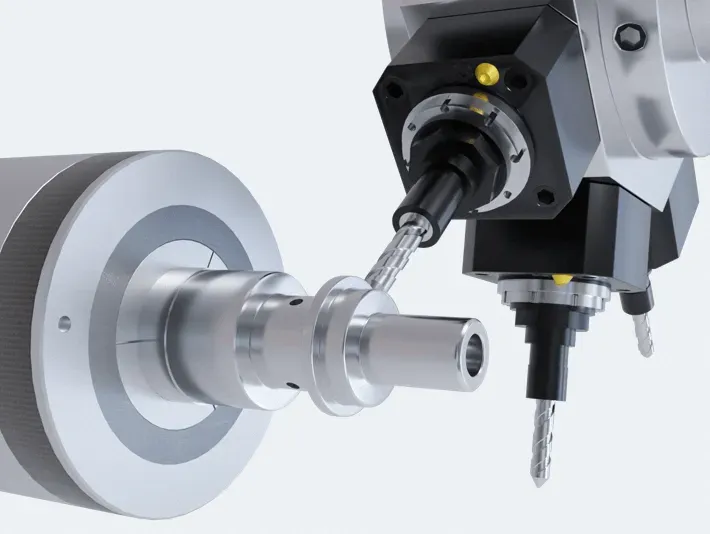
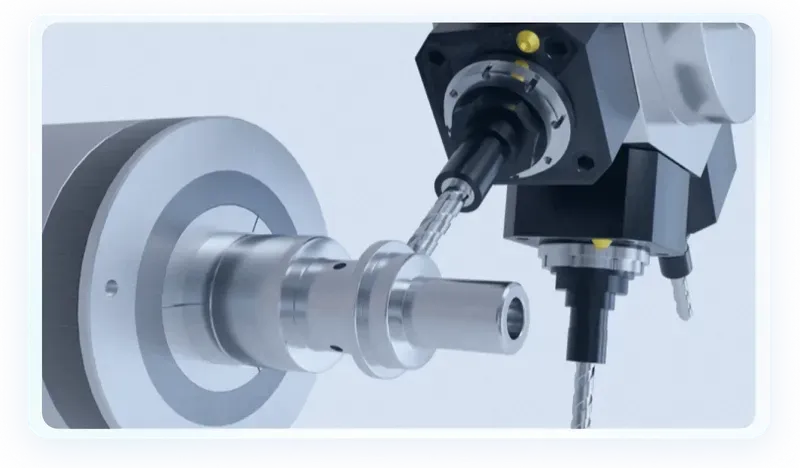
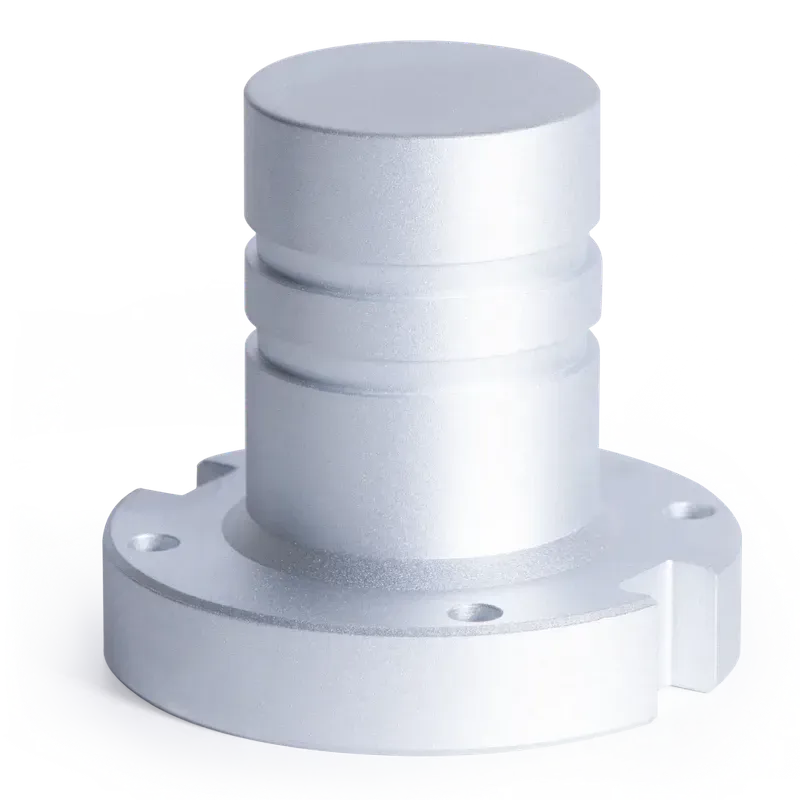
تنتج خدمات خراطة CNC لدينا أعمدة الإدارة والجلبات والفواصل والوصلات وغيرها من القطع ذات التناظر الدوراني على مخارط CNC بالأدوات المدفوعة، فتُنفَّذ الأسطح المفرَّزة والثقوب العرضية والأسنان في تثبيت واحد.
تُبقي العملية ذات التغذية بالقضبان تكلفة القطعة منخفضة في الدفعات الكمية، بينما تتولى العملية بالظرف القطع ذات الحواف والقطوع غير المنتظمة للنماذج الأولية والكميات الصغيرة.
القدرات
- أقطار خراطة CNC من 2 mm إلى 350 mm
- أدوات مدفوعة للسمات العرضية في تثبيت واحد
- خراطة الأسنان وتفريز الأسنان
- إنتاج كمي بتغذية القضبان
المواد النموذجية
فولاذ مقاوم للصدأ 303/304/316، فولاذ كربوني، ألومنيوم، نحاس أصفر 360، نحاس، تيتانيوم، بلاستيك.
| المادة / الدرجة | الحالة النموذجية | قابلية التشغيل الآلي | مجالات الاستخدام |
|---|---|---|---|
| Aluminium 6061 | T6 (معالجة محاليل وتقسية) | سهلة: تشغيل جيد وضبط جيد للرايش | الحوامل والهياكل والتجهيزات والنماذج الأولية وصولًا إلى الإنتاج |
| Aluminium 7075 | T6 / T651 | أصعب: تآكل أكبر للأدوات وتتطلب تثبيتات صلبة | قطع عالية القوة حساسة للوزن؛ غير مناسبة للحام |
| Stainless 304 / 304L | المُلدَّنة (Annealed) | تتصلب بالتشغيل: سرعات أقل وتغذية موجبة | مقاومة عامة للتآكل، ومعدات الأغذية والعمليات |
| Stainless 316 / 316L | المُلدَّنة (Annealed) | أصلب من 304: تآكل أكبر للأدوات | التعرض للكلوريد والبيئات البحرية والتطبيقات الطبية والصيدلانية |
| Carbon steel 1018 / 1045 | كما تُلف / مُطبَّعة | سهلة إلى متوسطة؛ تحتاج حماية من الصدأ | أعمدة الإدارة والألواح وتركيبات اللحام وأجسام العدد |
| Brass C360 | H02 نصف صلبة | ممتازة: سرعات عالية وتشطيب نظيف | الوصلات والجلبات والموصلات والقطع الزخرفية |
| Copper C110 | مُلدَّنة / H02 | لزجة: أدوات حادة وزوايا ميول عالية | التوصيل الكهربائي وقضبان التوزيع والإدارة الحرارية |
| Titanium Grade 5 (Ti-6Al-4V) | مُلدَّنة في المصنع | صعبة: سرعات منخفضة وضبط حراري وتآكل للأدوات | الطيران والفضاء والطب وقطع خفيفة عالية القوة |
| Engineering plastics (POM, PEEK, PA) | مبثوقة / مُلدَّنة | سهلة إلى لزجة: فكوك لينة وأدوات حادة | العزل وتقليل الاحتكاك والقطع الكيميائية ومقاومة التآكل |
التشطيبات
كما خُرِطت، تلميع، تخميل، طلاء بالنيكل، أكسيد أسود، أكسدة (الألومنيوم).
| التشطيب | ما يفعله | حدده عندما |
|---|---|---|
| كما شوُئر (As machined) | آثار الأدوات ظاهرة؛ Ra معتادة 1.6–3.2 µm | القطعة مطالَبة بالعمل فقط |
| السفع بالحبيبات الزجاجية | سطح مطفي موحد يغطي آثار الأدوات | القطع الظاهرة قبل الأكسدة |
| أكسدة النوع II | تبني طبقة أكسيد؛ خيارات ألوان | مظهر الألومنيوم مع مقاومة معتدلة للتآكل والارتداء |
| أكسدة صلبة النوع III | طبقة أكسيد أسمك وأصلب | أسطح ألومنيوم انزلاقية أو معرضة للارتداء |
| التحويل بالكرومات | غشاء حماية رقيق يبقى موصلًا | التوصيل الكهربائي أو التأريض على الألومنيوم |
| النيكل الكيميائي | طبقة موحدة صلبة مقاومة للتآكل | الارتداء مع التآكل، بما في ذلك داخل التجاويف |
| الطلاء بالزنك | حماية تصاعدية اقتصادية من التآكل | قطع الفولاذ الداخلية أو في أجواء محمية |
| الطلاء بالمسحوق | طبقة سميكة متينة وزخرفية | عندما يكون المظهر هو المتطلب |
| التخميل | يزيل الحديد الحر ويعيد طبقة الأكسيد | قطع الفولاذ المقاوم للصدأ بعد التشغيل الآلي |
| تخفيف الإجهادات / المعالجة الحرارية | يخفف الإجهادات المتبقية قبل القطع أو بعده | الجدران الرقيقة والسماحيات الضيقة التي يجب أن تصمد بعد التشغيل |
السماحيات
سماحيات قطر حتى ±0.01 mm؛ وأضيق عند الطلب بعد مراجعة الرسم الهندسي.
| القيد في الرسم | ما يتطلبه | الأثر على التكلفة ومدة التسليم |
|---|---|---|
| عامة: ±0.25 mm / ±0.010 in | عدة قياسية وفحص أبعادي | خط الأساس: بلا زيادة |
| قياسية: ±0.13 mm / ±0.005 in | ماكينة بحالة جيدة وفحص العينة الأولى | زيادة طفيفة؛ المعيار المعتاد للتسعير |
| ضيقة: ±0.025 mm / ±0.001 in | عدة مُجلَّاة أو ماسية وضبط حراري وآلة CMM | قفزة في المتطلبات: قطوع أبطأ مع فحص كامل |
| دقيقة: ±0.013 mm / ±0.0005 in | تمريرات نهائية وعدد قياس وبيئة مضبوطة | التشغيل الآلي يحدد السعر؛ غالبًا عملية منفصلة |
| الموقع / الزاوية (GD&T) | ضبط المرجع وتثبيت واحد للسمات المترابطة | يعتمد على عدد التثبيتات التي يشملها المرجع |
| خشونة سطح Ra 0.8 µm أو أدق | تمريرات أدق وتلميع أو تمريرة تشطيب | تضيف خطوة معالجة، لا مجرد وقت تشغيل |
المواصفات الرئيسية
| Specification | Value |
|---|---|
| tolerance | 0.025 mm |
| material | Aluminum 6061 |
| tolerance | ±0.0008 " |
خيارات المعالجة
- CNC machining is a subtractive manufacturing process.
- Finishing Options: Black Oxide, Electropolishing, ENP, Media Blasting, Nickel Plating, Passivation, Powder Coating, Tumble Polishing, Zinc Plating, Vibratory Tumbling
- EPX 82 is processed using Carbon DLS
- MUD is a type of mold that uses a standard injection molding frame.
- Different taper turning methods suit different jobs. Compound slides often handle short tapers, while CNC interpolation and taper attachments improve repeatability on longer parts
- G92 is used by programming one or more G92's right after the G76 threading cycle
- Estimates are provided through an auto-quoted method.
- EDM relies on a voltage and a thin wire
- Advanced machining processes like micro-machining and EDM are used to create small, precise mold cavities and cores
Surface Finish Reference
- The finish of MoldTech MT11010 is a fine matte texture.
- The finish of MoldTech MT11020 is a medium matte texture.
- The finish of MoldTech MT11030 is a coarse matte texture.
- SPI A-1 has a surface roughness of 0.012–0.025 µm.
- SPI B-2 has a finish of Medium semi-gloss.
- SPI B-2 has a surface roughness of 0.10–0.15 µm.
- SPI C-3 has a surface roughness of 0.63–0.70 µm.
- Super high gloss, polished with a Grade #3 (6000-grit) diamond buff to Ra 0.012–0.025 µm.
- Medium semi-gloss, finished with 400-grit paper to Ra 0.10–0.15 µm.
- Normal matte, polished with 320-grit stone to Ra 0.63–0.70 µm.
Tolerance Reference
- The tolerance with drawing for CNC Milling is as low as +/- 0.005 mm.
- FDM 3D printing offers a low-cost component with average accuracy and uses thermoplastics for 3D printing.
- Wire Cut EDM is highly accurate.
- The U6 H.E.A.T machine achieves tight tolerances.
- Die sinker EDM is capable of maintaining tight tolerances
- The shop needs to have CNC machines that can achieve a specific tolerance.
Industries We Serve
- antennas
- automotive
- CNC machined parts
- custom parts
- electronics
- medical diagnostic
- optical displays
- optical_systems
Material Reference
- ABS
- Austenitic Stainless Steel
- Carbon steel
- ceramic
- composites
- Copper - T2
- copper or graphite
- Hardened Materials
- High Impact Polystyrene
- Low-density polyethylene
- MDF
- metal
- Polybutylene Terephthalate
- SUS304
- thermoplastics
- thick metal sheets
- tungsten carbide
Ordering, Lead Times & MOQ
Custom CNC parts carry no forced MOQ; ordering from a single prototype piece is standard industry practice.
Instant-quote platforms publicly advertise prototype lead times of 1-3 business days.
Online RFQ is the industry-standard flow: upload a 3D model (STEP/STP/DWG/DXF), receive an instant quote or engineer review, then production, inspection, and delivery.
الأسئلة المتكررة
هل يمكنكم الخراطة بمخارط النوع السويسري؟
تُخرط القطع الصغيرة الطويلة الرفيعة على مخارط النوع السويسري وفق معيار الفحص لدينا؛ أخبرنا بالقطعة وسنؤكد مسار العملية.
هل تستجيبون لمتطلبات خشونة السطح مثل قيم Ra؟
نعم. حددوا قيمة Ra على الرسم الهندسي وسنعمل وفقها، مع قياس الخشونة عند الطلب.
What is the minimum order quantity (MOQ)?
Prototypes from 1 pc. Low-volume production typical 50-500 pcs. No forced MOQ on custom parts; unit price drops with volume.
What is the typical lead time?
Industry benchmark: instant-quote platforms deliver prototypes in 1-3 business days. Our own production: prototypes 5-10 working days, including in-house QC and shipping. Production: 2-4 weeks depending on quantity/finishing. Express options exist; finishing adds days.
How do I get a quote and what information do you need?
3D files (STEP/IGS) + 2D drawing with tolerances. Material, quantity, finish, destination country. Quote turnaround: 24-48h typical.
What tolerance should I specify?
Specify tight tolerances only on critical features. Standard ±0.1 mm covers most features. Tighter tolerance = cost multiplier; apply selectively via drawing GD&T.
How is quality controlled?
First-article inspection in our own shop before the first production order. In-process checks. Final inspection report (dimensions) with shipment. Material certs (mill test reports) on request.
Is my design protected?
NDA before file exchange. Files used only for your production. No resale of custom designs.
Which material should I choose?
Function first: strength, weight, corrosion, cost. Common pairings: 6061 general, 304/316 corrosive env., PEEK medical. See materials guide pages.
Which surface finish do I need?
Anodizing for aluminum corrosion/wear/color. Passivation for stainless. Plating for conductivity/steel protection. Cosmetic vs functional distinction.
How do you ship and what terms?
DHL/FedEx/UPS express for samples and small batches. Air/sea freight for production volumes. Incoterms: EXW/FOB/DAP/DDP options.
Sources · 1
- hubs.comIndustry peer technical page
Technical references cited for verifiability — not supplier recommendations. Browse the research library.
Capability commitments on this page are owner-confirmed (2026-09-21).