Laser Tube Cutting
Laser tube cutting for round, square and rectangular tube: holes, slots and copes with no tooling, most stock up to 6 in (152 mm), stainless 304/316, aluminum 6061, 4130 and A513.
Last updated: 2026-10-29
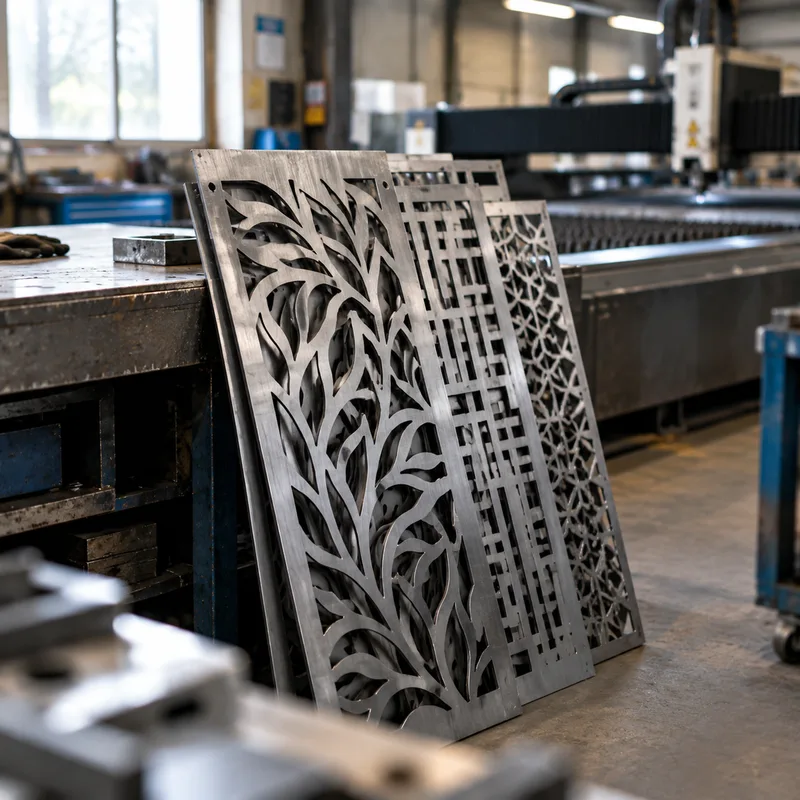
Laser tube cutting rotates tube stock in a lathe-style chuck while the laser cuts holes, slots, notches, copes and weld-prep channels along the length — no part-specific tooling, and features as small as the wall thickness. Most metal tube stock up to 6 in (152 mm) is accepted, in round, square and rectangular profiles.
Standard stock covers stainless 304/316 (welded and seamless), aluminum 6061 (extruded and drawn), alloy steel 4130 (seamless) and A513 DOM/HREW/CREW carbon steel. The process runs semi-to-fully automated with high throughput and low waste; the kerf is much thinner than saw or punch methods, and some materials show a small heat-discoloration halo at the cut edge.
Tube stock windows: round and square/rectangle sections from 0.500 in to 6.000 in, with wall thickness 0.035–0.500 in. Cut edges hold ±0.010 in nominal on the inner face of the tube, and the laser kerf runs far thinner than traditional cutting methods, which keeps material waste low.
Specifications
| Specification | Laser Tube Cutting |
|---|---|
| Tolerance | Edge-to-edge ±0.010 in nominal on the inner face of the tube (normal-to-surface cut) |
| Max Part Size | Most tube stock up to 6 in (~152 mm) accepted |
| Lead Time | Tube laser cut parts are typically shipped within 2-3 business days; additional services or larger production runs can extend that timeline |
Materials
Surface Finishes
Laser tube cutting rotates round, square and rectangular tube stock in a lathe-style chuck while a laser cuts holes, slots, notches and coped channels — features as small as the wall thickness — with no tooling and repeatable results. Most metal tube stock up to 6 in (152 mm) diameter is accepted. Standard stock includes stainless 304/316 (welded and seamless), aluminum 6061 (extruded and drawn), alloy steel 4130 (seamless) and A513 DOM/HREW/CREW carbon steel tube. The process is semi-to-fully automated with high throughput and low material waste; kerf is much thinner than traditional cutting, and some materials show a small heat-discoloration halo at the cut.
Values above are the collected catalog specification envelope for this product family. Tolerances and lead times at the demanding end of a range are confirmed for the specific geometry, material and batch at quotation.
Applications & Selection Points
Frames, racks and structural tube
Bike frames, racks, roll cages, furniture and conveyor structures: every joint cope, lightening hole and cable slot cuts in one program. Coped tube ends mate to each other without manual fitting, which is where laser tube cutting pays for itself over saw-and-drill.
Weld-prep and self-fixturing joints
Channels and tabs cut into the tube act as alignment features for welding — parts arrive pre-slotted so the frame squares itself. State your joining method: weld-gap channels, tab-and-slot geometry and bend zones are all program features, not add-ons.
Stock selection
Stainless 304/316 for corrosion, aluminum 6061 for weight, 4130 for strength-to-weight in structural work, A513 DOM/HREW/CREW for economical carbon frames. Welded versus seamless seam lines can matter for cosmetic or pressure applications — say which you need.
Where tube cutting meets its limits
The process cuts; it does not bend. Parts that form after cutting route through tube bending, and very large tube beyond the 6 in band routes to saw cutting or profiling. The heat-affected halo matters on some stainless cosmetic surfaces — call it out so it is finished or accepted.
Frequently Asked Questions
Laser tube cutting vs saw cutting — when does the laser pay off?
A saw makes one straight cut at a time; the laser cuts every feature — holes, slots, copes, notches — in one clamped setup with no layout work. For a plain cut to length, the saw wins on price. Once the tube needs more than two features, laser cutting usually wins on total cost because fitting and marking labor disappears.
What tube shapes and sizes can be cut?
Round, square and rectangular profiles, with most metal stock up to 6 in (152 mm) accepted. Standard materials are stainless 304/316, aluminum 6061, alloy steel 4130 and A513 carbon steel. Through-holes can go as small as the wall thickness — smaller features lose integrity at the edge.
What does a laser tube cutting quote need?
A 3D model or dimensioned sketch of the tube with every feature located, the stock spec (material, profile, size, welded or seamless), quantity, and any finish requirement. Say whether you supply the tube or need the shop to source it — both are normal.
Ordering & Documentation
Documents
A 3D model (STEP) of the finished tube or a dimensioned drawing with feature positions referenced to one end. Include the stock specification — profile, size, wall, material grade and seam type.
Quotation
Pricing inputs: tube size and material, feature count and complexity, whether stock is customer-supplied, and quantity. Repeat programs re-run without engineering; ask for the per-lot price at your real batch size.
Sample & Supply
A first tube cut from your stock validates fit-up against the mating parts — worth it before a frame program commits. Bundle parts per assembly for kits that go straight to the jig.
Storage & Shipping
Cut tube is light but long — specify maximum shipping lengths so parts arrive on standard carriers. Cap or bag finished ends on cosmetic or stainless parts to protect the cut edge in transit.