Weldment Services
Weldment services for certified structural assemblies: TIG, MIG, FCAW, stick, submerged arc and spot welding, with AWS D1.1, ASME, AS9100, NADCAP and ISO 9001 frameworks and NDT inspection options.
Last updated: 2026-10-29
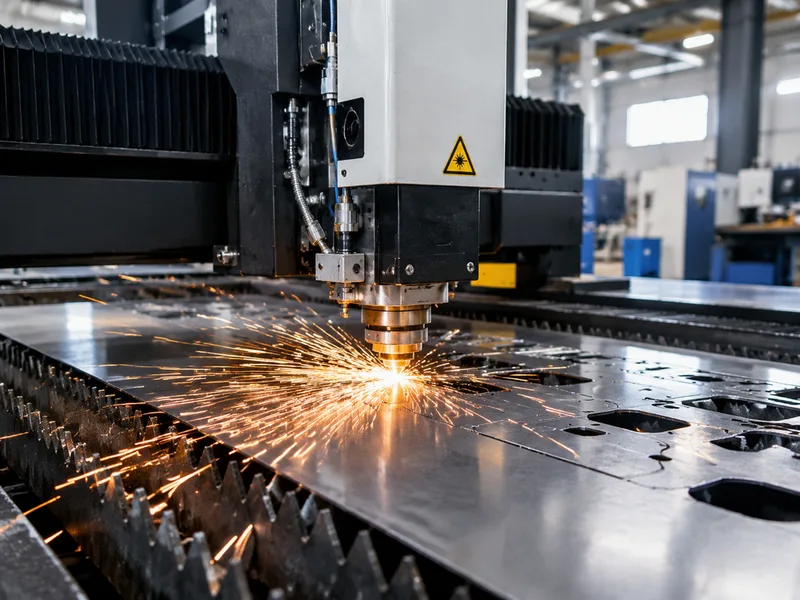
Weldment services turn machined, cut and formed components into finished structural assemblies. The process set covers TIG for clean, cosmetic welds on thin and exotic metals, MIG for speed in general fabrication, FCAW and stick for heavy structural work, submerged arc for long low-distortion seams and spot welding for sheet joins — selected per joint, material and appearance requirement.
Assembly quality is designed in before the first arc: like-for-like material pairs (aluminum to aluminum, steel to steel), standard weld symbols on the drawing, gap sizing to the joint configuration, and distortion control through intermittent welding and fixturing on long or thin-walled frames. Inspection then scales with criticality, from visual to dye penetrant, ultrasonic and radiographic testing.
Specifications
| Specification | Weldment Services |
|---|---|
| Tolerance | Welded assemblies can transfer directly to CNC machining after welding to mill mounting faces flat and bore holes to ±0.0005 in tolerance |
| Max Part Size | Robotic welding manipulates weldments up to 57 inches in diameter / 1,650 lbs (750 kg); post-weld CNC machining handles parts up to 74.8 inches diameter × 59 inches tall / 6,600 lbs (3,000 kg); sheet-based fabrication size is bounded by laser cutting dimensions of about 3048 mm × 1524 mm |
Materials
Surface Finishes
Weldment services turn machined, cut and formed components into certified structural assemblies: TIG for clean cosmetic welds on thin and exotic metals, MIG for speed in general fabrication, FCAW and stick for heavy structural work, submerged arc for long low-distortion seams and spot welding for sheet joins. Dissimilar-metal joins are avoided by design — aluminum to aluminum, steel to steel. Inspection scales from standard visual checks through dimensional verification to dye penetrant, ultrasonic and radiographic testing, under AWS D1.1, ASME, AS9100, NADCAP and ISO 9001 frameworks.
Values above are the collected catalog specification envelope for this product family. Tolerances and lead times at the demanding end of a range are confirmed for the specific geometry, material and batch at quotation.
Applications & Selection Points
Structural frames and heavy equipment
FCAW and stick welding carry deep penetration and high deposition rates for frames, bases and heavy equipment structures, with AWS D1.1 as the governing standard for structural work and procedure qualification records kept on file.
Cosmetic and precision assemblies
TIG produces the clean, aesthetic weld a visible enclosure or consumer-facing frame needs, and it is the route for thin metals and exotic materials — aluminum, magnesium, stainless steel, titanium and nickel alloys — where control matters more than speed.
Sheet-metal joins at volume
Resistance spot welding is the fast, economical join for sheet assemblies in automotive and appliance-style work, joining aluminum, brass, cast iron, mild steel, stainless steel and magnesium at the lowest per-joint cost.
Aerospace and defense weldments
Where the assembly flies or ships defense-controlled goods, the framework tightens: AS9100 quality management, NADCAP special-process compliance and ITAR registration, with advanced NDT — dye penetrant, ultrasonic, radiography — on high-integrity joints.
Frequently Asked Questions
TIG or MIG for my assembly?
TIG when appearance, thin material or an exotic alloy drives the joint — it is slower but cleaner and more controllable. MIG when speed matters and the weld is not cosmetic. Heavy structural sections step up to FCAW or stick for penetration; long straight seams run best on submerged arc; sheet at volume spots. State the material, thickness and whether the weld is visible in service.
Which welding standards and certifications apply?
Structural work typically falls under AWS D1.1; pressure and process work under ASME; aerospace under AS9100 with NADCAP special-process compliance; general quality under ISO 9001. AWS-certified work requires a procedure qualification record (PQR) on file, which adds processing time — declare the required standard at quotation, not after welding.
What does a weldment quote need?
The final assembly model plus part-level files, technical drawings with standard weld symbols and callouts, materials and thicknesses, finish requirements, inspection level and any certification requirement. Label the parts to be welded and the assembly file as such — it prevents quoting the job as loose parts.
Ordering & Documentation
Documents
Assembly-level 3D files plus drawings with weld symbols, weld locations, materials and finishes. Include inspection templates if the job has acceptance criteria beyond standard visual.
Quotation
Pricing inputs: weld types and lengths, material and thickness, certifications required (AWS PQR paperwork adds lead time), inspection level, and machining or finishing before and after welding. Complex assemblies often quote manually — expect a representative to confirm details.
Sample & Supply
A first assembly validates fit-up, distortion control and appearance before the batch commits. For recurring assemblies, a qualified welding procedure plus a retained sample keeps later batches consistent.
Storage & Shipping
Weldments are large, flexible and easily bent in transit: ship braced, with machined surfaces protected from spatter and grinding debris. Bare weld zones corrode — specify paint, plating or passivation before long storage.