Zinc Die Casting
Zinc die casting in the Zamak and ZA alloy families: ±0.05–0.10 mm typical tolerances, as-cast Ra 0.8–1.6 µm, wall 0.6–3.0 mm, shot weights to 500–750 g.
Last updated: 2026-10-29
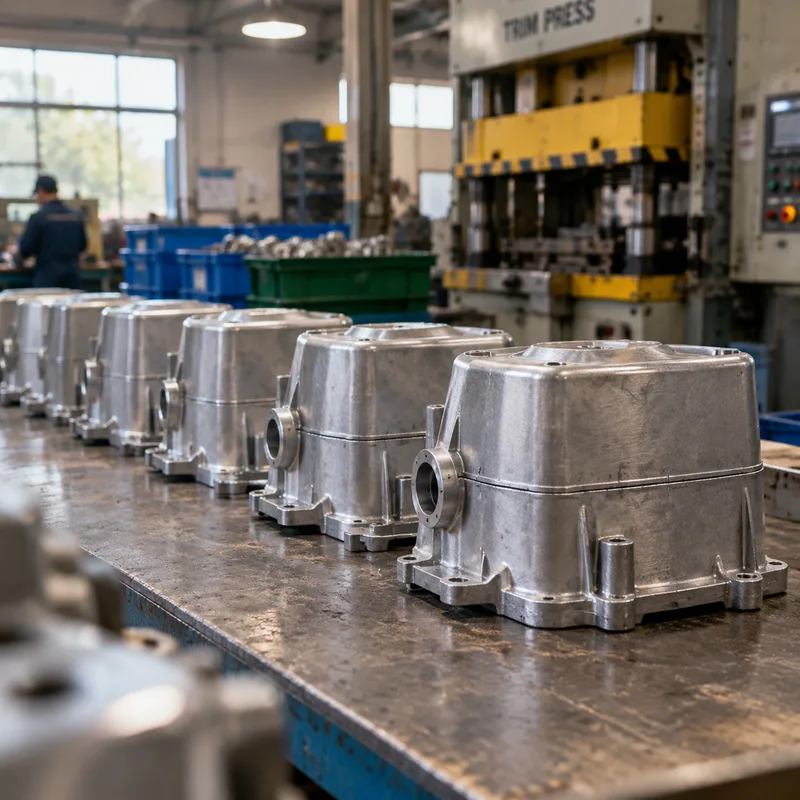
Zinc die casting injects molten Zamak or ZA alloy into a steel die under high pressure, producing small, dense, dimensionally stable components with an as-cast surface of Ra 0.8–1.6 µm straight from the mold. Zinc fills thin walls and fine detail better than aluminum, and the dies last through 500,000 to over 1,000,000 shots — which is why zinc owns the small, intricate, high-volume component niche.
The collected design envelope: general tolerances of ±0.05–0.10 mm typical (geometry-dependent), recommended wall thickness 0.6–3.0 mm for Zamak 3/5 and 1.0–4.0 mm for ZA-8, and draft angles of at least 0.5° on external surfaces and 1° in internal cavities. Most machines cap shot weight at 500–750 g, so large heavy parts belong to aluminum or gravity casting routes.
Specifications
| Specification | Zinc Die Casting |
|---|---|
| Tolerance | ±0.05–0.10 mm typical (geometry-dependent) |
| Max Part Size | Shot weight capped at 500–750 g on most machines; wall 0.6–3.0 mm (Zamak 3/5), 1.0–4.0 mm (ZA-8) |
| Lead Time | A new die casting program typically takes 14 to 24 weeks from quote to first delivery; repeat orders with approved tooling 4 to 10 weeks; full production molds require 25-35 days of tooling before first article inspection (FAI) |
Materials
Surface Finishes
Zinc die casting produces small, dense, high-precision components in the Zamak and ZA alloy families, with as-cast surface roughness of Ra 0.8–1.6 µm straight from the mold. General tolerances of ±0.05–0.10 mm are typical depending on geometry and die configuration; recommended wall thickness is 0.6–3.0 mm for Zamak 3/5 and 1.0–4.0 mm for ZA-8, with draft angles of at least 0.5° external and 1° internal. Most machines cap shot weight at 500–750 g, so large heavy parts belong to alternative casting routes — zinc earns its keep on small, intricate, high-volume components where tool life reaches 500,000 to over 1,000,000 shots.
Values above are the collected catalog specification envelope for this product family. Tolerances and lead times at the demanding end of a range are confirmed for the specific geometry, material and batch at quotation.
Applications & Selection Points
Small precision components at volume
Connectors, housings, gears, latches and decorative hardware: parts that need net-shape accuracy at thousands of pieces. Zamak 3 is the workhorse for dimensional stability; Zamak 5 adds strength; ZA-8 suits thin-wall structural work; ZA-27 carries higher loads where its lower density helps.
Thin-wall and fine-detail parts
Zinc fills 0.6 mm walls that aluminum alloys struggle with, capturing knurls, logos and fine ribs in the die. Draft still matters — external surfaces need at least 0.5° and internal cavities 1° — so flag texture and ejection direction early in design.
As-cast finishing economics
The 0.8–1.6 µm as-cast finish takes plating and coating with minimal preparation: electroplating (nickel, chrome) for wear and corrosion, powder coating or liquid painting for color, chromate conversion for basic protection. Budget plating thickness into fit tolerances — a few microns shifts a tight fit.
When zinc is the wrong answer
Shot weight caps at 500–750 g on most machines and tooling amortizes only over volume: large or low-volume parts should route to aluminum casting, machining or urethane casting instead. State annual volume openly — it decides whether a zinc die is economic at all.
Frequently Asked Questions
Zinc vs aluminum die casting — which alloy family for my part?
Zinc wins on thin walls, fine detail, as-cast surface quality, tolerance and die life for small parts; aluminum wins on weight, elevated-temperature service and large envelopes beyond the zinc shot-weight ceiling. As a working split: parts under ~500–750 g with detail and volume route to zinc; larger or heat-exposed parts route to aluminum.
Which Zamak grade should I specify?
Zamak 3 for the best balance of castability and dimensional stability (the default), Zamak 5 where higher strength and hardness matter, Zamak 2 for the highest strength in the family, ZA-8 for thin-wall structural parts and ZA-27 where load capacity and lower density dominate. Confirm the final choice against the working temperature — zinc alloys lose strength as service temperature rises.
What does a zinc die casting quote need?
A 3D model with wall thickness and draft shown, alloy preference or working conditions to choose one, tolerance and finish callouts, annual and per-lot quantity, and destination. Tooling is the dominant cost at low quantity — say whether you want a quote for the die alone, per-part pricing at volume, or both.
Ordering & Documentation
Documents
A 3D model (STEP) with uniform wall thickness and draft applied, plus a drawing calling out tolerances, finish, and any machined-after-casting features. Note ejection side preferences and any texture areas.
Quotation
Pricing inputs: alloy, part weight against the 500–750 g shot ceiling, finish (plating and coating are quoted per finish line), annual volume, lot size and destination. Expect separate tooling and per-part lines; tool life of 500,000 to over 1,000,000 shots usually lets one die cover the whole program.
Sample & Supply
First shots from the production die validate dimensions and finish before volume release. Ongoing supply runs to forecast; confirm inspection cadence and certificates at quotation.
Storage & Shipping
Zinc castings are hard but thin edges can bite — pack with separators rather than loose bulk. Chromated parts store well dry; plated parts should not be stored in direct contact with dissimilar metals.