Die Casting
Aluminum and zinc die casting for complex net-shape parts: tolerances to +/-0.003"–0.005" per inch, thin-wall capability, large formats to 2500 x 3500 mm, in A380, A360, ADC12 and Zamak alloys.
Last updated: 2026-10-26
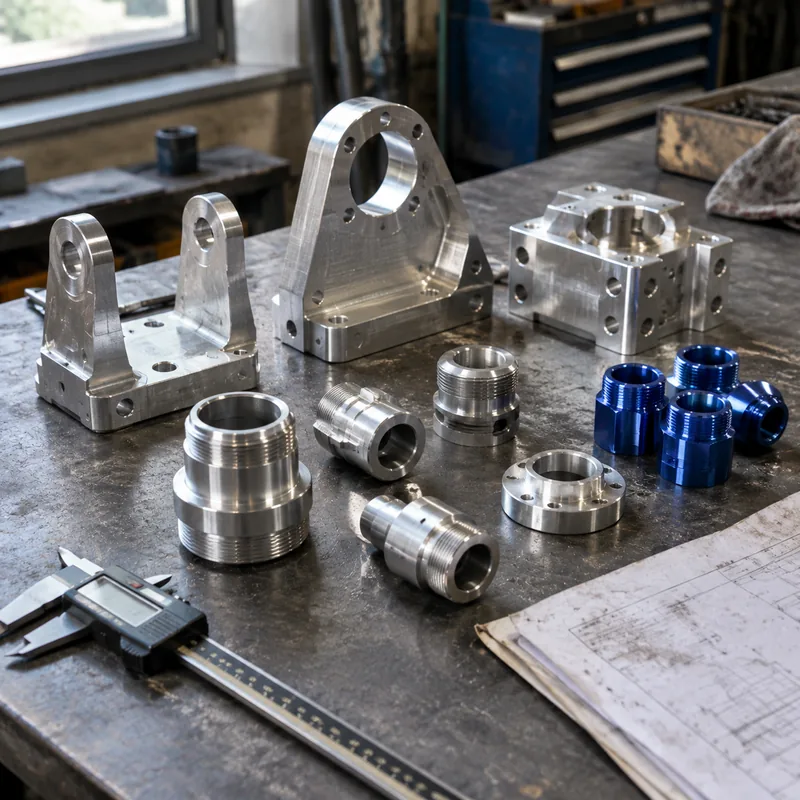
Die casting injects molten aluminium or zinc into a steel mold under pressure, producing net-shape metal parts with repeatable dimensions, thin walls and good surface condition at a per-part cost that falls sharply with volume. It is the volume process behind housings, gearbox cases, brackets, heat sinks and structural hardware where machining-from-solid would discard most of the metal.
The catalog envelope covers tolerances of +/-0.003"–0.005" per inch (as tight as +/- .001" on well-placed features), part formats up to 2500 x 3500 mm with single-block weights up to 20 tons, and an alloy list split between aluminium (A360.0, A380.0, A383.0/ADC12, A413.0) and zinc (Zamak 2, Zamak 3). Surface condition comes off the die smooth or textured, and takes paints and plating for finished appearances.
Specifications
| Specification | Die Casting |
|---|---|
| Tolerance | +/-0.003″ – 0.005″ per inch; as tight as +/- .001” |
| Max Part Size | Up to 2500 x 3500 mm, with single-block weights of up to 20 tons |
Materials
Surface Finishes
Custom aluminum and zinc die casting for complex metal parts with cost-effective tooling and rapid, scalable production. Offers tight tolerances, thin-wall capability, and a range of surface finishes.
Values above are the collected catalog specification envelope for this product family. Tolerances and lead times at the demanding end of a range are confirmed for the specific geometry, material and batch at quotation.
Applications & Selection Points
High-volume net-shape housings
The economics of die casting are tooling-versus-volume: once the die exists, each part carries minutes of machine time and scrap rates far below machining. Enclosures and cases produced in the hundreds to hundreds-of-thousands are the core application — the more the die can hold net-shape, the less secondary machining the part needs.
Thin-wall and lightweight structures
High-pressure casting fills walls that gravity casting cannot, which is where the weight savings live. Wall-thickness uniformity matters more than absolute thinness — abrupt thickness changes set both the fill behavior and the solidification shrink porosity the casting will carry.
Alloy selection: aluminium vs zinc
Aluminium alloys (A380 is the workhorse, A360 for better corrosion/pressure tightness, ADC12/A383 for thin intricate fills) carry structural and thermal hardware. Zamak zinc alloys fill finer detail, take plating exceptionally well, and suit smaller precision parts — the choice is part size, detail density and environment, not preference.
Where machining finishes the casting
Sealing surfaces, bearing bores, threaded holes and critical datums are machined after casting — the +/- .001" class on selected features is a machining callout, not a die callout. Design those features accessible to secondary machining and datum-consistent with the casting, and the process chain stays cheap.
Draft, parting lines and tooling-friendly design
Die-castable design is a discipline of its own: walls need draft so the part releases, the parting line decides where flash forms and what the die can hold, and features that would need slides (undercuts, side holes) add tooling cost and maintenance. Reviewing draft and parting strategy before the die is cut is the cheapest engineering hour in the whole process chain — after cut, every geometry change is a tooling change. Bring the castability questions to the quotation stage, not the first-article inspection.
Frequently Asked Questions
Die casting vs CNC machining — when does each win?
At volume, die casting wins on complex thin-walled geometry because the per-part cost drops while machining stays roughly linear with material removed. At prototype and low volume, machining wins because it needs no die. The crossover is tooling amortization — for parts destined for volume, the standard pattern is machined prototypes to validate the design, then the die.
What tolerance should I expect from the die?
The catalog states +/-0.003"–0.005" per inch as the die-formed envelope, with +/- .001" attainable on well-placed features that the die controls tightly. Across the part, tolerance scales with dimension and with the number of moving die elements (slides) involved. Put tight callouts on die-controlled features, and expect machined-after-casting for anything tighter.
What does a die casting quote need?
A 3D model with draft angles and wall thicknesses as-designed, alloy selection (or target properties to select from), estimated annual and per-lot volumes, finish callout (smooth, textured, paint, plating), and any machined-after-cast features marked. Volume is the decisive input — quotes without it cannot place the tooling economics honestly.
Ordering & Documentation
Documents
Order package: 3D model, drawing with die-formed versus machined features distinguished, alloy spec, finish spec, and volume forecast. Tooling design reviews (parting line, draft, ejector placement) happen before die cut — plan a revision cycle there.
Quotation
Quotes separate tooling cost from per-part price, and per-part price is volume-dependent. Inputs: geometry, alloy, volumes, finish, machining operations after cast, inspection requirements, and destination. Ask for per-lot pricing at more than one volume — the curve, not the point, is the decision input.
Sample & Supply
First samples come from the new die and anchor the production approval: dimension, fill quality, porosity on machined surfaces. Production lots then run against that approval. Batch scheduling and inventory arrangements (blanket orders against call-offs) are confirmed at quotation.
Storage & Shipping
Cast parts are dimensionally stable and ship well; finished surfaces (plated, painted) need the same transit protection as any coating. Aluminium castings stored long-term should stay dry — white corrosion product on unprotected aluminium is cosmetic but avoidable. Machined sealing surfaces ship protected and oiled where steel inserts are present.