Metal 3D Printing (DMLS)
DMLS metal 3D printing in 17-4 stainless and AlSi10Mg aluminium: 98%+ density, ±0.005"/in tolerance, 250 x 250 x 250 mm build, with CNC machining and polishing post-processing available.
Last updated: 2026-10-26
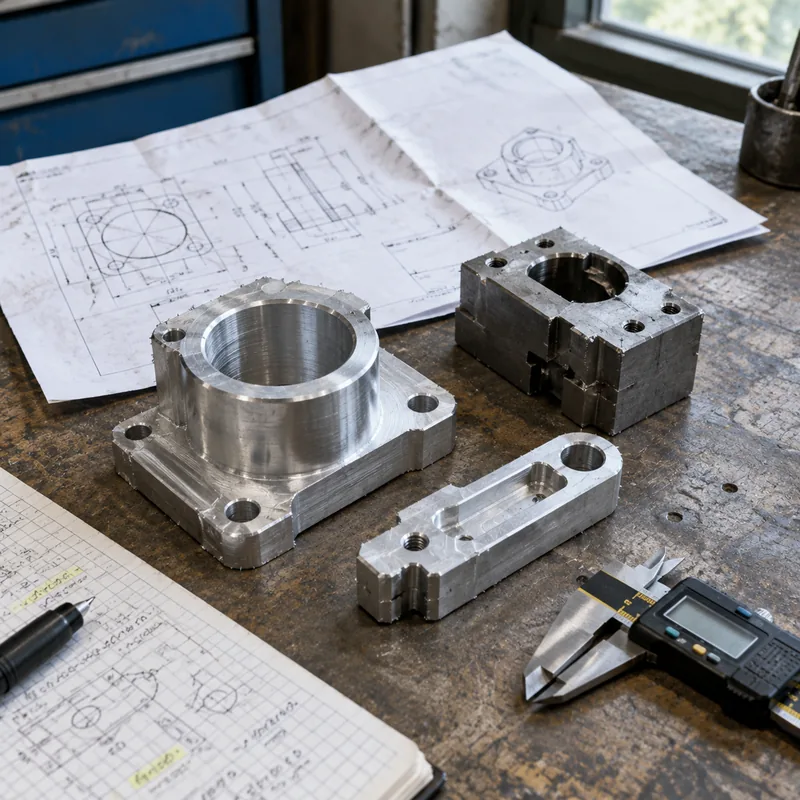
Direct Metal Laser Sintering (DMLS) builds metal parts by fusing fine powder layer by layer with a laser, producing fully dense parts sintering to 98%+ density. It manufactures geometry that subtractive processes cannot reach — internal cooling channels, conformal surfaces, consolidated assemblies — in real metal, for both prototypes and production.
The catalog envelope covers 17-4 stainless steel and AlSi10Mg aluminium, a 10" x 10" x 10" (250 x 250 x 250 mm) build volume, and a tolerance of ±0.005" for the first inch plus ±0.002" for every inch thereafter. As-printed surface roughness runs 150–1000 µin Ra; standard media-blast finishing, optional CNC machining of critical features and polishing are the post-processing chain. Certification context: ISO 9001:2015, ISO 13485, IATF 16949:2016 and AS9100D with ITAR registration are cited for the process line.
Specifications
| Specification | Metal 3D Printing (DMLS) |
|---|---|
| Tolerance | ± 0.005” for the first inch is typical, plus ± 0.002” for every inch thereafter |
| Max Part Size | 10" x 10" x 10" (250 x 250 x 250 mm) |
Materials
Surface Finishes
Direct Metal Laser Sintering (DMLS) 3D printing service for metal prototypes and production parts, using a laser to selectively fuse fine metallic powder layer by layer into fully dense parts. Offers instant quotes, free shipping on US orders, and ISO 9001:2015, ISO 13485, IATF 16949:2016, AS9100D certification with ITAR registration. Parts sinter to 98%+ density with as-printed surface roughness of 150-1000 uin Ra, with standard media-blast finishing and optional CNC machining or polishing post-processing.
Values above are the collected catalog specification envelope for this product family. Tolerances and lead times at the demanding end of a range are confirmed for the specific geometry, material and batch at quotation.
Applications & Selection Points
Internal channels and conformal geometry
Conformal cooling channels in tooling, internal manifolds, and heat-exchange geometry are the applications DMLS exists for: the passages are built, not drilled, so they follow any path the design gives them. Consolidating an assembly of many brazed/welded parts into one printed part is the same argument at system level.
17-4 stainless for tooling and structural parts
17-4 PH is the workhorse DMLS stainless: strong, hardenable, corrosion-resistant — used for tooling, fixtures and structural hardware. Note that as-printed condition differs from wrought heat-treated condition; mechanical values depend on post-print heat treatment, so state the application temperature and load class when quoting.
AlSi10Mg for lightweight thermal parts
AlSi10Mg suits housings, brackets and thermally loaded parts in the aluminium class, with fine microstructure from the rapid solidification. Heat treatment and machining of datums/threads after printing are the standard finishing chain for functional parts.
Plan for post-processing from the start
A printed part that must meet a drawing is a process chain, not a single step: print → stress relief/heat treatment → remove from build plate → machine critical features → finish. Design datums that survive that chain, put the ±0.005"-class callouts on machined features, and treat as-printed surfaces (150–1000 µin Ra) as the baseline the finishing must improve.
Supports, orientation and build economics
DMLS prints on supports that anchor overhangs to the plate, and orientation decides where those supports land, how much residual stress accumulates, and how many parts fit one build. Supports leave witness marks on the surfaces they touch — another reason critical surfaces get planned (and often machined) rather than printed. At quantity, build-plate nesting drives per-part price: parts that stack well print cheaper, so geometric freedom on non-critical faces has direct economic value in this process.
Frequently Asked Questions
DMLS vs CNC machining for a metal part?
Machining wins on tolerance, surface finish, wrought material properties and price for geometry a cutter can reach. DMLS wins when geometry is impossible or prohibitively expensive to machine — internal channels, consolidated parts, material-efficient complex structures. For a part that only exists in bulk because machining demands it, redesign-for-print often flips the comparison.
What tolerance and surface can I expect as-printed?
The catalog states ±0.005" on the first inch plus ±0.002" per inch thereafter, and as-printed roughness of 150–1000 µin Ra depending on orientation and down-skin surfaces. Functional precision comes from post-process machining: design the part so critical features carry machining stock, and hold printed surfaces to the cosmetic/structural role they serve.
What does a DMLS quote need?
STEP/STL model, alloy (17-4 or AlSi10Mg), quantity, heat treatment and machining requirements, critical-feature callouts, and delivery country. State the service environment — load, temperature, corrosion — because it drives both orientation and post-print heat treatment selection.
Ordering & Documentation
Documents
3D model plus critical-feature drawing; where post-machining is expected, mark the machined datums so the build orientation supports them. Certification or lot-traceability requirements should be stated with the order.
Quotation
Pricing inputs: material, part volume and support consumption, quantity (nesting economics), heat treatment, machining and finishing steps, destination. Quotes should separate print cost from post-processing — the chain, not the print, is usually most of the lead time.
Sample & Supply
First articles include the full chain (print, treat, machine, finish) so approval reflects the deliverable, not the raw build. For production parts, hold the orientation and process chain fixed after approval — changing either changes the part.
Storage & Shipping
Finished DMLS parts ship like machined metal parts: protected critical surfaces, corrosion protection for carbon-touching fixtures in transit. 17-4 in the as-printed state is more corrosion-prone than after passivation or full finishing — match storage conditions to the actual surface state delivered.