Urethane Casting
Urethane casting for 10–200 parts in ABS/PC/PP/rubber-simulating polyurethanes: ±0.010" tolerance, parts to 24–36 in, 1–2 week lead time, from silicone molds over 3D-printed or machined masters.
Last updated: 2026-10-26
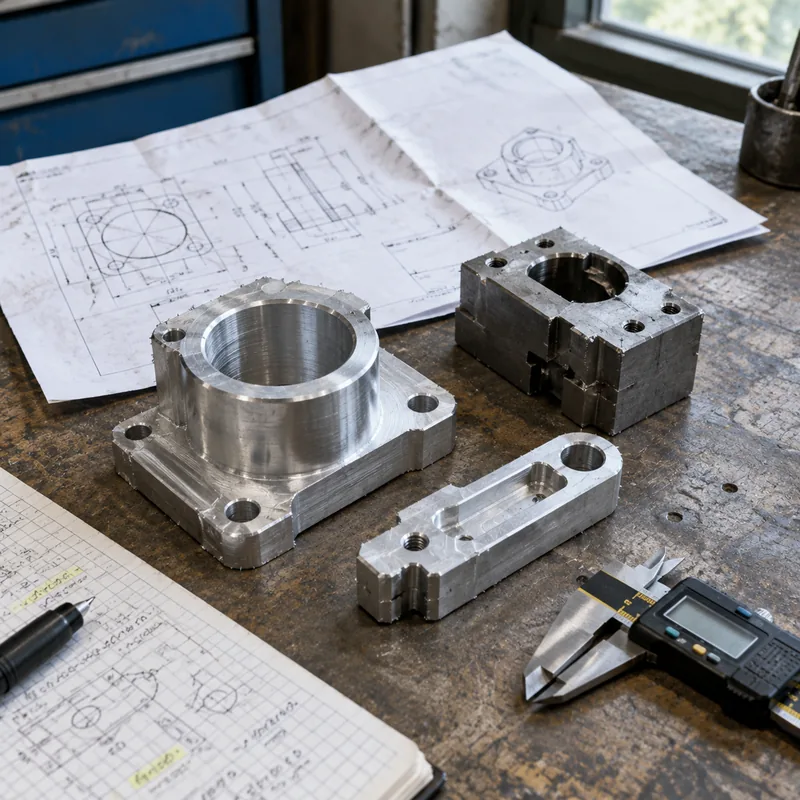
Urethane casting pours two-part polyurethane resin into silicone rubber molds made from a master pattern, yielding roughly 20–25 parts per mold. It occupies the gap between 3D printing and injection molding: molded-quality parts in ABS-, polycarbonate-, polypropylene- and rubber-simulating materials, in runs of roughly 10–200 pieces, without a production tool.
The catalog envelope covers ±0.010 in (±0.25 mm) tolerance with 0.15% shrink, parts from 24–36 in (600–900 mm) down to small components, 1–2 week lead times, and pricing around $71.40 per part all-in at 100 pcs (indicative; material and geometry move it). Material list includes Axson UP 6160, Rampf TP 4007/4006/4020, Heicast 8263, PTM&W PT8952 and PELNOX resins, with shore ranges from 30 Shore A to 85 Shore D. Surface replicates the master, from high gloss to textured.
Specifications
| Specification | Urethane Casting |
|---|---|
| Tolerance | ±0.010 in (±0.25 mm); 0.15% shrink |
| Max Part Size | 24–36 in (600–900 mm) |
| Lead Time | 1–2 weeks |
| Price From | $71.40 per part, all-in, at 100 pcs |
Materials
Surface Finishes
Urethane casting pours two-part polyurethane resin into silicone rubber molds made from 3D-printed or machined master patterns, yielding about 20-25 parts per mold. It suits low-volume runs of 10-200 parts and simulates ABS, polycarbonate, polypropylene, and rubber from 30 Shore A to 85 Shore D.
Values above are the collected catalog specification envelope for this product family. Tolerances and lead times at the demanding end of a range are confirmed for the specific geometry, material and batch at quotation.
Applications & Selection Points
Bridge production before injection molding
The classic use: 10–200 molded-quality parts while the production tool is being cut, or as the entire volume for a product that never reaches injection scale. The parts are cast from the same resin family behavior as production thermoplastics — close enough for beta units, sales samples and early deliveries.
Material simulation by design
Resin selection simulates the target thermoplastic: ABS-like for housings, PC-like for tougher structural covers, PP-like for living-hinge behavior, and elastomers from 30 Shore A for gaskets and overmold feel-alikes. Choose the resin by the property that matters in service — stiffness, impact, flex — not by name similarity.
Cosmetic and ergonomic parts
Because the silicone mold replicates the master exactly, surface quality is decided at the master: high-gloss, textured, leather-grain or matte finishes carry through to every cast. Consumer-facing enclosures, handheld devices and wearables use this to get production-look parts at prototype volume.
Rubber and gasket components
The elastomer end of the range (down to 30 Shore A) covers gaskets, bumpers, seals and flexible grips that would otherwise need compression molding tooling. Small flexible parts in tens of pieces are a natural cast, not a molding, job.
Frequently Asked Questions
Urethane casting vs injection molding vs 3D printing?
Injection molding wins above a few hundred pieces, once tooling amortizes. 3D printing wins below ~10 pieces and on geometry a mold cannot demold. Casting owns the 10–200 band with molded-quality surfaces and true thermoset material behavior — and it needs draft-light but demoldable geometry, so it is not as geometrically free as printing.
What tolerance and shrink should I design for?
The catalog states ±0.010 in (±0.25 mm) with 0.15% shrink. Design fits accordingly: casting is not a ±0.05 mm process. For assemblies, keep tight fits on features the master controls directly and allow shrink compensation on long spans — the mold maker scales for it, but the tolerance budget is the ±0.25 mm class.
What does a casting quote need?
A 3D model, resin choice or target material behavior, quantity, finish callout, and whether the master pattern is supplied or produced (3D-printed or machined). Quantity drives mold count — runs above ~20–25 pieces need multiple molds, and the quote should show that step in the price.
Ordering & Documentation
Documents
3D model with surface-finish intent marked; resin selection confirmed against service requirements. State whether cast parts carry inserts or hardware — insert placement happens at casting time and changes the mold plan.
Quotation
Pricing inputs: part size and volume, resin, quantity (mold count follows), finish, master production if needed, and destination. The $71.40/part all-in at 100 pcs figure is an indicative anchor — geometry and material move it in both directions.
Sample & Supply
First casts off the new mold anchor the run: color, finish replication and fit. The 1–2 week lead time covers master production, mold pour, and the first casting batch. Mold life (~20–25 parts each) is the planning unit for larger runs.
Storage & Shipping
Cast urethanes ship like finished plastic goods. In storage, keep parts away from sustained UV and high heat — polyurethanes age differently from the thermoplastics they simulate. Colored and clear resins should be stored out of direct light to hold appearance.
Color, clarity and shore matching
Resins cast in natural, dyed and filled formulations, and color matching to a sample or a Pantone reference is part of the mold batch, decided before casting starts. Clear parts need bubble-free resin handling and polished masters — clarity replicates from the master surface, so master quality shows directly in the cast. Shore hardness is selected in the same step: two resins that look identical in a housing wall behave very differently as a gasket lip, so the durometer callout belongs on the drawing for every flexible feature.