7050 Aluminum CNC Machining
CNC machining of 7050 aluminum: the stress-corrosion-resistant aerospace plate alloy, with collected property envelope, temper notes, and what to send for a quotation.
Last updated: 2026-10-31
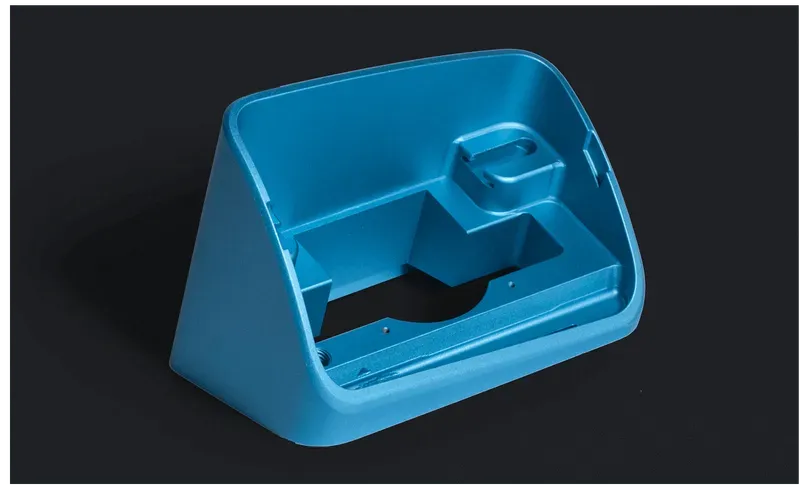
7050 is the zinc-bearing aerospace alloy engineered for thick sections: it delivers strength in the 7xxx class while explicitly trading a little of it for superior stress-corrosion resistance and fracture toughness, which is why heavy plate and die-forged bulkheads specify it where thinner-gauge work would name 7075. The T7451 temper — solution treated, stress relieved by stretching, overaged — is the shipping standard and the reason the alloy keeps its properties through thick, heavily machined cross-sections.
For machining, 7050 behaves like its 7xxx relatives: strong, abrasive on tooling at the margins, and happiest with rigid setups and flood coolant. The stress-relieved starting condition is the quiet advantage — plate arrives with low residual stress, so wide, deep pockets and thin webs machined from 7050-T7451 distort less than the same geometry cut from unstressed stock.
Specifications
| Property | Value | Condition |
|---|---|---|
| Tensile strength | 76 ksi (T7451) | — |
| Yield strength (0.2% offset) | 68 ksi (T7451) | — |
| Hardness | 140 HB (T7451) | — |
Values above are rendered from the collected model-evidence layer, each carrying the heat-treatment condition it was reported under; fields without collected evidence are stated as not established rather than estimated. Requirements outside the table are confirmed for the specific geometry and batch at quotation.
Applications & Selection Points
Thick-section aerospace structures
Bulkheads, wing spars, fuselage frames and landing-gear-adjacent fittings machined from heavy plate are the home ground of this alloy. Where a design needs 7xxx strength through a thick section, 7050 holds its strength and its stress-corrosion resistance where thin-section-oriented tempers would be a compromise. The aerospace supply chain is organized around exactly this use.
Why T7451 rather than T6
The overaged temper gives up peak strength in exchange for resistance to stress-corrosion cracking and exfoliation — the failure modes that matter most inside thick, stressed sections. For machined parts with deep material removal, the temper also ships stress-relieved, so the part you finish with is closer to the part you started with. Specifying peak-strength tempers on thick 7050 sections usually solves a number and creates a durability problem.
7050 versus 7075
7075 carries the peak-strength reputation, and for thin sections, fittings and high-stress machined parts it remains the default. 7050 answers the questions 7075 handles poorly: stress-corrosion behavior in thick sections, fracture toughness, and distortion over heavy machining. The alloys are not interchangeable on drawings, but the choice between them is well understood in aerospace practice and driven by section thickness and environment.
Corrosion management
The improved stress-corrosion behavior of 7050 is relative to other 7xxx tempers, not a marine qualification — bare 7xxx aluminum still needs protection in aggressive service. Aerospace practice pairs the alloy with anodizing, chemical film and paint systems per the drawing. State the service environment at quotation so finishing is part of the plan rather than an afterthought.
Machining-behavior notes for planning
Plan tooling and parameters as for other 7xxx plate: rigid workholding, sharp carbide, flood coolant and chip loads that manage heat. The alloy machines more slowly than 6xxx grades and rewards process discipline on deep pockets — roughing that balances stock removal, finishing passes that arrive at low residual stress, and stress-relieved plate as the starting condition. Machined distortion on aerospace bulkheads is a stock-condition problem before it is a fixturing problem.
Frequently Asked Questions
Is 7050 stronger than 7075?
Not at peak temper — 7075 holds the strength record between the two. 7050 is engineered for thick sections where the question is not peak strength but strength retained against stress-corrosion cracking and through heavy machining. A comparison on peak numbers alone picks the wrong alloy for plate work most of the time.
What does the T7451 designation tell me?
Solution heat treated, stress relieved by cold stretching, then overaged: strength slightly below the peak-strength temper, in exchange for stress-corrosion resistance and low residual stress in the plate. For machined aerospace parts in thick sections it is the standard shipping condition, and the drawing should name it.
Can 7050 be welded?
The 7xxx family welds poorly by design — zinc-bearing compositions lose strength and crack resistance in the weld zone. Riveted and bolted assembly dominates 7050 structures. If the part must be welded after machining, the alloy conversation should move to the 6xxx or 5xxx families before the drawing is released.
What should I send for a 7050 machining quote?
A STEP model, a 2D drawing with tolerances and finish, the temper named (T7451 is typical for plate), the stock form and starting thickness, quantity, and the finishing and inspection requirements. Aerospace and defense work usually carries documentation expectations — first-article inspection and material certification — that belong in the first conversation.
Ordering & Documentation
Documents
Send a STEP or IGES model with a 2D drawing carrying tolerances, finish and inspection callouts. Name the temper and the starting stock form — plate thickness and temper determine both properties and distortion behavior on heavy-machining parts.
Quotation
Pricing follows the model and drawing, the named alloy and temper, stock form, quantity, finishing and documentation. Aerospace-sourced parts quote with certification expectations included; state the required level at quotation rather than after.
Sample & Supply
First-article inspection is the norm on 7050 work, and prototype runs validate the roughing sequence and distortion behavior of the specific geometry before production. Material certification with traceability to the plate mill is available — agree scope at quotation.
Storage & Shipping
Machined 7050 ships with the finish the drawing defines — anodized, chem-filmed or painted. Store dry; bare 7xxx surfaces can show oxidation over long storage, which finishing is meant to prevent, so parts waiting for assembly keep best sealed and dry.