Aluminum Anodizing Services (Type II / Type III)
Aluminum anodizing to MIL-A-8625: Type II cosmetic coats and Type III hardcoat, thickness windows, dimensional growth rules, salt-spray and dielectric performance, alloy selection.
Last updated: 2026-10-29
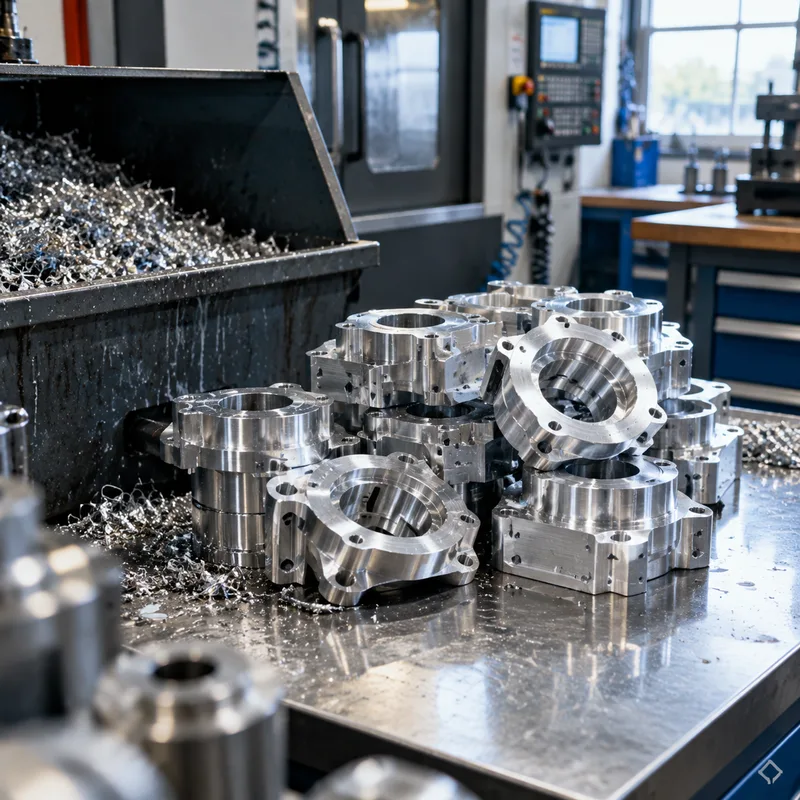
Anodizing is not a coating on the aluminum — it is converted aluminum: an oxide layer grown electrochemically from the surface itself, so it cannot peel or flake like paint. Type II (sulfuric) is the general-purpose cosmetic and corrosion coat; Type III (hard anodize) builds a thicker, far harder layer for wear and abrasion service. MIL-A-8625 governs both, and it belongs on the drawing.
The discipline that separates a good anodized part from a scrapped one is dimensional: the layer grows half inward and half outward, so a Type II coat adds growth per surface that a tight fit must anticipate, and a Type III coat doubles it. Alloy choice is the other lever — the same process that renders 6061-T6 uniformly takes color poorly on 7075 and fails on 2024.
Specifications
| Property | Value | Condition |
|---|---|---|
| Coating thickness | Type II 0.0002–0.001 in (5–25 µm); Type III 0.001–0.003 in (25–75 µm) | per-surface dimensional growth is half the total thickness — the number that drives pre-plate machining size |
| Dimensional growth | 50% inward / 50% outward; ~0.0005 in per surface on a 0.001 in Type II coat, ~0.001 in per surface on a 0.002 in Type III coat | the reason critical fits are designed to the lower end of tolerance on anodized parts |
| Hardness | Type II HV 200–300; Type III HV 400–600 | Vickers; reference points in the same table: 6061-T6 ~HV 107, tool steel ~HV 600–900 |
| Corrosion resistance | Type II 250–500 hr salt spray; Type III >2,000 hr salt spray | the outdoor/chemical-exposure discriminator between the two types |
| Dielectric strength | Type II 250–400 V/mil; Type III 500–800 V/mil | why anodized housings and heat sinks double as electrical isolation |
| Governing spec | MIL-A-8625 (Type II / Type III) | cite the MIL spec on the drawing; ISO 7599 decorative and ISO 10074 hard anodize are the international equivalents |
| Alloy compatibility | 6061-T6 excellent (full-spectrum color); 6063-T5 excellent; 5052-H32 good; 7075-T6 acceptable (yellowish tint); 2024-T351 poor (avoid); cast A380/356 poor–acceptable | copper and zinc alloying elements disrupt the oxide layer — the alloy decision belongs at design time, not after a failed cosmetic anodize |
| Pricing | Not established in the collected evidence — confirm at quotation. | |
| Masking materials | Not established in the collected evidence — confirm at quotation. | |
| Seal method detail | Not established in the collected evidence — confirm at quotation. | |
Values above are rendered from the collected model-evidence layer, each carrying the heat-treatment condition it was reported under; fields without collected evidence are stated as not established rather than estimated. Requirements outside the table are confirmed for the specific geometry and batch at quotation.
Applications & Selection Points
Type II: cosmetic and corrosion protection
The full color spectrum lives here — clear, black and dyed finishes on housings, panels and brackets, with salt-spray performance in the hundreds of hours. Specify type, thickness and seal on the drawing; color anodize on the wrong alloy is the classic rework order.
Type III: wear and hard service
Hardcoat carries bearing surfaces, sliding contacts, pistons and hydraulic components: several times the hardness of the base alloy, deep-dyed colors unavailable but wear life transformed, and salt-spray endurance past two thousand hours for outdoor and chemical exposure.
Electrical isolation and thermal parts
The oxide layer is an insulator with documented dielectric strength per mil of thickness, which anodized housings and heat sinks exploit for isolation — with masking where a grounding path must stay conductive. Say where conductivity must survive; masking is planned, not improvised.
Dimensional planning
Growth splits between intrusion and build-up, so threaded holes, press fits and sealing faces need pre-plate sizing or masking. Threads and deep corners take the coat unevenly — flag them and decide masking before the parts go to the tank.
Frequently Asked Questions
Which aluminum alloy should I anodize?
The compatibility ranking is real and worth designing around: 6061-T6 and 6063 take uniform coats and full-spectrum color; 5052 is good with a slightly darker clear; 7075 is acceptable with a yellowish tint that rules out bright color work; 2024 and high-silicon castings anodize poorly. If cosmetic color matters, the alloy decision is part of the finish decision.
How much does anodizing change my dimensions?
The coating grows half into the part and half outward, so plan roughly half the total coating thickness as growth per surface. Type II windows and Type III windows are published in the thickness table — design tight fits to the lower end so finished parts land at nominal, and mask what cannot grow.
What belongs on the drawing?
MIL-A-8625 with the type, the coating thickness or class, the color and the seal. Add masking callouts for grounding or precision-mating surfaces, and state the inspection expectation — salt-spray figures and hardness are spec-level properties the tank process is controlled against.
Ordering & Documentation
Documents
Drawing with the MIL-A-8625 type, thickness and color; masking map for conductive or tight-tolerance areas; alloy and temper stated. The masking map is what prevents the grounding-surprise after the tank.
Quotation
Anodizing prices per area or per batch with racking, and Type III runs longer cycles at a premium over Type II. Quantity, thickness class and masking count drive the number — send all three rather than a bare color name.
Process plan
Clean, etch, anodize, dye (Type II color work), then seal. Bath temperature and current density decide the type — that control is why the type callout is a process promise, not a wish.
Sample & Supply
First articles verify thickness, color and adhesion against the spec called out; dimensional reports on masked or pre-sized features close the loop with machining. Agree the acceptance measurements at quotation, not after delivery.
Request a quote for Aluminum Anodizing Services (Type II / Type III) →