Automotive Machining
Automotive CNC machining for powertrain, chassis and EV components: tolerances to ±0.0002 in, parts as fast as 1 day, automotive steels through titanium Grade 5, IATF 16949-aligned production quality.
Last updated: 2026-10-28
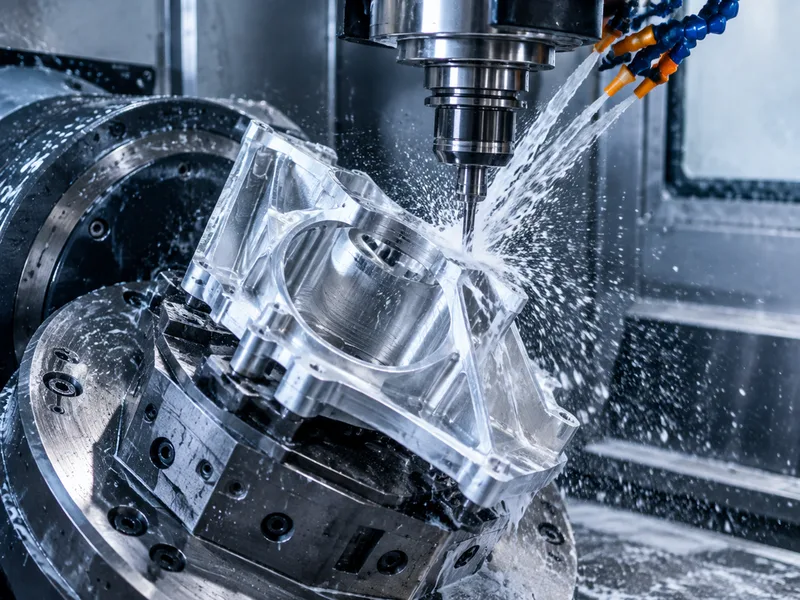
Automotive machining spans the whole vehicle program arc — prototype, engineering validation, pre-production and volume — under one process roof. CNC parts turn around as fast as 1 day, tolerances reach ±0.0002 in (±5 µm) on precision features, and the material set covers the automotive canon: 4140, 4340 and 4130 steels, 1045 and 1018 carbon steels, 6061-T6 and 6063 aluminum, titanium Grade 5, copper alloys and engineering plastics.
What separates automotive work from general machining is the quality framework: production runs align to IATF 16949:2016 under an ISO 9001:2015 system, with PPAP and APQP documentation, PFMEAs and control plans available where the program demands them. GD&T discipline matters early — tolerance stack-ups decide whether components assemble at line rate.
Specifications
| Specification | Automotive Machining |
|---|---|
| Tolerance | As tight as ±0.0002 in (±5 µm); ±0.0001 in (±2.5 µm) reported on precision work |
| Lead Time | CNC parts as fast as 1 day |
Materials
Surface Finishes
Automotive machining covers powertrain, chassis, EV and interior components across the prototype-to-production arc: quotes in minutes, CNC parts as fast as 1 day, tolerances as tight as ±0.0002 in. The material set spans automotive steels (4140, 4340, 4130, 1045, 1018), 6061-T6 and 6063 aluminum, 5052 sheet, titanium Grade 5, copper and engineering plastics. Automotive-grade quality frameworks — IATF 16949:2016 manufacturing with PPAP and APQP documentation — apply at production scale.
Values above are the collected catalog specification envelope for this product family. Tolerances and lead times at the demanding end of a range are confirmed for the specific geometry, material and batch at quotation.
Applications & Selection Points
Powertrain and chassis components
Housings, brackets, shafts, fittings and mounts in the steel and aluminum canon — 4140 and 4340 where strength governs, 1045 and 1018 where cost does, 6061-T6 where weight does. Steels machine to ±0.0002 in class tolerances on functional features.
EV and battery program parts
Electric drivetrain and battery components add copper (C101/C110) for busbars and thermal paths, plus 5052 aluminum sheet and extrusion profiles for enclosures. Weight, thermal and high-voltage isolation requirements shape the material choice as much as strength.
Prototype to production bridge
The same platform quotes a validation part in days and carries it into production: quick-turn CNC parts as fast as 1 day for early builds, then volume pricing as the design freezes. PPAP-level documentation enters when the customer program requires it.
Interior and consumer-facing parts
Visible components take the finishing set: anodizing, alodine, electroless nickel, passivation, powder coating, zinc plating and vapor polishing. Finishes are chosen for wear and environment first, appearance second — spec both explicitly.
Frequently Asked Questions
What tolerances can automotive CNC parts hold?
Precision automotive work quotes tolerances as tight as ±0.0002 in (±5 µm), with ±0.0001 in (±2.5 µm) reported at the top end. Apply tight callouts only where the assembly needs them — tolerance stack-up across a bill of materials is the automotive discipline, and every unnecessary tight band raises cost.
Which material for my automotive component?
4140/4340/4130 for strength and fatigue, 1045/1018 for general steel work at cost, 6061-T6/6063 for weight and corrosion, 5052 for formed sheet, titanium Grade 5 where strength-to-weight justifies it, copper alloys for current and heat. State the load, environment and weight budget and the alloy follows.
What does an automotive machining quote need?
The 3D model and drawing with GD&T callouts, alloy and finish specification, annual and per-lot volumes, and the program stage — prototype, validation or production. If PPAP, APQP or IATF 16949-aligned documentation is required, say so at quotation; it shapes the quality plan and the price.
Ordering & Documentation
Documents
3D model plus drawing with GD&T per the program standard, alloy and temper, finish callouts, and any customer-specific quality annex. Programs usually have their own cover-sheet formats — attach them.
Quotation
Pricing inputs: stage (prototype or production), annual and per-lot volume, material, tolerances, finishes, documentation level (PPAP elements, run-at-rate, control plans). Volume-priced quotes beat per-lot quotes for vehicle programs.
Sample & Supply
Validation parts prove form and fit before the production buy; PPAP submissions add dimensional layouts and process evidence. Ongoing supply runs on release schedules — agree safety stock and call-off cadence at launch.
Storage & Shipping
Automotive parts ship on returnable or program-standard dunnage with lot traceability intact. Bare steel parts need oil or wrapping for transit; anodized and plated surfaces need surface protection against abrasion.