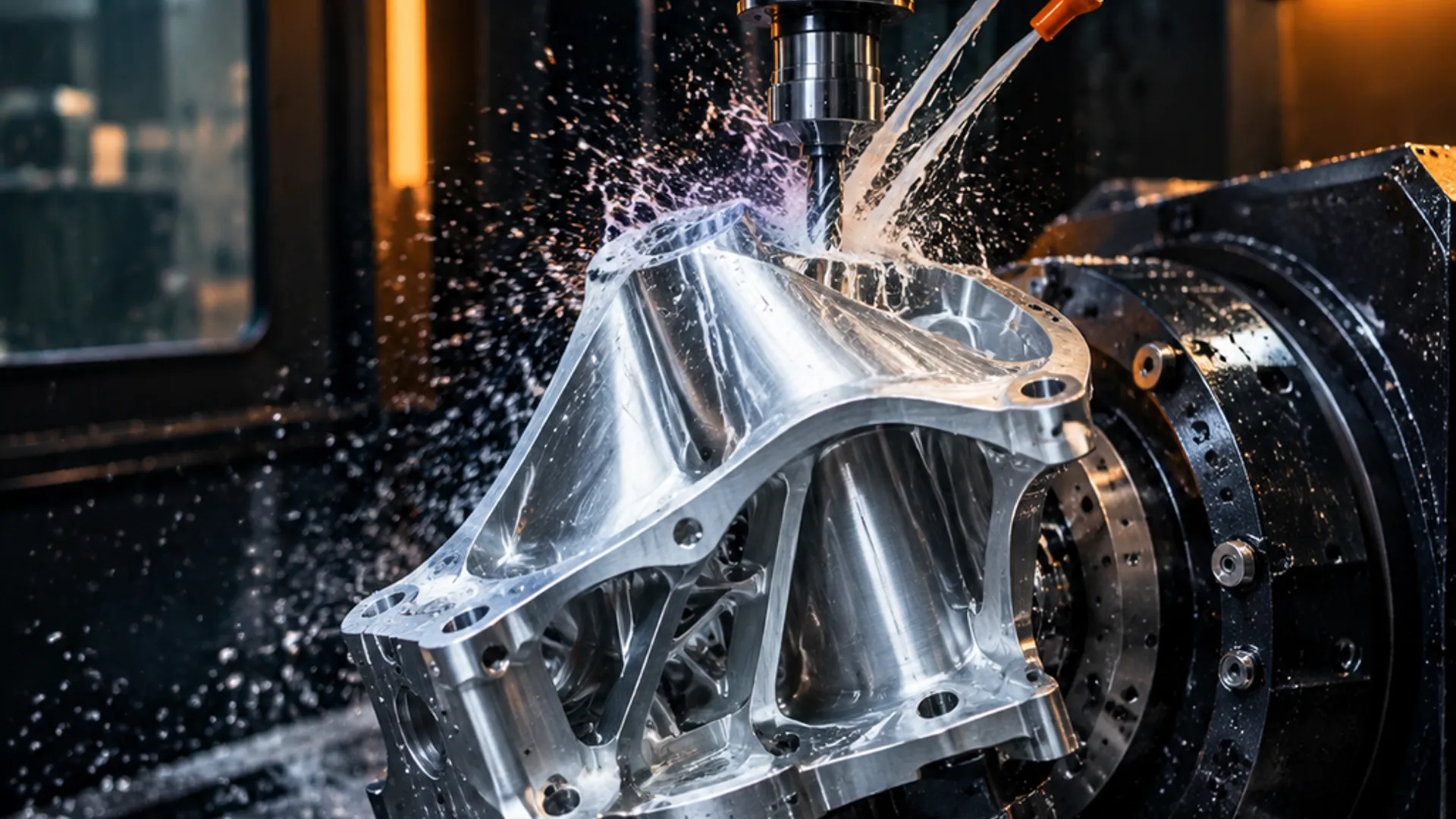
How to choose a die casting process
The two families here differ by the alloy they shoot into the mold. Aluminum die casting (A360, A380, ADC12 and related alloys) suits structural housings, brackets and heat-dissipating parts; zinc die casting (Zamak 2/3/5, ZA-8, ZA-27) fills fine detail in a hot-chamber machine, which is why it dominates small, precise hardware — locks, gears, connectors and decorative shells.
Screen the set with three questions. First, part size: zinc is capped by shot weight, so anything beyond small-to-medium hardware moves to aluminum. Second, precision: zinc as-cast tolerances are typically tighter than aluminum's, and both routes can hand critical features to a CNC finishing pass. Third, volume against tooling: a hardened steel die is a real investment, so die casting pays for itself across volume — a one-off or a short run usually belongs with CNC machining or 3D printing instead.
The table compares the families on as-cast tolerance practice, the size envelope the process accepts, and quoted lead times from quote to first article. Tooling-heavy lead times read long on purpose: a first program includes die manufacture, while repeat orders with approved tooling move far faster — the detail page for each family states the breakdown.
Product family
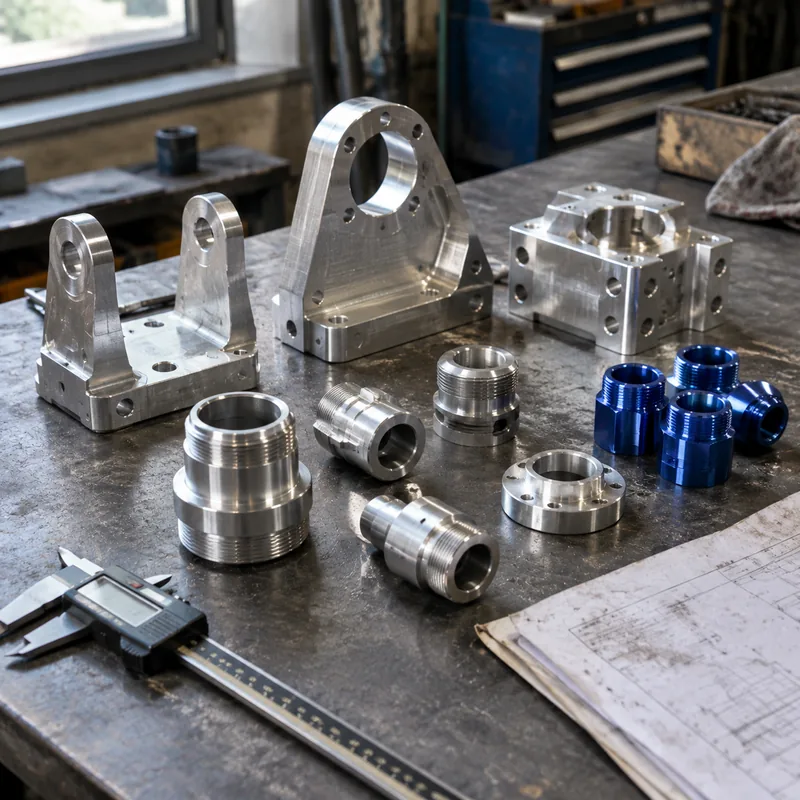
Die Casting
Custom aluminum and zinc die casting for complex metal parts with cost-effective tooling and rapid, scalable production. Offers tight tolerances, thin-wall capability, and a range of surface finishes.
Product family
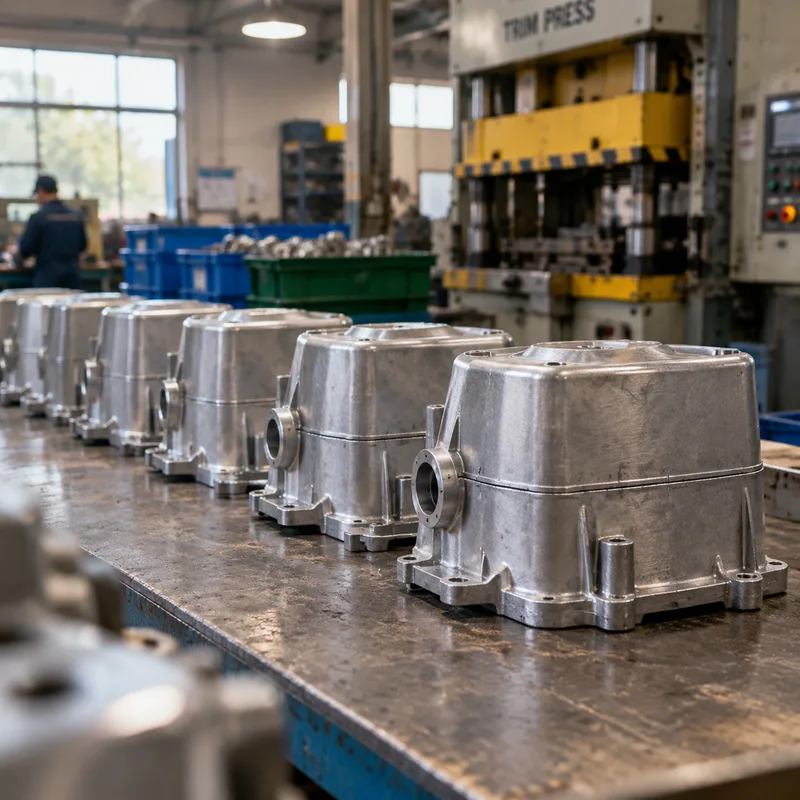
Zinc Die Casting
Zinc die casting produces small, dense, high-precision components in the Zamak and ZA alloy families, with as-cast surface roughness of Ra 0.8–1.6 µm straight from the mold. General tolerances of ±0.05–0.10 mm are typical depending on geometry and die configuration; recommended wall thickness is 0.6–3.0 mm for Zamak 3/5 and 1.0–4.0 mm for ZA-8, with draft angles of at least 0.5° external and 1° internal. Most machines cap shot weight at 500–750 g, so large heavy parts belong to alternative casting routes — zinc earns its keep on small, intricate, high-volume components where tool life reaches 500,000 to over 1,000,000 shots.
Process comparison
Values are reproduced verbatim from each family's catalog specification; an em dash means the family does not carry that field.
| Family | Tolerance | Size envelope | Typical lead time |
|---|---|---|---|
| Die Casting | as low as +/- 0.003 in; around 0.004 in (0.1 mm) typical for small parts | Up to 2500 x 3500 mm, with single-block weights of up to 20 tons | T1 samples as fast as 10 days; sample lead times 10-15 days |
| Zinc Die Casting | ±0.05–0.10 mm typical (geometry-dependent) | Shot weight capped at 500–750 g on most machines; wall 0.6–3.0 mm (Zamak 3/5), 1.0–4.0 mm (ZA-8) | A new die casting program typically takes 14 to 24 weeks from quote to first delivery; repeat orders with approved tooling 4 to 10 weeks; full production molds require 25-35 days of tooling before first article inspection (FAI) |
Where to go next
Cast parts frequently need machined features, sheet-metal assemblies around them, or a volume too small to amortize a die — the related categories below cover those hand-offs.