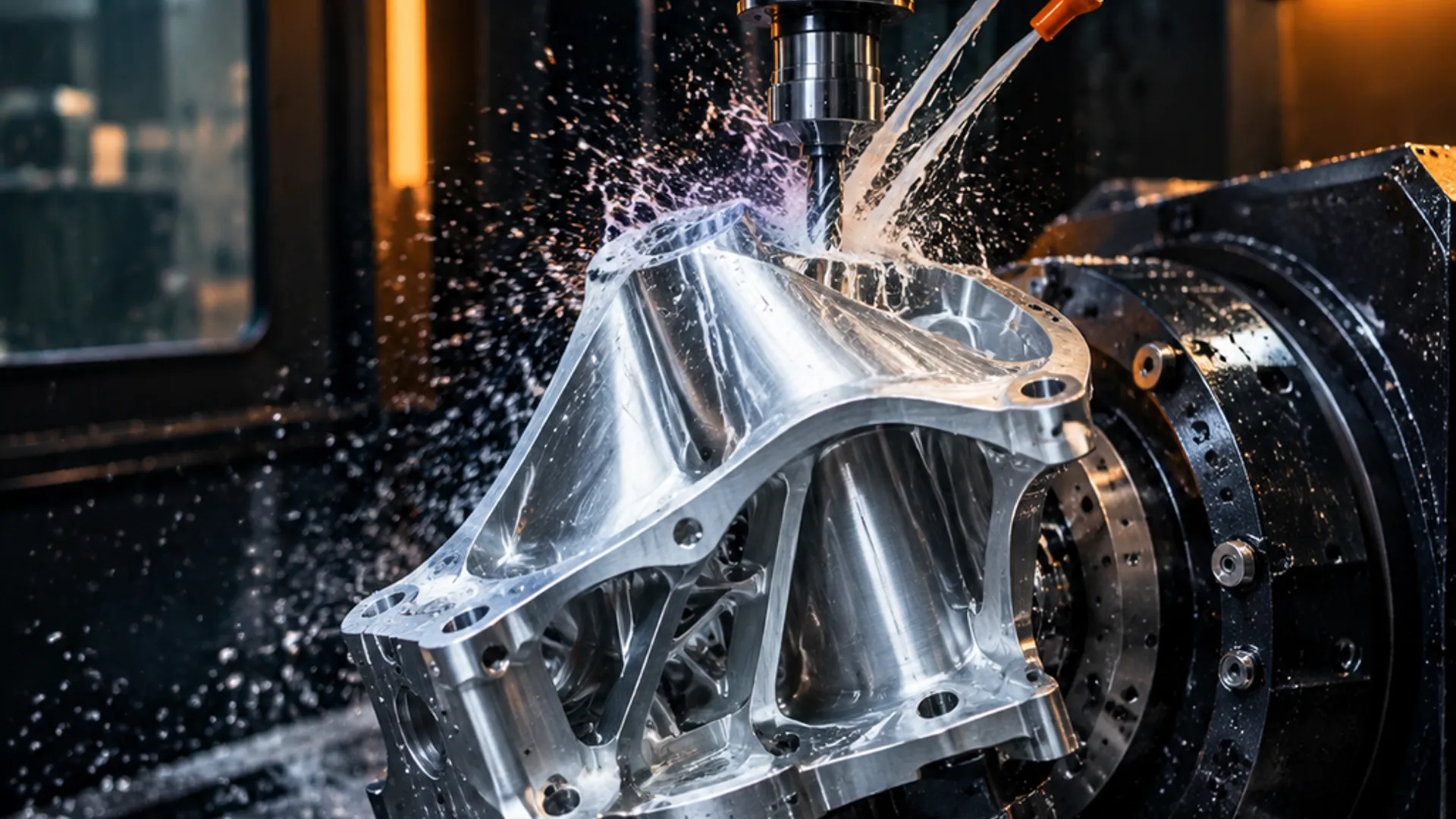
How to choose a CNC machining process
The families below cover the subtractive processes in this catalog: milling, turning and 5-axis machining remove material with cutting tools, while EDM erodes electrically conductive material with sparks — a common route for sharp internal corners, thin walls and hardened alloys that cutters struggle with.
Three questions sort the set quickly. First, geometry: prismatic parts with flat faces and pockets belong with milling; rotationally symmetric shafts, bushings and fittings belong with turning; parts needing compound-angle features in one setup belong with 5-axis machining. Second, feature access: when a profile or cavity cannot be reached by a rotating tool, wire or sinker EDM takes over. Third, material state: hardened steel and carbide are natural EDM work, while aluminum and plastics machine fastest with conventional cutters.
The table compares each family on the three dimensions buyers screen first — achievable tolerance, the size envelope a single setup accepts, and quoted lead time. Read them as capability bands, not promises for a specific part: envelope and tolerance interact with geometry and material, and the detail page for each family states the conditions. For material-specific behavior, start from the aluminum, brass, stainless or plastic machining pages and follow their links to the grade-level pages.
Product family
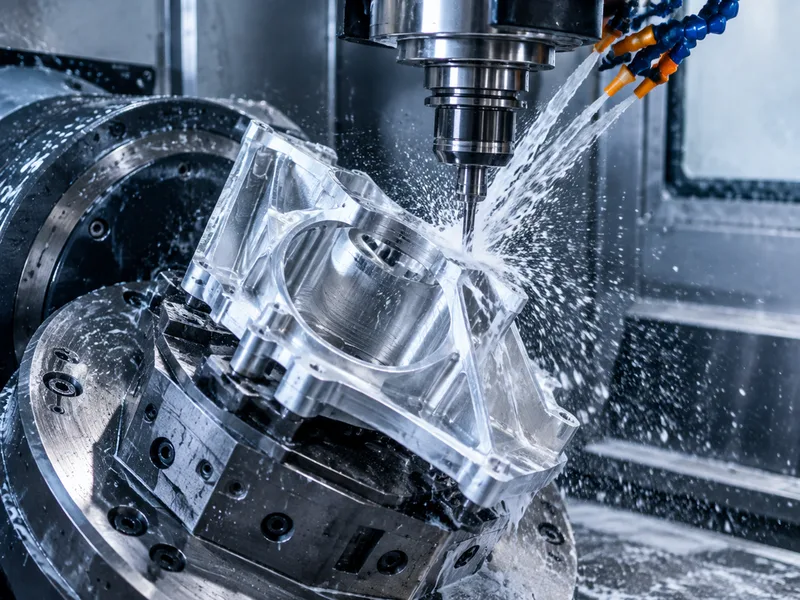
CNC Machining Service
High-volume CNC machined prototypes and production parts in days, with tolerances down to sub +/- 0.001" and a wide range of metals and plastics.
Product family
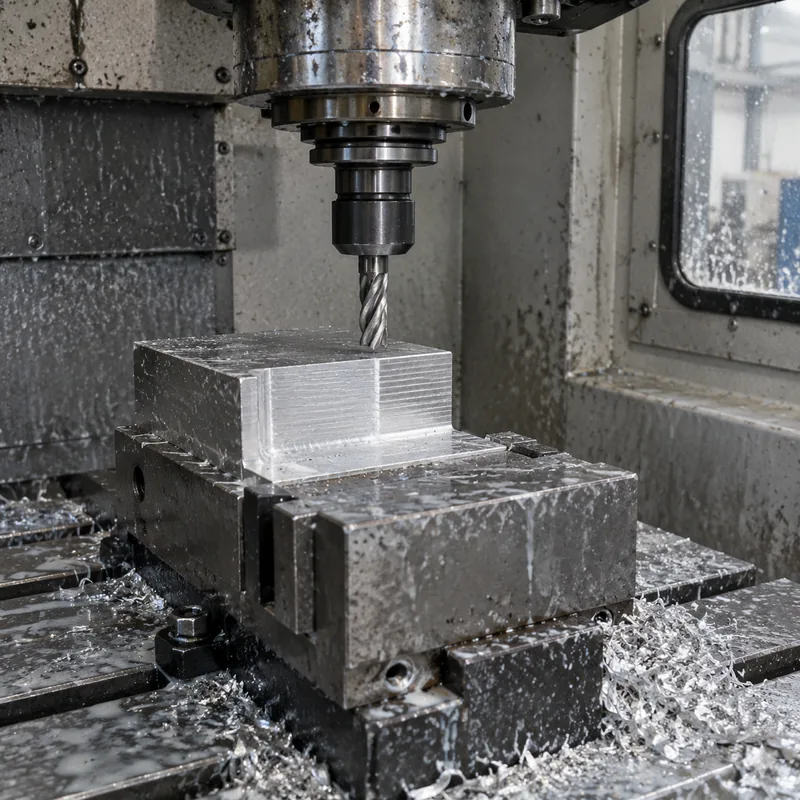
CNC Milling
CNC milling is a precision machining technique that uses rotating cutting tools to shape workpieces into finished products, accommodating a wide range of materials such as metals, polymers, wood, and glass. Advanced 5-axis systems allow intricate geometries to be produced without multiple machine setups.
Product family
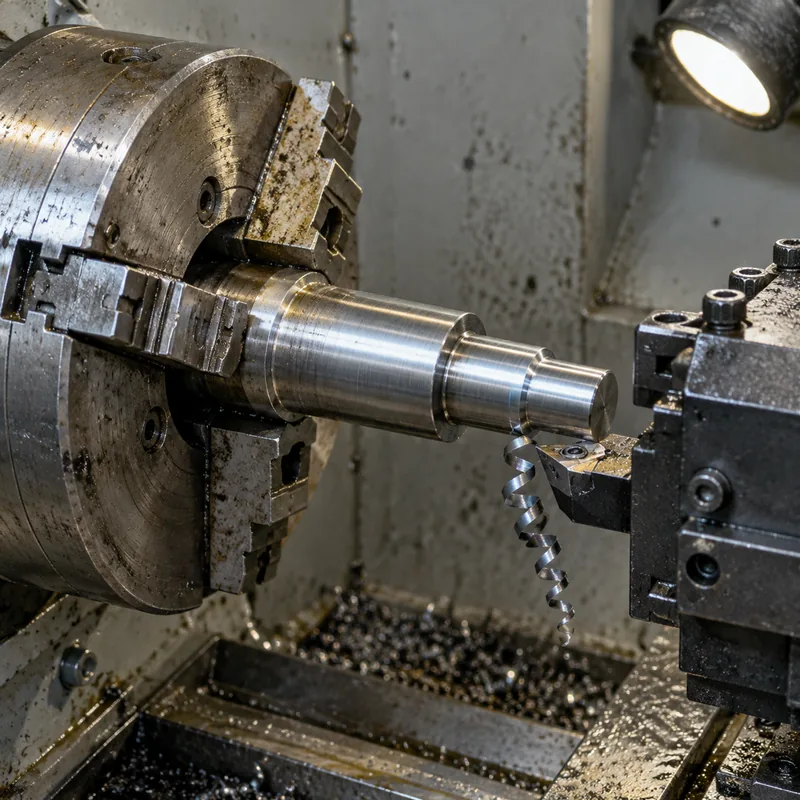
CNC Turning
CNC turning is a machining process where the workpiece rotates while stationary cutting tools shape it, ideal for cylindrical parts. It achieves tight tolerances and excellent surface finishes, with capabilities ranging from basic 2-axis lathes to advanced 5-axis mill-turn centers.
Product family
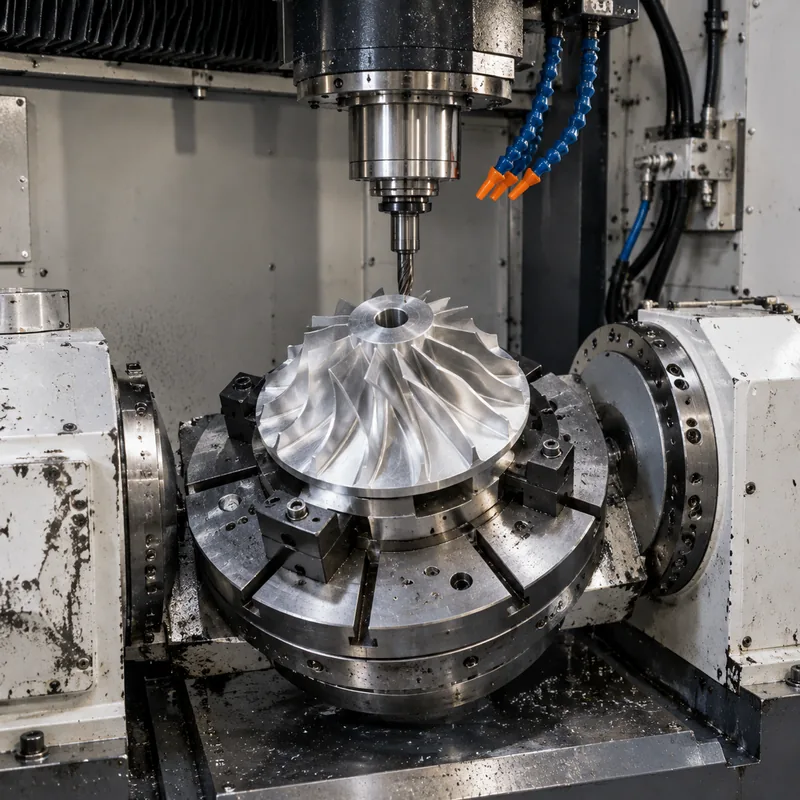
5-Axis CNC Machining
5-axis CNC machining produces high-precision prototypes and production parts with tight tolerances and complex geometries. Services support metals and plastics with fast lead times and a range of finishing options.
Product family
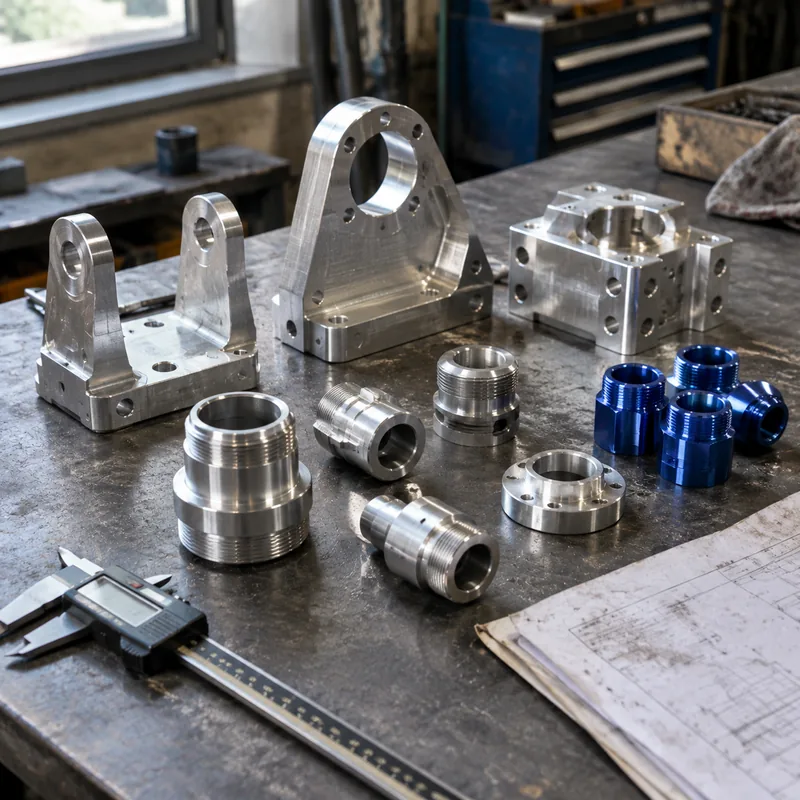
Aluminum CNC Machining
CNC machining service for aluminum alloys, offering milling and turning with tight tolerances and a range of surface finishes. Aluminum machines three to five times faster than steel, making it cost-effective for prototypes through production.
Product family
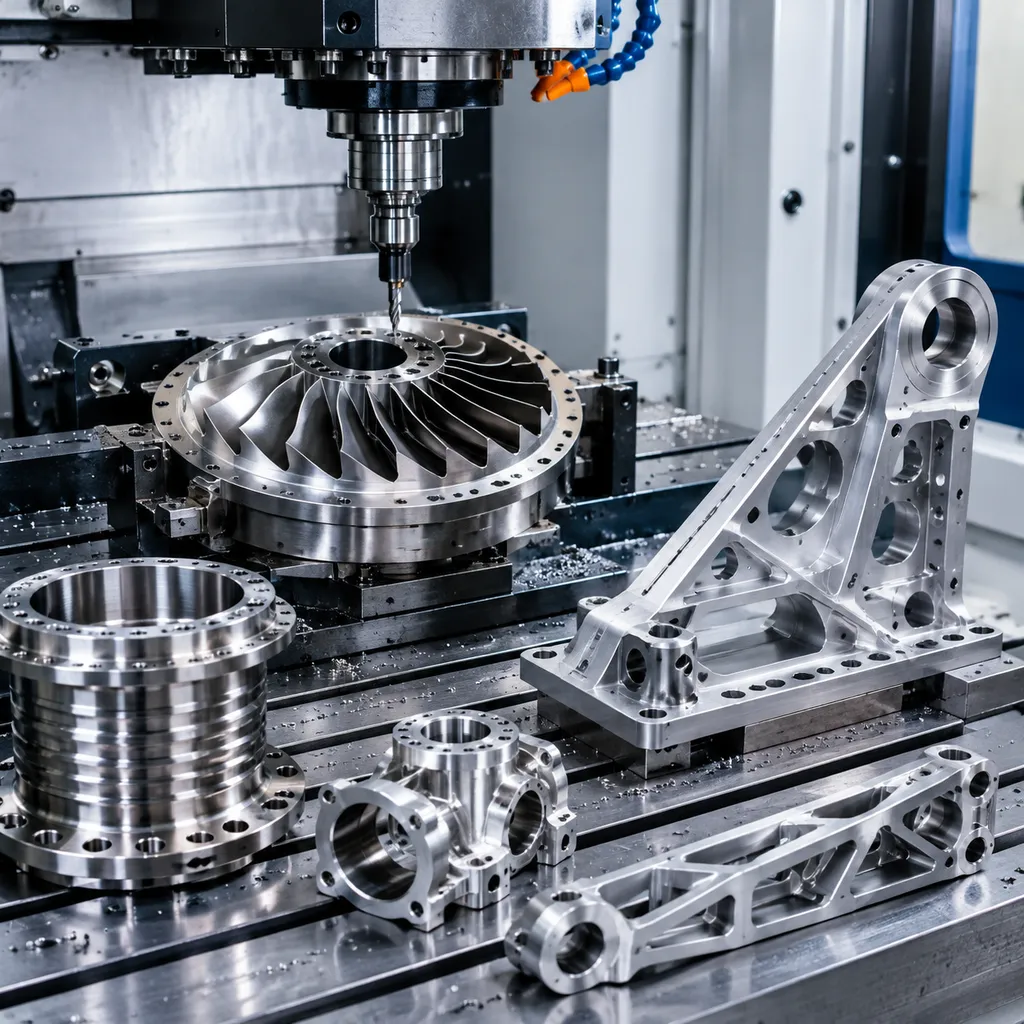
Aerospace CNC Machining
CNC machining service for aerospace and defense components using simultaneous 5-axis milling and turning centers to produce complex geometries such as turbine blades, impellers, and structural parts. Holds tight tolerances with superior surface finish on compound curves and undercuts.
Product family
EDM Machining
Electrical Discharge Machining uses electrical sparks to erode conductive material in a dielectric fluid, enabling precise machining of complex shapes and hard materials. It covers both conventional/sinker EDM and wire EDM processes.
Product family
Wire EDM
Wire electrical discharge machining service that uses a continuously fed wire electrode to cut conductive materials, capable of tight tolerances, fine surface finishes, and complex geometries. Suitable for hard conductive materials such as carbides and graphite.
Product family
Sinker EDM
Sinker (ram) EDM burns a custom-shaped electrode into conductive workpieces to produce blind cavities, mold details and complex 3D forms that through-cutting wire EDM cannot reach. No cutting forces act on the part, so deep cavities and thin features hold geometry in hardened steel, tungsten and carbide. Catalog tolerance evidence runs from ±0.005–0.01 mm in stable conditions down to ±0.0001 in (0.00254 mm); finishing passes reach Ra 0.2–0.8 µm on the characteristic matte EDM texture.
Product family
Small Batch CNC Machining
Small batch CNC machining covers prototype-to-pilot runs of machined parts without production tooling. Compatible processes span 3-, 4- and 5-axis CNC machining, CNC turning, CNC drilling, sinker and wire EDM, and surface grinding, so the route follows the part rather than forcing it onto one machine. As-machined surface roughness ranges Ra 0.2–3.2 µin depending on parameters, with powder coating available as a post-process. Material coverage runs from mild steel (0.05–0.20% carbon, the easiest steel to machine) to high-temperature thermoplastics such as PEEK, stable to 250 °C.
Product family
CNC Drilling
CNC drilling produces round holes in metal, plastic and composite workpieces under program control, holding as-drilled tolerances as tight as ±0.005 in (±0.127 mm) consistently across a hole population. Where the drawing calls a tighter fit, the hole is finished downstream: reaming reaches ±0.01–0.05 mm (H7/H8 common) at Ra ≤1.6–0.8 µm, and boring reaches ±0.005–0.02 mm at Ra ≤0.8 µm for critical bores. Drilled surfaces measure Ra 3.2–6.3 µm; peck and chip-breaking cycles (G73) carry hole depths beyond three times the drill diameter.
Product family
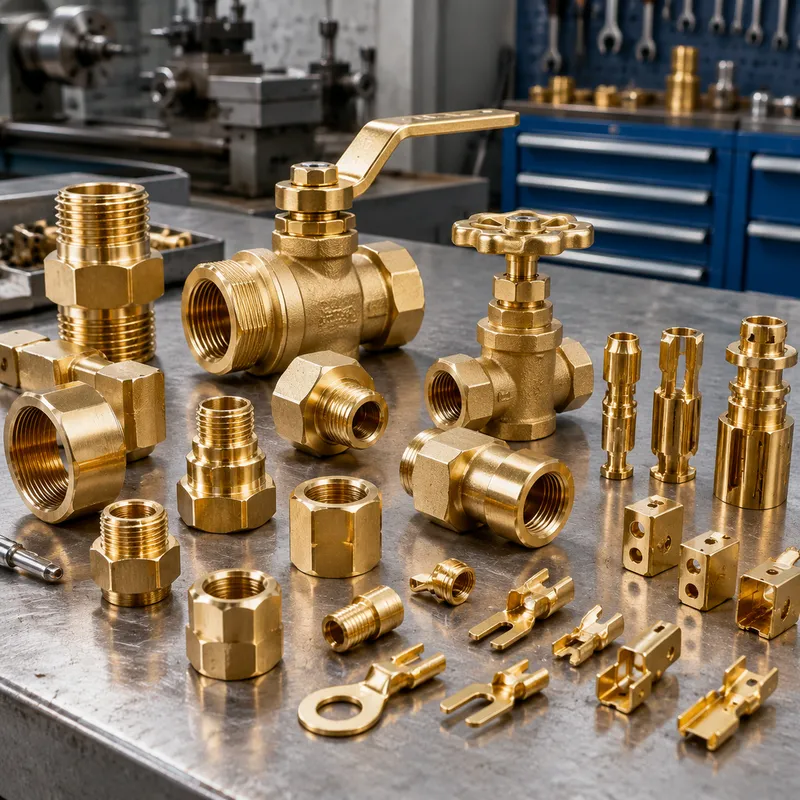
Brass CNC Machining
Brass machines faster than almost any metal alloy: free-cutting C360 (about 60% copper, over 30% zinc, under 3% lead) breaks chips cleanly and cuts with low tool force, while the higher-ductility C260 cartridge brass suits cold-formed features. Machined tolerance capability runs down to ±0.005 in (0.127 mm). Parts leave the machine functional as-machined; where appearance or corrosion resistance matters, polishing/buffing, nickel or chrome electroplating and honing for bearing seats are the standard finishing routes — plating a few microns thick must be budgeted into fit tolerances.
Product family
High Volume CNC Machining
High volume CNC machining covers production runs from 1,000 into the hundreds of thousands of parts, on dedicated or semi-dedicated equipment: horizontal machining centers, multi-spindle and Swiss-type lathes with bar feeders, and pallet-loaded 5-axis cells running lights-out. Well-controlled processes hold ±0.0005 in (±12.7 µm) across full runs, with critical features at ±0.0001 in (±2.5 µm). Material choice is driven by machinability at scale: 6061-T6 dominates milling, free-machining C360 brass and 303 stainless cut cycle time in turning.
Product family
Phenolic Machining
Phenolic machining covers the thermoset laminate family — paper, canvas and linen-reinforced phenolics, nylon-reinforced N-1, glass-reinforced G-3, silicone-resin G-7 and the glass-epoxy G-10/G-11 (Garolite) grades. The material machines dry without lubricants, stays dimensionally stable under heat and humidity, and holds insulative and dielectric properties that make it the classic choice for terminal boards, PCB laminates, gears, cams and high-wear insulative components. G-7 grades carry service to 428 °F (220 °C); fine-weave linen grades achieve close tolerances, while stronger glass-reinforced grades need carbide or diamond-tipped tooling at high spindle speed.
Product family
High Speed Machining
High speed machining pairs fast, light-cut toolpaths with tightly scoped design rules: minimum hole diameter 0.5 mm, minimum slot width 0.75 mm (1.25 mm and above unlocks deeper, faster cutting, to a 50 mm slot depth), and threads from M1.6 to M12 at a typical depth of Ø × 2.5. Stocked engineering plastics — ABS, acetal, nylon, PEEK, polycarbonate — machine without special ordering, and parts leave the machine deburred with optional bead-blast matte finishing, anodizing or laser engraving.
Product family
Automotive Machining
Automotive machining covers powertrain, chassis, EV and interior components across the prototype-to-production arc: quotes in minutes, CNC parts as fast as 1 day, tolerances as tight as ±0.0002 in. The material set spans automotive steels (4140, 4340, 4130, 1045, 1018), 6061-T6 and 6063 aluminum, 5052 sheet, titanium Grade 5, copper and engineering plastics. Automotive-grade quality frameworks — IATF 16949:2016 manufacturing with PPAP and APQP documentation — apply at production scale.
Product family
Robotics Machining
Robotics machining covers the joints, frames and motion interfaces of robot systems, where tolerance discipline follows function: precision interfaces like bearing seats and rail mounts run in the ±0.01–0.05 mm class, 5-axis work reaches ±0.0001 in (±2.5 µm) at the top end, and non-functional geometry takes general tolerances. 6061-T6 aluminum is the structural default, 7075-T6 the stiffness-to-weight upgrade, steel the high-wear answer — with quick-turn parts as fast as 2 days keeping robot programs iterating.
Product family
Electronics Machining
Electronics machining covers the precision-machined hardware around the board — aluminum housings, front panels, connector housings, shielding covers, thermal blocks, heat sinks and small brackets — quoted around ±0.001–0.002 in (±0.025–0.05 mm) for many features. Material follows function (aluminum for weight and machinability, copper for conduction, brass for conductive connector parts, plastics for isolation), and finishing-aware tolerancing matters because anodizing changes part dimensions at holes, slots, threads and sealing faces.
Product family
Heat Sink Machining
Heat sink machining produces the thermal hardware of electronics: pin fin heatsinks, liquid cold plates, heat spreaders, fan shrouds, vapor chamber bases and TEC mount plates in aluminum 6063 and copper C110. Interface flatness to ±0.001 in is the governing spec — flat thermal contact surfaces, with case-study contact faces at Ra 16 µin. Prototype runs quote market-typical at 5–10 business days, production 10–15.
Process comparison
Values are reproduced verbatim from each family's catalog specification; an em dash means the family does not carry that field.
| Family | Tolerance | Size envelope | Typical lead time |
|---|---|---|---|
| CNC Machining Service | Metals +/- 0.005" (+/- 0.127 mm) per ISO 2768; plastics and composites +/- 0.010"; sub +/- 0.001" precision tolerances per drawing | Milled parts up to 80” x 48” x 24” (2,032 x 1,219 x 610 mm); Lathe parts up to 62” (1,575 mm) length and 32” (813 mm) diameter | 3-7 business days |
| CNC Milling | ±0.02mm; ±0.05mm; +/- 0.005" (+/- 0.127 mm); +/- 0.010"; sub +/- 0.001" | 80” x 48” x 24” (2,032 x 1,219 x 610 mm); 270*260*230mm; 800*600*400mm | 3-7 business days; About 5 business days; About 6 business days |
| CNC Turning | Precision down to ±0.0008" (±0.02 mm) for critical features. | Lathe parts up to 62” (1,575 mm) length and 32” (813 mm) diameter | 3-7 business days standard |
| 5-Axis CNC Machining | ±0.05 mm | 1100*600*500 mm | 3 business days |
| Aluminum CNC Machining | Down to ±0.05 mm | 22" x 14" x 3.75" (559 x 356 x 95.25 mm) aluminum 6061/7075; 24" x 16" x 4" (609 x 406.4 x 101.6 mm) block; 1100 x 600 x 500 mm service envelope | As fast as 3 days (aluminum 6061/7075); 2-5 days |
| Aerospace CNC Machining | diameter tolerances ±0.025 mm; length ±0.050 mm typical. | — | 5–10 business days for prototype defense components. |
| EDM Machining | ±0.05mm | 400*300*300mm | Conventional and wire EDM service build time is commonly quoted at 3 days on online service listings |
| Wire EDM | ±0.0001–0.0002 in (0.00254–0.0051 mm) linear precision; service tolerance band down to ±0.05 mm | 400*300*300mm | Wire and conventional EDM service build time is commonly quoted at 3 days on online service listings |
| Sinker EDM | ±0.005–0.01 mm stable conditions; down to ±0.0001 in (0.00254 mm) | — | EDM parts ship in 5–10 days standard; one insert for first article typically 5–10 days including electrode manufacture; multi-cavity programs 12–25 days |
| Small Batch CNC Machining | Overall cut tolerance ±.005 in with overall positional tolerance ±.005 in, so a milled feature size can vary by up to .010 in; specialized custom tolerancing for milled parts is not offered | — | 3 to 10 days (CNC low-volume comparison, no tooling) |
| CNC Drilling | As-drilled ±0.005 in (±0.127 mm); reamed ±0.01–0.05 mm (H7/H8); bored ±0.005–0.02 mm | Up to 1500 × 800 × 600 mm; minimum part size 1 × 1 × 0.5 mm | CNC machining baseline for prototype runs of 1-5 parts: simple parts 3-5 days standard (1-3 days expedited); complex parts 7-10 days standard (3-5 days expedited) |
| Brass CNC Machining | Down to ±0.005 in (0.127 mm) | — | Typical ranges: simple prototype parts 3–7 business days; complex prototype parts 5–15 business days; low-volume production 1–4 weeks |
| High Volume CNC Machining | ±0.0005 in (±12.7 µm) routine across full runs; ±0.0001 in (±2.5 µm) on critical features | — | Standard lead times scale with order volume: 50-500 parts (mid-volume) typically 21-28 days, expedited 14-21 days; 500+ parts (production) 28-42 days, expedited 21-28 days |
| Phenolic Machining | Close tolerances achievable with fine-weave grades (linen phenolic); collected source publishes no numeric band | — | Quick-turn prototypes and production parts in days (market-typical) |
| High Speed Machining | Distance dimensions for features of size and location held to ±0.005 in; precision tolerances down to sub ±0.001 in per drawing specifications and GD&T callouts | — | Standard custom parts typically 2 to 4 weeks; complex geometries or secondary operations such as heat treatment can extend production to 6 weeks or more; rapid prototyping runs often complete in 3 to 7 business days |
| Automotive Machining | As tight as ±0.0002 in (±5 µm); ±0.0001 in (±2.5 µm) reported on precision work | — | CNC parts as fast as 1 day |
| Robotics Machining | ±0.01–0.05 mm functional band at precision interfaces; top end ±0.0001 in (±2.5 µm) reported on 5-axis work | — | As fast as 2 days (industry quick-turn benchmark); quick-turn supply quoted from 3 days |
| Electronics Machining | ±0.001–0.002 in (±0.025–0.05 mm) commonly quoted for many features | — | Custom machined electronic enclosures can be delivered in as fast as 5 days; prototype turnaround is typically 3–5 days |
| Heat Sink Machining | Down to ±0.001 in (flat thermal interface surfaces) | — | 5–10 business days for prototypes, 10–15 for production (market-typical); documented case-study run shipped in 7 business days |
Where to go next
Once a process family fits, the grade-level material pages and the adjacent casting route narrow the choice further — or go straight to an RFQ with your drawing.