Small Batch CNC Machining
Small batch CNC machining for prototype-to-pilot runs: 3/4/5-axis milling and turning, EDM and grinding compatible, as-machined Ra 0.2–3.2 µin, mild steel to PEEK.
Last updated: 2026-10-28
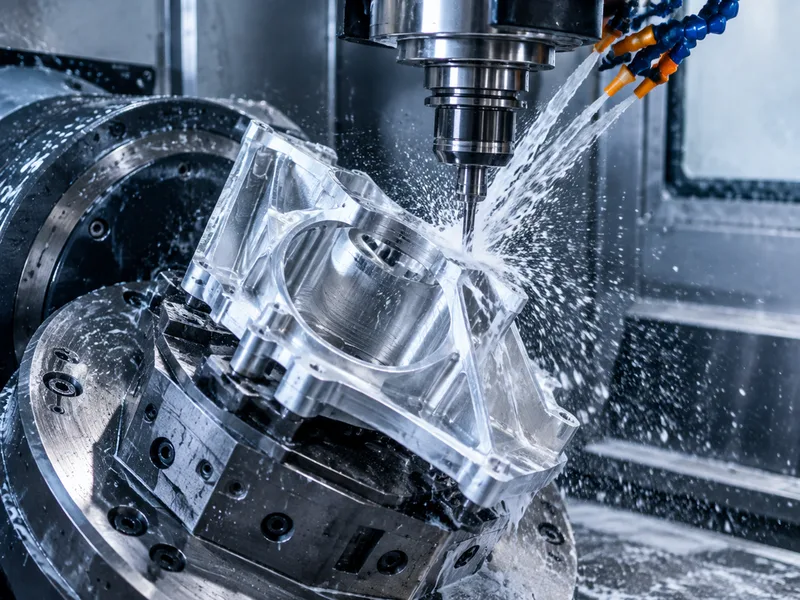
Small batch CNC machining covers the space between one-off prototypes and full production runs — tens to hundreds of parts where production tooling never amortizes. Because every compatible process is tooling-free, the route follows the part: 3-, 4- and 5-axis CNC machining, CNC turning, drilling, sinker and wire EDM, and surface grinding are all in scope within a single small-batch program.
The finish ceiling is the as-machined surface, Ra 0.2–3.2 µin depending on parameters, with powder coating available as a post-process. Material coverage runs from mild steel (0.05–0.20% carbon — the easiest steel to machine) to high-temperature thermoplastics like PEEK, dimensionally stable to 250 °C.
Quoting hygiene matters more as batches shrink: 2D drawings and 3D models with tolerance and finish callouts are commonplace for small batch parts, and over-tolerancing is the classic false economy — extremely small tolerances where they are not required make parts take longer and cost more.
Specifications
| Specification | Small Batch CNC Machining |
|---|---|
| Tolerance | Overall cut tolerance ±.005 in with overall positional tolerance ±.005 in, so a milled feature size can vary by up to .010 in; specialized custom tolerancing for milled parts is not offered |
| Axes | 3-, 4- and 5-axis CNC machining; CNC turning, drilling, sinker/wire EDM and surface grinding compatible |
| Lead Time | 3 to 10 days (CNC low-volume comparison, no tooling) |
Materials
Surface Finishes
Small batch CNC machining covers prototype-to-pilot runs of machined parts without production tooling. Compatible processes span 3-, 4- and 5-axis CNC machining, CNC turning, CNC drilling, sinker and wire EDM, and surface grinding, so the route follows the part rather than forcing it onto one machine. As-machined surface roughness ranges Ra 0.2–3.2 µin depending on parameters, with powder coating available as a post-process. Material coverage runs from mild steel (0.05–0.20% carbon, the easiest steel to machine) to high-temperature thermoplastics such as PEEK, stable to 250 °C.
Values above are the collected catalog specification envelope for this product family. Tolerances and lead times at the demanding end of a range are confirmed for the specific geometry, material and batch at quotation.
Applications & Selection Points
Pilot runs and design-validation builds
The build between the first article and the production commitment: test fixtures, pilot housings, field-trial units. The same CAM programs scale from one part to hundreds, and design changes cost a program edit — not a tooling revision.
Mixed-process parts
A part that mills, turns and then needs a wire-cut feature routes through several machines inside one batch. That flexibility is the point of small-batch machining: geometry decides the process, not the other way round.
Fixture and MRO parts
Workholding, replacement components and machine upgrades live almost entirely in small-batch territory. Lead time and repeatability matter more than unit price; the same program re-runs years later for spares.
Where small batch stops making sense
Below a handful of parts, one-off rapid prototyping is cheaper; above the low hundreds, batch manufacturing routes (casting, stamping, molding) amortize. State the honest annual quantity — it picks the right process and often saves money both directions.
Frequently Asked Questions
What batch size counts as small batch?
The working band is tens to low hundreds of parts — enough that one-offs are wasteful, not enough to amortize hard tooling. The processes involved (milling, turning, drilling, EDM, grinding) are all tooling-free, so batch size changes price per part but never requires new tooling investment.
Which surface finish will my small-batch parts have?
The default is as-machined: Ra 0.2–3.2 µin depending on tooling and parameters, with visible tool marks on non-critical faces. Powder coating is available when parts need color or corrosion protection. Call out cosmetic surfaces explicitly so they are machined with finishing passes rather than roughing.
What does a small-batch quote need?
A 3D model plus a drawing with tolerances and finish callouts, material, batch size and delivery cadence (one lot or staged releases). For repeat orders, say whether the parts are identical or revision-tracked — program reuse prices repeat batches lower.
Ordering & Documentation
Documents
A 3D model (STEP) and a 2D drawing with tolerance and finish callouts — drawings matter more, not less, in small batches because inspection sampling decisions follow them. Note any batch-critical features that must match across the lot.
Quotation
Pricing inputs: batch size, material, tolerance and finish spec, setup count (a part crossing milling and turning carries two setups), and delivery schedule. Staged delivery from one setup run usually prices better than repeated small lots.
Sample & Supply
A first-article inspection on the first pieces of the lot anchors the batch — useful when the parts feed an assembly line. Programs and fixtures stay on file for re-orders.
Storage & Shipping
Batch parts ship in counted trays or tubes, not bulk. State packaging if parts feed directly into your assembly — small-batch quantities are small enough to package per-station at nominal cost.