High Speed Machining
High speed CNC machining with tightly scoped design rules: 0.5 mm minimum holes, 0.75 mm minimum slot width, threads M1.6–M12 at Ø × 2.5 depth, stocked plastics from ABS to PEEK, deburred or bead-blast finishes.
Last updated: 2026-10-28
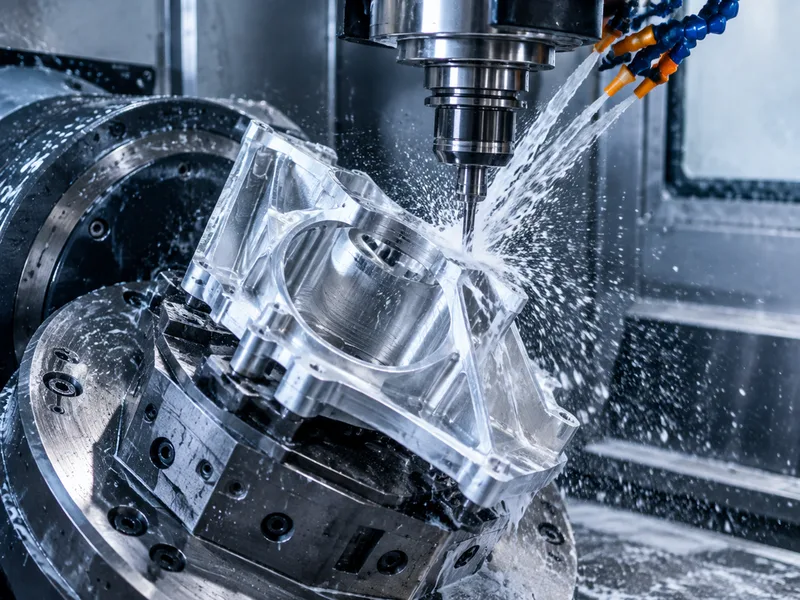
High speed machining pairs fast, light-cut toolpaths with a design envelope tuned for throughput: holes down to 0.5 mm diameter, slots from 0.75 mm wide — where 1.25 mm and above unlocks deeper, faster cutting to a 50 mm slot depth — and threads from M1.6 to M12 at a typical depth of Ø × 2.5. Features that need side access cost more than top-and-bottom access, so the design review happens before the spindle spins.
The material set is stocked, not ordered: ABS, acetal (Delrin), nylon, PEEK and polycarbonate machine without procurement delay. Parts leave the machine deburred as standard, with a fine matte bead-blasted finish available across the whole part, plus optional anodizing and laser engraving.
Specifications
| Specification | High Speed Machining |
|---|---|
| Tolerance | Distance dimensions for features of size and location held to ±0.005 in; precision tolerances down to sub ±0.001 in per drawing specifications and GD&T callouts |
| Lead Time | Standard custom parts typically 2 to 4 weeks; complex geometries or secondary operations such as heat treatment can extend production to 6 weeks or more; rapid prototyping runs often complete in 3 to 7 business days |
Materials
Surface Finishes
High speed machining pairs fast, light-cut toolpaths with tightly scoped design rules: minimum hole diameter 0.5 mm, minimum slot width 0.75 mm (1.25 mm and above unlocks deeper, faster cutting, to a 50 mm slot depth), and threads from M1.6 to M12 at a typical depth of Ø × 2.5. Stocked engineering plastics — ABS, acetal, nylon, PEEK, polycarbonate — machine without special ordering, and parts leave the machine deburred with optional bead-blast matte finishing, anodizing or laser engraving.
Values above are the collected catalog specification envelope for this product family. Tolerances and lead times at the demanding end of a range are confirmed for the specific geometry, material and batch at quotation.
Applications & Selection Points
Small, precise, quick-turn features
Dense hole patterns, fine slots and M1.6–M12 threads at Ø × 2.5 depth are the natural territory — electronics housings, sensor fixtures, small mechanical assemblies where feature density, not envelope, is the challenge.
Stocked-plastic components
ABS for housings and fixtures, acetal for sliding and dimensional stability, nylon for wear, PEEK where temperature and chemical resistance climb, polycarbonate where transparency helps. Nothing waits on a material order.
Design-for-manufacture reviews
The speed premium is won at design time: hole and slot minimums respected, thread depths at Ø × 2.5, radii matched to tool access. Features outside the fast envelope still build — they just route slower, so flag them early and price both ways.
When high speed is the wrong lane
Very large envelopes, hard-metal heavy roughing and 5-axis simultaneous work belong to conventional milling or 5-axis machining. If the part is one big pocket in aluminum, the high speed design rules buy little — route by geometry, not by name.
Frequently Asked Questions
How small can my features be?
Holes to 0.5 mm diameter and slots to 0.75 mm width are inside the standard envelope; slots 1.25 mm and wider cut deeper and faster, to a 50 mm slot depth. Below those minimums, cost and risk climb steeply — move the feature or accept a specialty route.
Which threads and depths work best?
Metric M1.6 to M12 plus fine threads and UN inch sizes, at a typical thread depth of Ø × 2.5; HELICOIL inserts fit the common sizes where wear or repair matters. Deeper threads than that ratio add cost without adding pull-out strength.
What does a high speed machining quote need?
A 3D model with the material named from the stocked set (ABS, acetal, nylon, PEEK, polycarbonate or others on request), tolerance callouts, thread specification, finish choice — deburred, bead-blasted, anodized or laser-engraved — and quantity.
Ordering & Documentation
Documents
A 3D model plus a drawing separating standard from critical tolerances, with thread callouts complete (size, depth, class). Note any feature needing side access — it changes fixturing and price.
Quotation
Pricing inputs: material from the stocked set, feature minimums respected or flagged, finish option, quantity. Designs inside the fast envelope price and ship quickest; out-of-envelope features quote as exceptions.
Sample & Supply
First articles check the fine features — small holes, thread depth, slot floors — before the batch runs. Repeat orders reuse the proven program, so keep the revision frozen once qualified.
Storage & Shipping
Small plastic parts ship well but scratch: bag or tray them, keep anodized and engraved surfaces separated, and note that bead-blasted matte surfaces mark permanently against rough handling.