Electronics Machining
CNC machining for electronics: housings, heat sinks and connector hardware at ±0.001–0.002 in quoted precision, anodize-aware dimensional planning, aluminum through engineering plastics.
Last updated: 2026-10-28
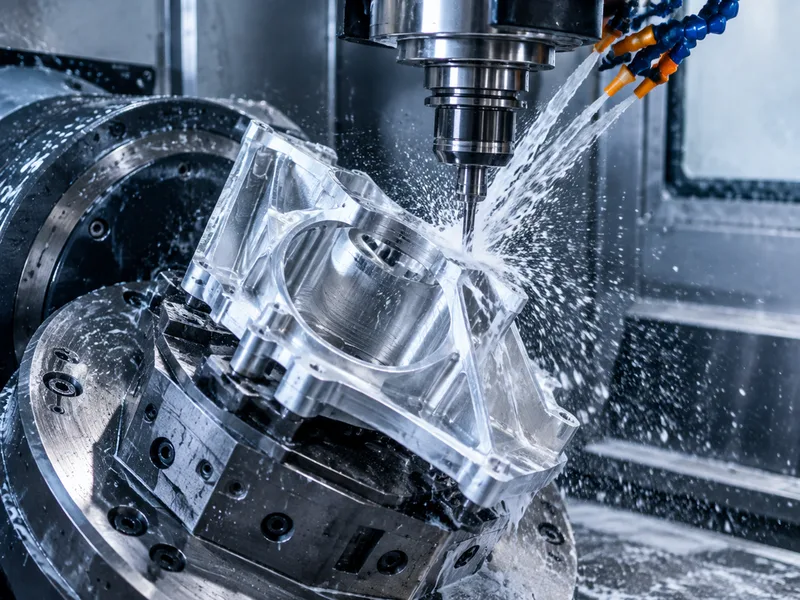
Electronics machining covers the precision-machined hardware around the board: aluminum housings, front panels, connector housings, shielding covers, thermal blocks, heat sinks and small brackets. Precision is commonly quoted around ±0.001–0.002 in (±0.025–0.05 mm) for many features — a capability that is feature-specific and datum-dependent, not a blanket promise across the part.
The discipline that separates a clean electronics build from a rework loop is finishing-aware tolerancing: anodizing changes part dimensions, and the change matters most at holes, slots, threads, sealing faces and connector openings. Material follows function — aluminum for weight and machinability, copper for conduction, stainless for stiffness and corrosion, brass for conductive connector parts, engineering plastics for isolation.
Enclosure tolerance bands in practice: ±0.10 mm for most jobs, ±0.05 mm where assemblies need better precision, ±0.01 mm for very tight fits — EMI shielding seams and board-mount holes deserve the tighter end. When qualifying a supplier, verify real experience with ±0.001–0.002 in class features backed by CMM, optical or gauge inspection and documented reports.
Specifications
| Specification | Electronics Machining |
|---|---|
| Tolerance | ±0.001–0.002 in (±0.025–0.05 mm) commonly quoted for many features |
| Lead Time | Custom machined electronic enclosures can be delivered in as fast as 5 days; prototype turnaround is typically 3–5 days |
Materials
Surface Finishes
Electronics machining covers the precision-machined hardware around the board — aluminum housings, front panels, connector housings, shielding covers, thermal blocks, heat sinks and small brackets — quoted around ±0.001–0.002 in (±0.025–0.05 mm) for many features. Material follows function (aluminum for weight and machinability, copper for conduction, brass for conductive connector parts, plastics for isolation), and finishing-aware tolerancing matters because anodizing changes part dimensions at holes, slots, threads and sealing faces.
Values above are the collected catalog specification envelope for this product family. Tolerances and lead times at the demanding end of a range are confirmed for the specific geometry, material and batch at quotation.
Applications & Selection Points
Housings, panels and enclosures
Machined housings protect and locate the electronics; wall thickness, flatness and finish are the decision factors, with dimensional fit and flatness the inspection concerns. Anodize or powder coat for durability — and size pre-finish where a tight connector must still fit after coating.
Heat sinks and thermal hardware
Thermal plates and sinks live or die on contact flatness: a high-conductivity alloy with a non-flat base still underperforms. Fin geometry trades surface area against machinability — the design decides, the process has to hold it.
Connectors and shielding
Brass and conductive alloys carry threaded connector parts; shielding covers need both geometry control and a finish that does not break conductivity. Masking on grounding areas is planned at the finish step, not discovered at assembly.
Prototype to production
Machining carries prototypes and low-volume builds where the design is still moving, and simple-geometry parts at stable volume can graduate to die casting once tooling pays back. Compare geometry stability, tolerance needs and expected design changes before committing either way.
Frequently Asked Questions
What precision can electronics machined parts hold?
Around ±0.001–0.002 in (±0.025–0.05 mm) is commonly quoted for many features, with capability varying by feature type, material, part size, fixturing and inspection. Put tolerances on the features that mate and use practical general tolerances elsewhere.
Which material for my electronics component?
Aluminum grades for weight, corrosion resistance and machinability; copper when thermal or electrical conduction governs; stainless for stiffness and corrosion at a machining cost; brass for conductive threaded parts; engineering plastics where isolation, weight or chemical resistance matters. Review mixed-metal assemblies for galvanic risk and grounding continuity.
How does anodizing affect my fit?
The coating changes dimensions — most importantly at holes, slots, threads, sealing faces and connector openings. Machine pre-finish sizes with allowance, mask grounding and precision contact faces, and define which dimensions apply before finish and which after.
Ordering & Documentation
Documents
Model plus drawing with tolerances on mating features, finish specification with its governing callout, and material stated by function. Thin walls, deep pockets, connector cutouts and fin geometry each carry their own feasibility checklist — send the geometry early.
Quotation
Pricing follows material, tolerance allocation, finish scope and inspection. Quote prototype and production stages together if the design is near freeze — the volume path may change the recommended process.
Sample & Supply
First articles validate fit and finish on the real alloy lot; flatness and coating thickness are the usual inspection points. Repeat production holds from the frozen process — keep the file revision stable once approved.
Storage & Shipping
Anodized surfaces ship protected against abrasion; bare copper and brass need corrosion-aware packaging. ESD-sensitive assemblies should receive parts cleaned and packed to the electronics handling standard the assembly line uses.