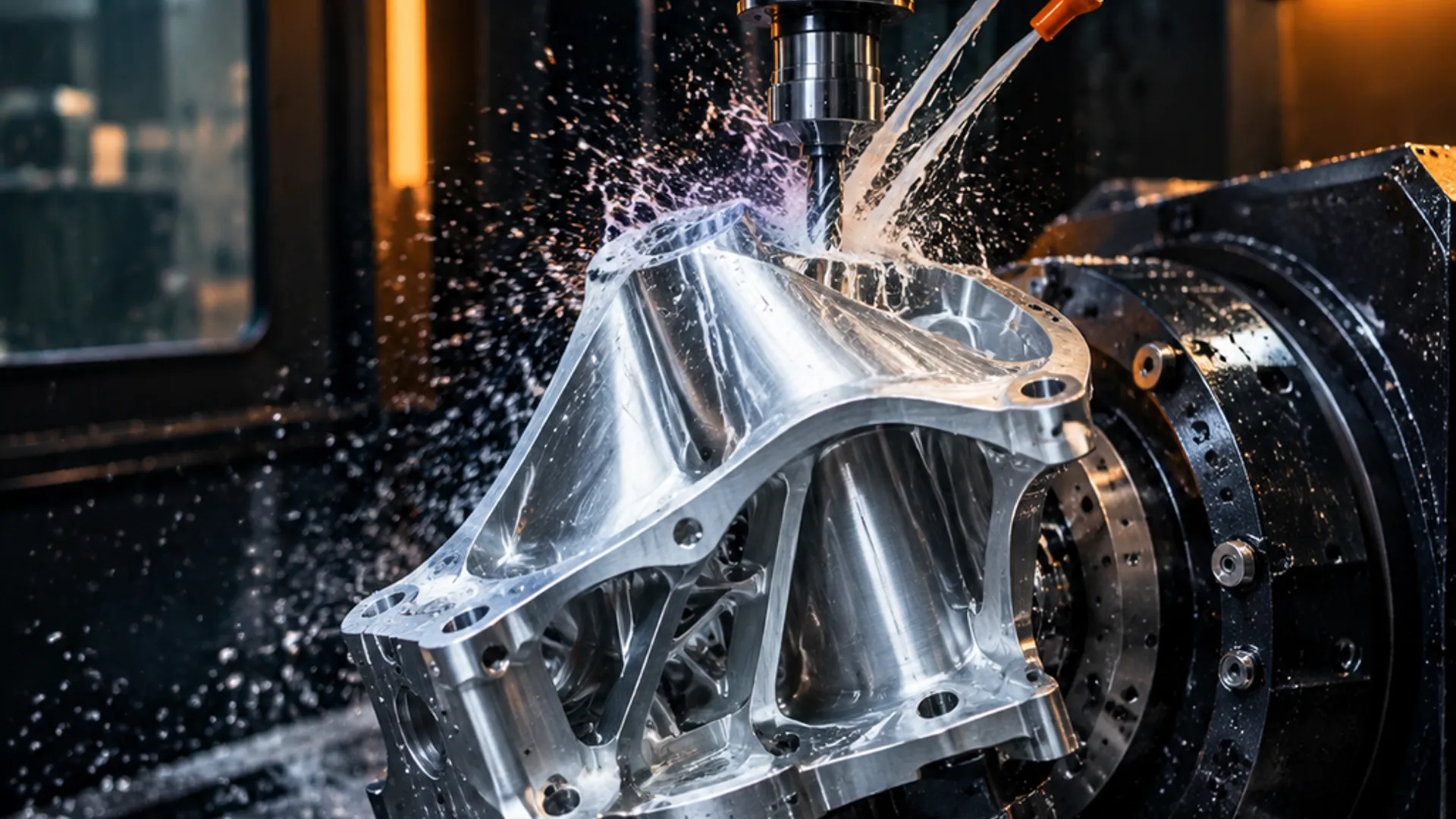
How to choose a sheet metal process
Every family here starts from flat sheet; what differs is how the part is cut, formed and joined. Laser cutting profiles sheet without tooling, bending folds it into 3D shells, stamping and punching form features under a press with dedicated tooling, and weldment services join cut and formed pieces into larger structures.
The decision usually turns on volume against tooling. Cutting and bending work directly from your flat pattern, which is why short runs and prototypes move fast; stamping amortizes a tool over volume, so per-part cost drops only once the tool is paid for. Weldments sit above both: they let a large or hollow assembly be built from laser-cut and bent pieces that no single press could form.
The table compares the families on tolerance practice, the sheet size they accept and quoted lead times. For forming decisions inside a bent part — bend radii, hem types, relief cuts — the bending family page links the detail guidance, and each detail page states what inputs a quote needs.
Product family
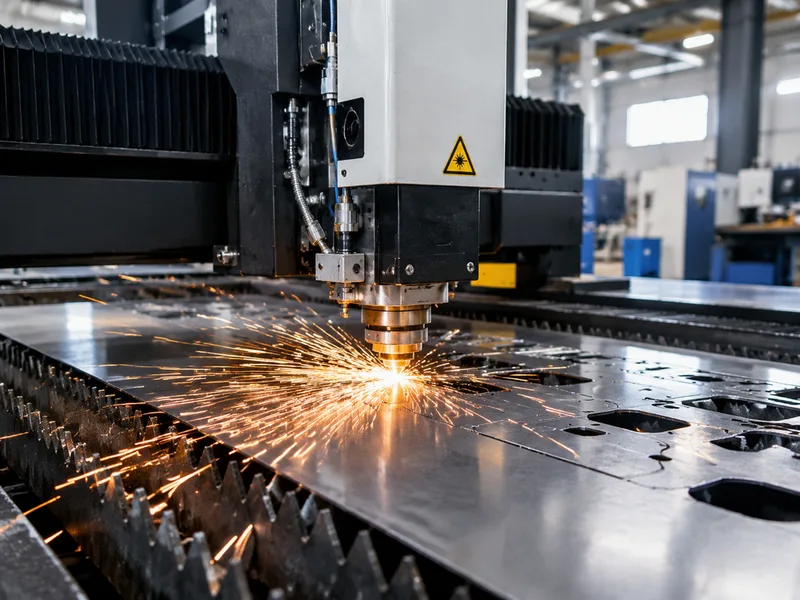
Sheet Metal Fabrication
Custom sheet metal fabrication service offering laser cutting, bending, tapping, countersinking, welding, and finishing across materials including aluminum, stainless steel, brass, and cold rolled/galvanized steel. Lead times range from as fast as 3 days for aluminum to 7 days for stainless steel.
Product family
Laser Cutting
A precision sheet metal cutting process that uses a laser to turn flat material into finished part geometry, ideal for tight tolerances, small features, and fast production. It is the fastest, most precise option for metal up to .750″.
Product family
Metal Stamping
CNC punching/stamping service for sheet metal parts, offering louver, convex package, countersunk hole and rolling rib forming with ±0.1 punching accuracy on plates up to 6mm thick.
Product family
Sheet Metal Bending
CNC press-brake bending folds laser-cut flat patterns into brackets, enclosures and formed parts without removing material. Setup tolerance is typically ±0.1 mm with CNC backgauging; sheet thickness up to 0.25 in (6.35 mm) and beyond is bent routinely in ductile alloys such as aluminum 5052, stainless steel, brass and mild steel. Bending suits low-to-medium volumes of roughly 1–5,000 parts, where brake tooling costs a fraction of stamping dies and changeover takes minutes rather than hours.
Product family
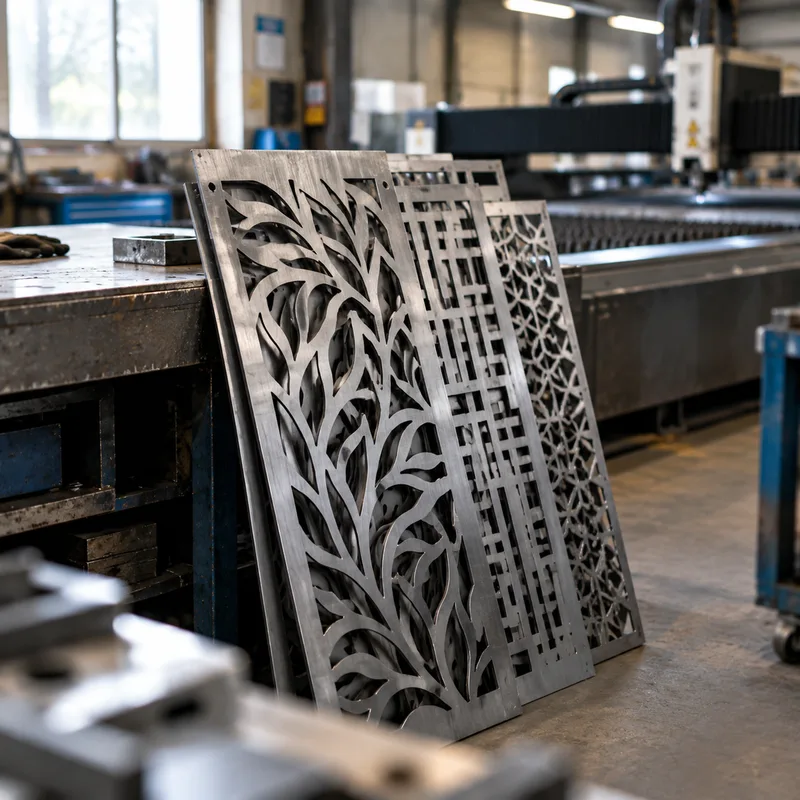
Laser Tube Cutting
Laser tube cutting rotates round, square and rectangular tube stock in a lathe-style chuck while a laser cuts holes, slots, notches and coped channels — features as small as the wall thickness — with no tooling and repeatable results. Most metal tube stock up to 6 in (152 mm) diameter is accepted. Standard stock includes stainless 304/316 (welded and seamless), aluminum 6061 (extruded and drawn), alloy steel 4130 (seamless) and A513 DOM/HREW/CREW carbon steel tube. The process is semi-to-fully automated with high throughput and low material waste; kerf is much thinner than traditional cutting, and some materials show a small heat-discoloration halo at the cut.
Product family
Weldment Services
Weldment services turn machined, cut and formed components into certified structural assemblies: TIG for clean cosmetic welds on thin and exotic metals, MIG for speed in general fabrication, FCAW and stick for heavy structural work, submerged arc for long low-distortion seams and spot welding for sheet joins. Dissimilar-metal joins are avoided by design — aluminum to aluminum, steel to steel. Inspection scales from standard visual checks through dimensional verification to dye penetrant, ultrasonic and radiographic testing, under AWS D1.1, ASME, AS9100, NADCAP and ISO 9001 frameworks.
Process comparison
Values are reproduced verbatim from each family's catalog specification; an em dash means the family does not carry that field.
| Family | Tolerance | Sheet size envelope | Typical lead time |
|---|---|---|---|
| Sheet Metal Fabrication | ± 0.1 | 800mm | 3 business days standard |
| Laser Cutting | ±0.005″ | Laser blank platforms up to 10' x 20'; common sheet stock caps out at 48" x 96" (4' x 8'); laser-safe sheet material thickness cannot exceed about 12 mm | 1–3 business days |
| Metal Stamping | punching and cutting ±0.1 mm typical; precision stamping as low as 0.0005 in | 800mm | Custom metal stamping parts typically range from 8 to 12 weeks, influenced by design complexity and order volume; stamping tooling commonly falls in the 8–24 week range depending on part complexity, tool size and capacity |
| Sheet Metal Bending | ±0.1 mm typical (setup-dependent) | Sheet thickness up to 0.25 in (6.35 mm) or more | Standard lead time starts at 3 business days |
| Laser Tube Cutting | Edge-to-edge ±0.010 in nominal on the inner face of the tube (normal-to-surface cut) | Most tube stock up to 6 in (~152 mm) accepted | Tube laser cut parts are typically shipped within 2-3 business days; additional services or larger production runs can extend that timeline |
| Weldment Services | Welded assemblies can transfer directly to CNC machining after welding to mill mounting faces flat and bore holes to ±0.0005 in tolerance | Robotic welding manipulates weldments up to 57 inches in diameter / 1,650 lbs (750 kg); post-weld CNC machining handles parts up to 74.8 inches diameter × 59 inches tall / 6,600 lbs (3,000 kg); sheet-based fabrication size is bounded by laser cutting dimensions of about 3048 mm × 1524 mm | — |
Where to go next
Finished sheet parts often need the finishing line or a machined feature added — the related categories below cover those hand-offs.