EDM Machining
EDM machining services — sinker and wire — for conductive and hard materials: ±0.05 mm tolerance, parts to 400 x 300 x 300 mm, mirror to matte finishes in carbide, steel, titanium and more.
Last updated: 2026-10-26
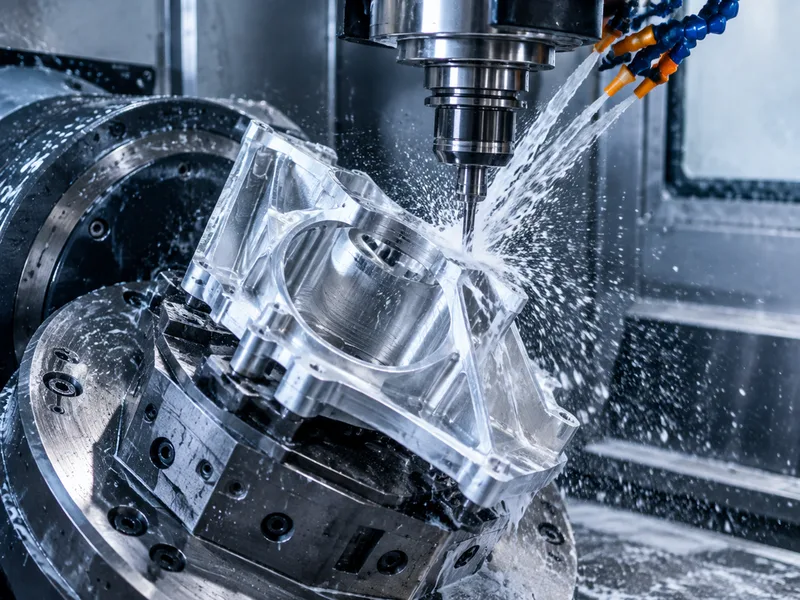
Electrical Discharge Machining (EDM) erodes electrically conductive material with controlled sparks in a dielectric fluid. Because the electrode never touches the work, EDM machines hardened steel, carbide and titanium without cutting forces — the process family behind mold cavities, die details, and precision features in materials at full hardness.
The catalog covers both EDM variants: sinker (ram) EDM, which burns a shaped electrode into blind cavities and details, and wire EDM, which cuts through-profiles with a fed wire. The envelope is ±0.05 mm tolerance, parts to 400 x 300 x 300 mm, and finishes from mirror-like to uniform matte to smooth striated — surface character is a controllable output of the process, specified per feature rather than accepted as given. Materials: brass, steel, aluminium, titanium, copper and tungsten carbide.
Specifications
| Specification | EDM Machining |
|---|---|
| Tolerance | ±0.05mm |
| Max Part Size | 400*300*300mm |
Materials
Surface Finishes
Electrical Discharge Machining uses electrical sparks to erode conductive material in a dielectric fluid, enabling precise machining of complex shapes and hard materials. It covers both conventional/sinker EDM and wire EDM processes.
Values above are the collected catalog specification envelope for this product family. Tolerances and lead times at the demanding end of a range are confirmed for the specific geometry, material and batch at quotation.
Applications & Selection Points
Mold and die work
Injection mold cavities, ribbed details, textured surfaces and sharp internal corners in hardened steel are sinker EDM territory: the electrode reproduces its shape in the steel after heat treatment, where cutting tools would need the mold soft. The finish on the cavity comes off the electrode and burn settings — textured ("VDI-class") surfaces are an EDM output, not a post-process.
Hard and exotic conductive materials
Tungsten carbide tooling, hardened die steel, titanium aerospace details — all machinable by EDM at full hardness. The feasibility gate is electrical conductivity, not hardness; that single property inverts the rules that govern milling.
Sharp corners and fine detail
Sinker EDM reaches internal corners as sharp as the electrode allows, and fine ribs and slots that would snap a milling cutter. Wire EDM complements it for through-features with near-sharp corners. Between the two, most "unmachinable" internal geometry in hard metal has an EDM answer.
Routing between sinker and wire
The variant choice follows the feature: blind 3D cavity → sinker; through-profile → wire; and complex jobs use both. When a part mixes them, quoting the EDM work as one package with the variant split specified avoids the most common misroute — sending a blind cavity to wire or a profile to sinker.
Electrode strategy and wear compensation
Sinker EDM burns its accuracy through an electrode that wears as it works: roughing and finishing typically use separate electrodes, and the burn sequence compensates for the wear each stage causes. Electrode production (graphite or copper, machined to the cavity geometry) is therefore a real cost and lead-time line in sinker work — complex cavities need more electrodes, and fine finish classes need dedicated fine-cut electrodes. Saying whether electrodes are produced or supplied changes the quote; leaving it unsaid leaves the largest single variable in sinker pricing undefined.
Frequently Asked Questions
What is the difference between sinker EDM and wire EDM?
Sinker EDM presses a shaped electrode into the workpiece and burns its form as a cavity — blind pockets, mold details, 3D shapes. Wire EDM stretches a thin wire through the part and cuts a through-profile like a stress-free band saw of arbitrary contour. Blind cavity → sinker; through-cut → wire; many parts need both.
Does EDM weaken the material it cuts?
The spark-eroded surface carries a thin recast layer and heat-affected zone; for most tooling this is managed by skim passes or accepted at working conditions. EDM also does not apply mechanical force, so there is no workpiece distortion — often the decisive advantage on thin sections and fine details in hard material. State any requirement on recast removal (e.g. for fatigue-critical surfaces) at quotation.
What does an EDM quote need?
Model/drawing with the EDM features identified, material and hardness state, tolerance and finish per feature, electrode or wire-variant preference (or let the routing decide), and quantity. For sinker work, note whether electrodes are supplied or produced — it is a real cost line.
Ordering & Documentation
Documents
3D model with EDM features marked, hardness/heat-treat state stated, finish class specified per surface (mirror, matte, striated, textured). For mold work, the surface-finish standard referenced on the drawing governs the electrode plan.
Quotation
Pricing inputs: burned/cut volume, depth and detail density, finish class (finer = more passes), material, electrode production if needed, quantity and destination. Tolerance at the ±0.05 mm class is standard; tighter callouts on named features are confirmed per drawing.
Sample & Supply
Prototype cavity and die details are validated in the real material and hardness before a full tool set is burned — surface finish and corner condition are the properties to inspect on the sample, not just dimensions.
Storage & Shipping
EDM surfaces are clean but fine-finished — mirror and textured cavities ship face-protected and rust-inhibited (steel). Never store EDM-finished tool steel unprotected: a corroded cavity finish costs far more to restore than to protect.