H59 Brass CNC Machining
CNC machining of H59 brass, the two-phase Cu-Zn workhorse: plate mechanical properties, hot-working behavior, and where it sits against C260 and C360 free-cutting grades.
Last updated: 2026-10-29
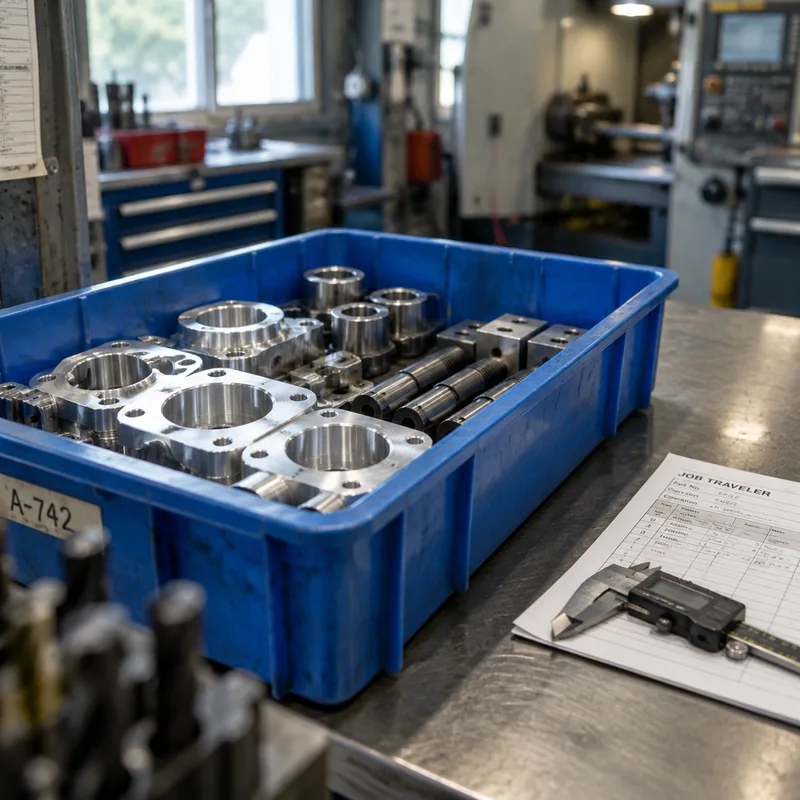
H59 is the zinc-rich end of the ordinary brass family — a two-phase copper-zinc alloy whose rising zinc content is exactly what makes it cheap, strong and suited to hot working. It is the generic machinist brass across much of Asian supply: fittings, threaded components, stamped shells, hardware and decorative parts where "brass" on the drawing means the economical alloy, not a certified grade.
Compared with the named western grades, H59 trades certification and cold-forming finesse for price. It machines willingly and takes threading well, but parts that carry a western specification callout usually map to C360 (free-cutting) or C260 (cartridge) instead — so the first selection question is whether the drawing genuinely requires H59-equivalent chemistry or simply "a machinable brass".
Specifications
| Property | Value | Condition |
|---|---|---|
| Tensile strength | ≥294 MPa (σb, plate) | plate, thickness 0.5–15 |
| Elongation | ≥25% (δ10, plate) | plate, thickness 0.5–15 |
| Hot working temperature | 730–820 °C hot working temperature | brass with rising zinc content toward H59 |
| Hardness | Not established in the collected evidence — confirm at quotation. | |
| Density | Not established in the collected evidence — confirm at quotation. | |
| Yield strength (0.2% offset) | Not established in the collected evidence — confirm at quotation. | |
Values above are rendered from the collected model-evidence layer, each carrying the heat-treatment condition it was reported under; fields without collected evidence are stated as not established rather than estimated. Requirements outside the table are confirmed for the specific geometry and batch at quotation.
Applications & Selection Points
Turned fittings and threaded components
H59 is at home on the lathe: connectors, adapters, threaded inserts and small hardware are its core assignment, with corrosion resistance good enough for plumbing and electrical service. The two-phase structure that helps hot working leaves the alloy harder and less ductile at room temperature than the alpha grades — fine for cutting, worth knowing where the part must also be bent or staked.
Hot-worked and stamped parts
The alloy tolerates hot processing well, and its classic volume roles — stamped shells, radiator components, small hardware — reflect that. Two-phase brass is forged or pressed hot rather than cold-formed extensively; a part that needs deep cold deformation belongs to a more ductile alpha brass, and the forming route should be settled before the grade is.
Where H59 is the wrong call
Certified mechanical properties are the boundary: H59 plate carries published minimums for tensile strength and elongation, but drawings written against ASTM or EN standards name C360, C260 or their regional equivalents, and substituting H59 becomes a concession conversation rather than a drop-in. Potable-water and regulated fittings likewise need the actual standard named and met, not a generic brass.
Machining-behavior selection points
Expect good chip behavior on turning and milling with standard brass practice: sharp positive-rake tooling, steady feed, and attention to burr control on threads — the buyer watch-items on turned brass parts are thread quality, burrs and surface finish. The alloy machines more freely than the alpha grades but not as freely as leaded free-cutting brass, which is the honest trade for lead-free chemistry.
Frequently Asked Questions
Is H59 the same as C360 or C260 brass?
No — they are neighboring answers to the same need. H59 is a Chinese-designated two-phase brass near the zinc-rich end of the family; C360 is a leaded free-cutting grade and C260 a ductile cartridge grade, both ASTM-designated. Chemistry, phase structure and cold-forming behavior differ, so a drawing that names one is not automatically satisfied by another. Match the governing standard first, then optimize the supplier.
When should I specify H59 for a machined part?
When the drawing is open on grade but fixed on function — a machinable, corrosion-resistant, economical brass for fittings, connectors and hardware — and the supply chain is one where H59 is the stocked alloy. When a western standard governs the part, quote the named grade instead; the mapping between H59 and C360/C260 is close enough to confuse and not close enough to assume.
What should I send for an H59 brass machining quote?
The standard package: a STEP model plus a 2D drawing with tolerances, thread callouts and finish, the grade or the governing standard named explicitly, quantity and batch intent, and the service environment (plumbing, electrical, decorative). If the part is threaded, say so prominently — thread and burr quality are the items worth agreeing on before production.
Ordering & Documentation
Documents
Send a STEP or IGES model with a 2D drawing carrying tolerances, thread callouts and the finish specification. Name the grade and its governing standard rather than writing "brass" — the brass family spans alloys with genuinely different phase structure, strength and forming behavior.
Quotation
A quote is priced from the model and drawing, the named grade, quantity and batch intent, thread and tolerance requirements, and destination country. Material form matters: machining from hex bar, rod or stamping blank changes both price and grain direction, so state the starting form if it is fixed.
Sample & Supply
Prototype quantities from one piece are normal for machined brass and validate thread quality and burr behavior on the actual geometry before production. First-article inspection with material certification is available on request — agree the scope at quotation, especially where the part substitutes a named western grade.
Storage & Shipping
Machined brass ships as-machined or lacquered for decorative work; ordinary warehouse conditions suit it, though damp storage dulls the surface over time. Keep finished parts separated from acidic handling contact, and thread protection (plugs or wrapping) travels with turned parts by default.