Hastelloy C-276 CNC Machining
CNC machining of Hastelloy C-276: the nickel-molybdenum-chromium alloy for the worst mixed chemical streams — collected property envelope, machining behavior, and RFQ guidance.
Last updated: 2026-10-30
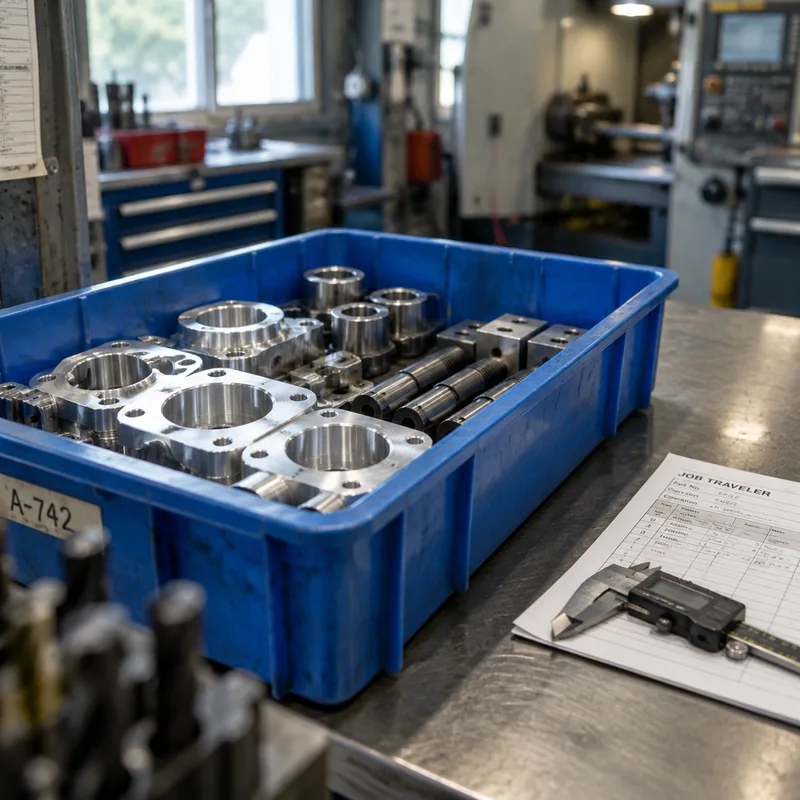
Hastelloy C-276 is the nickel-molybdenum-chromium alloy procurement reaches for when the chemical stream defeats everything cheaper: wet chlorine gas, hypochlorite, ferric and cupric chlorides, sulfuric and hydrochloric acids across wide concentration and temperature ranges, and sour gas service. Its reputation in flue gas desulfurization scrubbers and chemical reactor hardware is built on tolerance of exactly the conditions — oxidizing and reducing agents arriving together — where most corrosion-resistant alloys must pick a side.
On the machining side it is a serious alloy: work-hardening, abrasive, and slow to cut, with tooling economics that resemble the aerospace superalloys more than any stainless. That is the honest frame for a quote — C-276 parts are rarely hard to make and routinely expensive, so the buying decision is usually whether the environment truly demands this tier of corrosion resistance.
Specifications
| Property | Value | Condition |
|---|---|---|
| Density | 8.89 g/cm³ | |
| Melting point | 1371 °C | |
| Tensile strength | 601.2 MPa | sheet/plate 4.80–25.4 mm, at 538 °C |
| Yield strength (0.2% offset) | 204.8 MPa | 0.2% offset, thickness 2.40 mm, at 427 °C |
| Elastic modulus | 205 GPa | room temperature |
| Elongation | 56 % | in 50.8 mm, thickness 1.60–4.70 mm, at 204 °C |
| Hardness | 87 HRB | plate |
| Composition | Mo 15–17 %, Cr 14.5–16.5 % | weight % |
Values above are rendered from the collected model-evidence layer, each carrying the heat-treatment condition it was reported under; fields without collected evidence are stated as not established rather than estimated. Requirements outside the table are confirmed for the specific geometry and batch at quotation.
Applications & Selection Points
Chemical process reactor and heat-exchanger hardware
Reactor vessels internals, heat-exchanger plates and baffles, valve and pump trim in mixed-acid service are core C-276 machining work. The alloy holds where the stream swings between oxidizing and reducing — a chemistry no single stainless phase handles. Quotes in this territory should carry the full stream chemistry, because the argument for the alloy is precisely the edge cases; if the chemistry is simple, a cheaper grade usually passes the same test.
Flue gas desulfurization and pollution control
Scrubber internals, dampers, stack hardware and quench components live in wet sulfuric acid condensate with chloride carryover — the environment that made C-276 famous in FGD retrofits. Machined-from-billet suits damper shafts, spray nozzle bodies and instrument fittings; large sheet constructions belong to the fabricator, with machining reserved for the critical interfaces.
Oil and gas sour service
Downhole and wellhead components in sour, high-chloride brines use the grade where NACE-adjacent service rules out standard stainless. Machined parts include seal bodies, choke and valve internals and instrumentation hardware. Sour-service work often carries hardness limits and testing requirements on top of the material spec — state them at quotation, because they shape the heat-treatment and inspection route.
Where C-276 is the wrong call
If the service is seawater alone, Monel 400 or a super austenitic solves it for less. If temperature with strength is the driver rather than chemistry, Inconel 718 is the better family. C-276 is a corrosion specialist without a hardening mechanism — its strength is modest and it does not age-harden, so specifying it for mechanical reasons pays specialist prices for the wrong property.
Machining behavior and process planning
The C-276 cutting signature is work hardening plus abrasive molybdenum-rich microstructure: cutting edges wear fast, and dwell or light rubbing passes harden the surface against the next pass. Established practice is rigid setups, sharp positive-rake carbide chosen for nickel alloys, heavy-enough cuts to stay under the work-hardened layer, high-pressure coolant where available, and conservative speeds with steady feed. Threading and small-diameter deep holes are the risk operations — thread milling often beats tapping here.
Welding and post-processing
The grade welds well with matching filler and is a standard construction material in chemical plant fabrications — many machined C-276 parts are weldment components. The solid-solution structure means no hardening transformation in the heat-affected zone, but heat tint on corrosion-critical faces should be removed before service, and post-weld cleaning is a specified step in most chemical service specs, not an optional polish.
Tolerance, inspection and surface finish
Dimensional behavior is stable — no transformations, movement driven by heat and fixturing — but tool wear means the last parts of a batch can drift if the process does not manage tool change intervals. Sealing faces and corrosion-critical surfaces deserve planned finishing passes with fresh edges. Material certification traceable to the heat is the norm in this service tier; agree its scope at quotation.
Frequently Asked Questions
Why does a C-276 part cost several times its 316 equivalent?
Three multipliers stack. Material: the alloy is nickel- and molybdenum-rich, and both elements carry structural premiums. Machining: cutting speeds are a fraction of stainless rates and coated carbide or ceramic tooling consumes faster. Process: the certification and cleaning expectations of chemical service add inspection steps. None of this is padding — but quotes that assume simpler chemistry or looser certification can differ dramatically, which is why the stream details belong on the RFQ.
Is Hastelloy C-276 interchangeable with C-22?
They are siblings, not twins. C-22 shifts the chromium-molybdenum balance toward better performance in oxidizing acids, while C-276 keeps the edge in reducing environments and wet chlorine service. Weld filler selection and existing plant standards often lock the choice. If the drawing names one, machining suppliers should not substitute without written agreement — the environments where they differ are exactly the ones the part was specified for.
Can C-276 be hardened for wear service?
Not by heat treatment — it is a solid-solution alloy and stays at its annealed strength. Wear-facing C-276 parts gain hardness only through cold work or applied overlays, and both compromise some corrosion performance. If the duty is wear plus corrosion, the honest answer may be a duplex construction: C-276 where the chemistry lives, a hardfaced or ceramic element where the wear lives.
Does machining C-276 require special shop capability?
It requires the discipline any aerospace-grade shop already has: rigid machines, nickel-alloy tooling practice, coolant management and patience on feeds. It does not require exotic equipment. What buyers should check is process experience — shops that cut C-276 regularly quote realistic hours, while first-timers often underestimate tooling consumption. A trial part on a critical geometry is cheap insurance at this material price.
What should I send for a C-276 machining quote?
A STEP model and 2D drawing with tolerances and corrosion-critical faces marked, the material specification, quantity, and the full service chemistry — media, concentrations, temperatures, oxidizing versus reducing character. Certification scope and any sour-service or NACE-adjacent requirements should be stated at quotation. On this alloy, incomplete chemistry is the most expensive missing input in the RFQ.
Ordering & Documentation
Documents
Send a STEP or IGES model with a 2D drawing carrying tolerances, finish callouts and marked corrosion-critical surfaces. Name the specification and variant explicitly — C-276 versus C-22 — because substitution questions in this family are chemistry questions.
Quotation
Quotes price from model, drawing, stock form, quantity and the service chemistry, plus certification and cleaning scope. Tooling wear is a real cost line on this alloy; geometries with deep threads or small deep holes should be flagged so the route and price reflect them.
Sample & Supply
Prototype quantities from one piece are normal at this material price, and a first article validates tooling choices before a batch commits them. Material certification traceable to the melt is standard supply — agree its scope before production.
Storage & Shipping
Finished parts resist ordinary transit corrosion, but surface-critical faces should be protected from steel contact and abrasion — embedded free iron becomes a corrosion site in exactly the service the alloy was bought for. Pack clean, store dry, and preserve the as-cleaned surface condition the spec requires.