Inconel 718 CNC Machining
CNC machining of Inconel 718: the age-hardened nickel superalloy behind aerospace and energy hardware — collected property envelope, machining behavior, and how to quote it.
Last updated: 2026-10-30
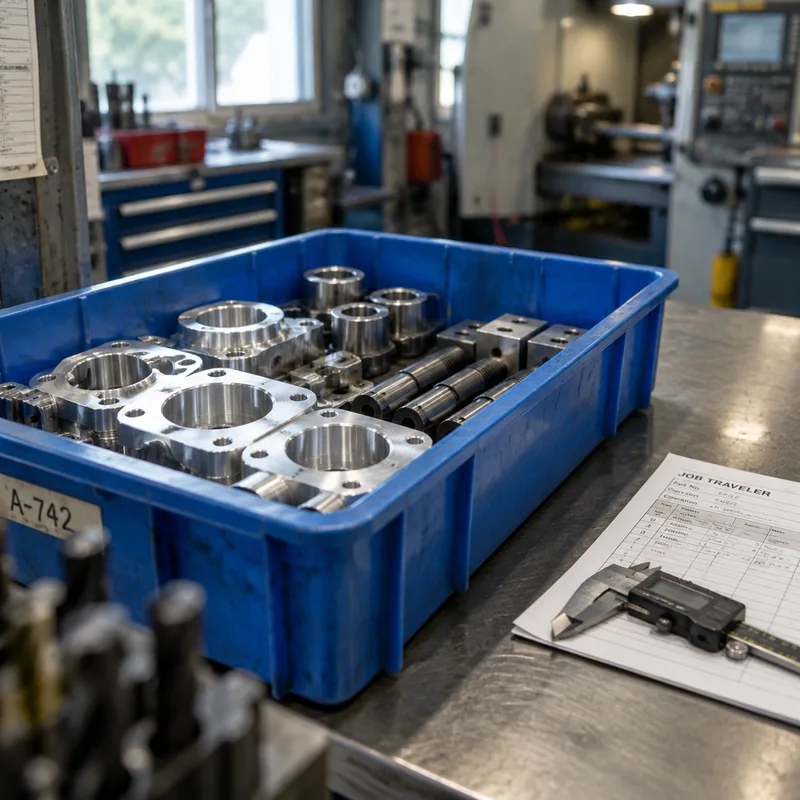
Inconel 718 is the workhorse nickel-chromium superalloy of aerospace and energy hardware: turbine and compressor components, rocket engine parts, fasteners and high-pressure fittings. Its defining trick is precipitation hardening — it gains most of its strength from an aging heat treatment, and it keeps that strength at temperatures where aluminum and most steels have given up. Add strong oxidation and creep resistance, and it is usually the first superalloy a drawing names.
The same metallurgy makes it one of the most demanding materials a machine shop cuts. Work-hardening, abrasive carbides and low thermal conductivity combine to chew through tooling and punish dwell. Machining 718 is a planning exercise as much as a cutting one: the heat-treatment condition the part is machined in — solution annealed versus fully aged — shapes the whole process route and the quote.
Specifications
| Property | Value | Condition |
|---|---|---|
| Density | 8.19 g/cm³ | room temperature |
| Tensile strength | 185 ksi (1276 MPa) | aged |
| Hardness | 36–40 HRC | fully aged (solution annealed + double age per AMS 2770) |
| Thermal conductivity | 6.5 W/m·K | at 0–100 °C |
| Melting point | 1260–1336 °C (solidus–liquidus) | |
| Composition | Ni 50–55 %, Cr 17–21 % | weight % |
Values above are rendered from the collected model-evidence layer, each carrying the heat-treatment condition it was reported under; fields without collected evidence are stated as not established rather than estimated. Requirements outside the table are confirmed for the specific geometry and batch at quotation.
Applications & Selection Points
Aerospace rotating and structural hardware
Turbine disks, spacers, shafts, casings and fasteners are the classic 718 portfolio — the grade holds tensile strength and creep resistance at gas-path temperatures and resists oxidation in the process. Aerospace quotes in this territory carry traceability expectations: certified melt data, heat numbers carried through the route, and first-article inspection. State the certification requirement at quotation rather than after.
Energy, oil and gas components
Downhole tools, valve trim, wellhead hardware and gas turbine parts use 718 where high pressure, high temperature and sour environments arrive together. The grade strengthens by aging rather than by massive section size, which helps heavy-wall parts reach strength without quench-and-temper distortion. Corrosion chemistry specifics belong on the RFQ — sour-service work may carry additional material and testing requirements.
Choosing the machining condition
Most 718 is roughed in the solution-treated or solution-annealed condition, where the alloy is at its softest, then aged and finish machined or ground. Machining fully aged material is possible but trades tool life and time for a simpler sequence. The drawing should name the required final condition and heat-treatment specification; if it does not, the quoting shop will assume one, and the strength-critical properties depend on that assumption being right.
Where 718 is the wrong call
If the service temperature is moderate, 17-4 PH or a 4340-class steel delivers strength at a fraction of the material and machining cost. If the driver is corrosion alone without heat, the austenitic and duplex stainless families cover it cheaper. 718 earns its cost only where strength and temperature arrive together — specifying it by habit is one of the most expensive habits in procurement.
Machining behavior and process planning
The 718 signature is work hardening and heat with nowhere to go: thermal conductivity far below steel means the cutting edge takes the temperature, and notching at the depth-of-cut line is the classic failure mode. The countermeasures are established practice — rigid setups, ceramic or coated carbide tooling selected for the operation, constant engagement without dwell, high-pressure coolant where available, and sharp passes that stay under the work-hardened layer. Drilling and tapping are the operations to flag; deep holes and fine threads carry the risk premium.
Welding, repair and post-processing
718 is weldable by its metallurgical design — an important part of its selection story — but welding and machining interact: the heat-affected zone and any post-weld aging change local hardness and machinability. Parts that are welded after machining should sequence final machining of critical features around the thermal cycle. Wire EDM is a common partner process for slots, holes and profiles in aged material where cutting forces would distort thin sections.
Tolerance, inspection and surface finish
Dimensional stability through aging, plus the cost of rework, push 718 parts toward disciplined inspection: critical features are usually inspected on CMM with the heat-treatment condition documented. Surface finish callouts on fatigue-relevant features deserve care — grinding, polishing or peening may be specified to protect fatigue life, and each is a real process step that belongs in the quote, not an afterthought.
Frequently Asked Questions
Why is Inconel 718 so expensive to machine compared with stainless steel?
Three cost drivers stack: cutting speeds are a fraction of what steel allows, so machine time multiplies; tooling consumes specialized coated carbide or ceramic inserts at a higher rate; and the heat-treatment sequence adds handling and sometimes intermediate machining steps. None of these is padding — they are the physics of a work-hardening, low-conductivity alloy. Quotes that look out of line usually differ in assumed condition and sequence, which is why the drawing should name them.
Should my part be machined before or after aging?
Most routes rough in the solution-treated condition, age, then finish. The right answer depends on final tolerances, section thickness and how much distortion aging induces on the geometry. Thin, tight-tolerance parts usually need a finish cut after aging; heavier parts with generous tolerances can sometimes go straight through. State the final condition and critical tolerances, and let the shop propose the sequence — it is a legitimate quoting variable.
Is 718 the right grade for a corrosion-only problem?
Usually not. If the environment is chloride or acid service without high temperature or strength demands, the stainless and nickel-copper families — 316L, 904L, duplex grades, Monel 400 — solve it at lower cost. 718 exists for strength at temperature; buying it for corrosion resistance alone pays superalloy prices for metallurgy the part is not using.
What certification comes with Inconel 718 parts?
Aerospace and energy buyers typically require mill certification traceable to the melt, heat numbers maintained through cutting and heat treatment, and dimensional or first-article inspection reports. Processes such as AMS-specified heat treatment and NDT can be added. Certification scope drives cost and lead time, so agree it at quotation — retroactive traceability is not a thing.
What should I send for a 718 machining quote?
A STEP model and 2D drawing with tolerances, the required material specification and heat-treatment condition, quantity, certification requirements, and the service environment. Name which features are fatigue- or seal-critical — finish, edge condition and inspection expectations on those features shape both the route and the price more than any other input.
Ordering & Documentation
Documents
Send a STEP or IGES model with a 2D drawing carrying tolerances and finish callouts. Name the material specification, the required heat-treatment condition and any process specification the part must meet — condition assumptions are the single most common quoting mismatch on 718.
Quotation
Quotes are priced from the model and drawing, the specified condition and certification scope, quantity, and the inspection plan. Fatigue-critical surfaces, deep bores and fine threads should be called out — they carry the process risk and deserve their own line items.
Sample & Supply
First-article inspection with material certification is the normal acceptance path for 718 work, and prototype quantities validate the aging-and-finishing sequence on the specific geometry before production. Agree the inspection scope and documentation package at quotation.
Storage & Shipping
Finished 718 parts are dimensionally stable in ordinary storage; protect finished surfaces from abrasion and keep titanium and steel swarf segregated in the shop context. Ship with the certification package referenced on the packing documents so traceability travels with the parts.