Phosphor Bronze CNC Machining
CNC machining of phosphor bronze (C51000/C54400 class): the tin-bronze spring and bearing alloy, how temper changes its properties, and where it beats brass and pure copper on duty.
Last updated: 2026-10-31
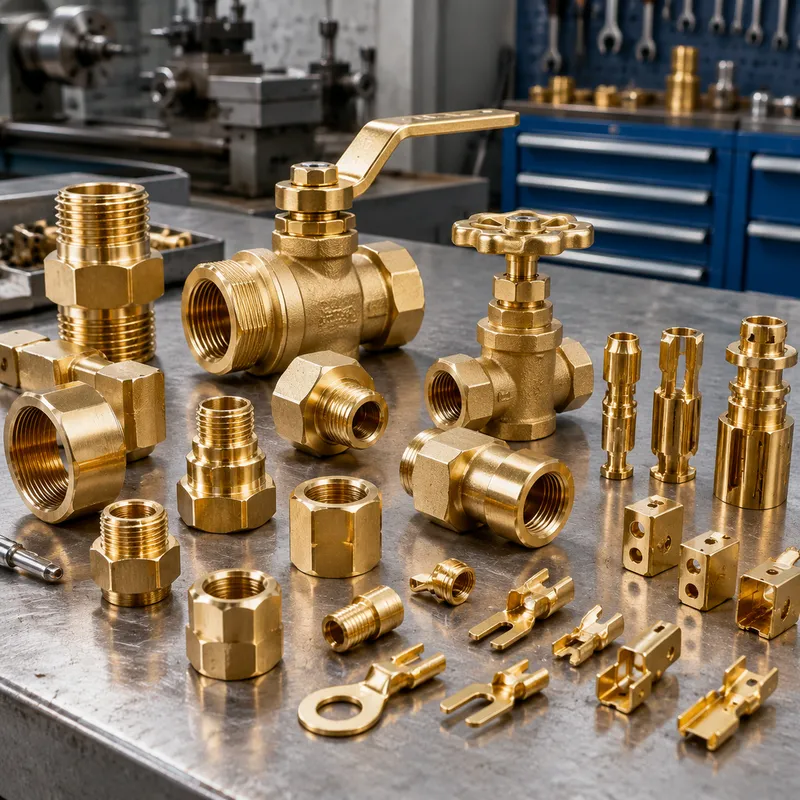
Phosphor bronze is the copper-tin family with a phosphorus deoxidizer — the alloy group behind electrical springs, sliding bearings, wear plates and instrument components. Its signature is the spread between soft and hard temper: the same C51000 chemistry delivers a soft, ductile state for forming and a spring temper whose stiffness and fatigue life make it the classic contact-spring material. Temper is not a footnote on this alloy; it is the property decision.
Machining phosphor bronze sits between the ease of free-machining brass and the stubbornness of pure copper: it cuts with ordinary technique, though not at brass speeds. The buyers who use it well are the ones who name the temper and the duty on the drawing — a bearing bush and a contact spring may share a UNS number and want opposite material states, and the shop cannot infer which from the grade alone.
Specifications
| Property | Value | Condition |
|---|---|---|
| Tensile strength | 410-655 MPa | |
| Yield strength (0.2% offset) | 170-520 MPa | |
| Hardness | 180-210 HV | spring-temper (C51000) |
| Density | 8.9 g/cm³ | |
| Melting point | 954 °C | |
| Elongation | 60-70 % | |
| Electrical conductivity | 15% IACS | |
| Service temperature | 125 °C | continuous operating maximum (C51000) |
Values above are rendered from the collected model-evidence layer, each carrying the heat-treatment condition it was reported under; fields without collected evidence are stated as not established rather than estimated. Requirements outside the table are confirmed for the specific geometry and batch at quotation.
Applications & Selection Points
Electrical springs, contacts and connectors
Contact springs, switch blades, connector terminals and instrument suspensions are the classic spring-temper phosphor bronze application. The alloy holds its set under cycling, conducts well enough for signal duty and resists corrosion that would degrade contact resistance over years. Machined or formed from strip, these parts live on the temper decision — spring temper for force, soft temper for parts that form in assembly.
Bearings, bushings and wear plates
Sliding bearings, bushings, worm-gear rims and wear plates use phosphor bronze for a different virtue: it runs against steel shafts with low friction and a self-sacrificing wear behavior that protects the more expensive mating part. Machined bushings and bearing liners are standard CNC work in this alloy, often press-fitted into housings and bored in place to final size.
Where phosphor bronze is the wrong call
Parts needing the lowest electrical resistance should be copper. High-load structural duty is off-brand for bronze. And general threaded hardware with no spring or bearing duty is better served by free-machining brass at lower cost — phosphor bronze earns its premium only when the spring, bearing or corrosion duty is real.
How temper changes the conversation
The same grade ships as soft-annealed strip or full-hard spring temper, and the mechanical properties move dramatically between them. A machined part cut from soft stock will not behave like one cut from hard-temper bar. For machined components the practical answer is naming the required condition — hardness or spring behavior — on the drawing and letting the shop source the right temper, because temper cannot be added after machining.
Machining behavior and technique
Phosphor bronze machines with short chips and good finishes at moderate parameters — closer to brass than to pure copper in behavior, though not as free-cutting as the leaded brasses. Sharp tooling and flood coolant carry the standard case. Cast bearing bronze variants machine even more freely; wrought spring-temper stock is harder on tooling and wants more rigid setups.
Corrosion behavior in service
Phosphor bronze resists atmospheric and fresh-water corrosion well, which is why instrument and marine-adjacent hardware uses it where plated steel would eventually fail. It is not immune — specific chemical exposures need checking — but as a corrosion floor for copper-alloy hardware, the tin bronzes sit near the top of the practical list.
Frequently Asked Questions
What is the difference between phosphor bronze and brass?
Family and duty. Brass is copper-zinc, optimized for cost and machinability; phosphor bronze is copper-tin, optimized for spring behavior, wear resistance and corrosion performance. Brass wins cheap threaded hardware; phosphor bronze wins contact springs, bearings and long-life instrument parts. Both machine well; only one survives the duty the other cannot.
Why does temper matter so much on phosphor bronze?
Because the same chemistry spans an enormous mechanical range from annealed to spring temper — the difference between a part that forms in assembly and one that pushes back with spring force for years. Temper is set by the mill, not by the machine shop, so the drawing has to name the condition. Asking for phosphor bronze without a condition is an incomplete material call.
Can my bushing and my contact spring use the same material?
The same UNS number, yes — but not the same temper. A bearing bushing wants the soft, conformable state; a contact spring wants full-hard spring temper. The practical habit is to specify duty or hardness rather than just grade, so the two parts arrive in the right states even though the name on the drawing is identical.
What should I send for a phosphor bronze machining quote?
A STEP model plus a 2D drawing with tolerances, the grade and temper or hardness requirement, product form (bar, plate or strip), quantity, finish callout, and the service duty if it is spring or bearing work. Stating the duty lets the shop verify the temper instead of guessing from the grade name.
Ordering & Documentation
Documents
Send a STEP or IGES model with a 2D drawing carrying tolerances and finish. Name the grade and the required temper or hardness explicitly — on phosphor bronze the condition is as decisive as the alloy.
Quotation
Pricing follows the model, drawing, stock form and temper availability, quantity and finish system. Specialty tempers may carry lead time from the mill — parts that need them quote through the material lead time, not just the machining.
Sample & Supply
First articles verify dimensions, finish and, on spring or bearing duty, the material condition itself. Mill certificates accompany supply on request — agree the verification scope at quotation so temper arrives as evidence, not assumption.
Storage & Shipping
Phosphor bronze is stable in ordinary storage and resists tarnish better than many copper alloys. Spring-temper strip and finished springs should ship supported so they are not deformed in transit; machined parts ship in standard protective packing.