C11000 Copper (ETP) CNC Machining
CNC machining of C11000 electrolytic tough-pitch copper: the conductivity benchmark, the gummy-cutting reality and how shops machine it, and where brass or bronze alloys are the better call.
Last updated: 2026-10-31
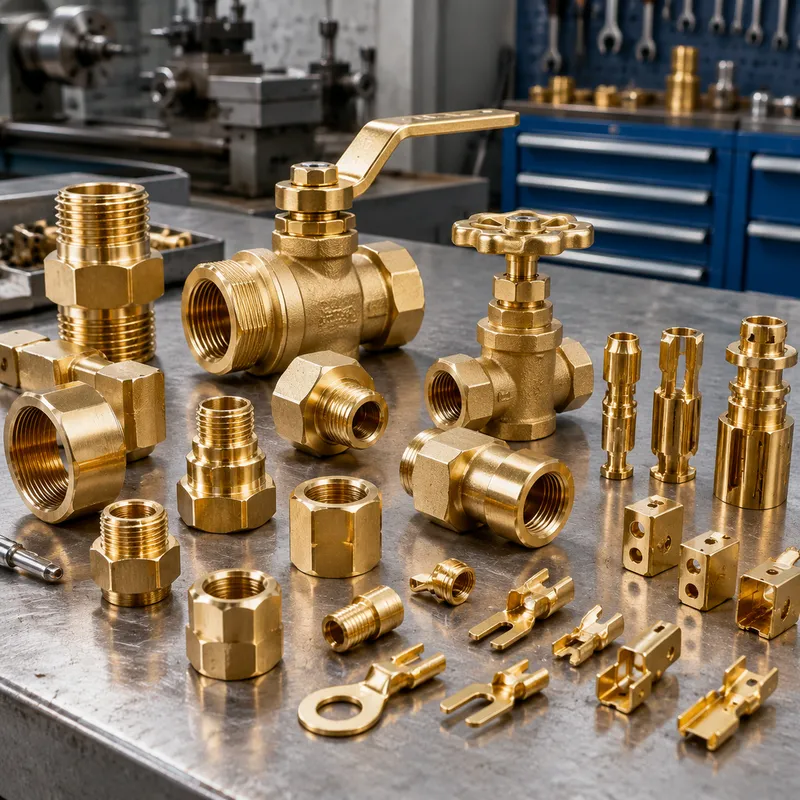
C11000 — electrolytic tough-pitch copper — is the commercial face of pure copper: essentially the full electrical and thermal conductivity of the element, in a wrought form every metal supplier stocks. Bus bars, grounding hardware, electrical contacts, heat-transfer surfaces and decorative parts specify it whenever what matters is moving electricity or heat, not mechanical strength.
Machining pure copper is the exact opposite of machining its free-machining relatives: soft, gummy material that wants to push instead of shear. Shops succeed with sharp tooling, high speeds, generous lubrication and geometries adapted to a metal that flows. The parts that need both conductivity and complex precision features get machined — cast or wrought billets give the conductivity, and disciplined cutting technique gives the geometry.
Specifications
| Property | Value | Condition |
|---|---|---|
| Electrical conductivity | 100% IACS | |
| Machinability rating | 20% | |
| Thermal conductivity | 390 W/(m·K) | |
| Density | 8.94 g/cm³ | |
| Yield strength (0.2% offset) | 69 MPa | |
| Tensile strength | 210 MPa | |
| Hardness | 35-65 HB | |
| Modulus of elasticity | 120 GPa | |
| Melting point | 1,085 °C | copper (generic, C11000 is 99.9% Cu) |
Values above are rendered from the collected model-evidence layer, each carrying the heat-treatment condition it was reported under; fields without collected evidence are stated as not established rather than estimated. Requirements outside the table are confirmed for the specific geometry and batch at quotation.
Applications & Selection Points
Bus bars, terminals and grounding hardware
Electrical distribution parts — bus bars, lug terminals, grounding rods and connectors — are C11000 by reflex, because the application is the conductivity. Machined flats, drilled mounting holes and tinned or bare finishes are all standard; the metal data the application needs is in the grade, and the machining only adds geometry around it.
Heat-transfer and thermal-management parts
Cold plates, heat spreaders, mold-cooling details and thermal test fixtures use C11000 for the same reason the electrical world does: nothing practical conducts heat better. Machining it into channels, manifolds and precision interfaces is routine given the right technique, and the thermal payoff shows up immediately in the application.
Where C11000 is the wrong call
Strength-led parts step to the copper alloys — brass for free-machining threaded hardware, beryllium copper or phosphor bronze where spring and wear properties matter. Corrosive duty with dezincification or stress-corrosion concerns needs a specific alloy decision, not the generic grade. And where some conductivity can be traded for machinability, the brasses buy a far easier cutting job for a modest electrical penalty.
Machining behavior and technique
Pure copper is soft and sticky: chips tear rather than shear, and dull or low-rake tooling builds up edge and burnishes the surface. The countermeasures are specific — sharp polished tooling with high rake, high surface speeds, heavy flood lubrication, and planned climb cuts that get in and out of the material cleanly. Shops that treat copper like soft aluminum get torn surfaces; shops that adapt get clean parts.
Tolerance and finishing behavior
Copper holds general tolerances without drama once cutting technique is right; its softness means handling marks and clamping dents are the real dimensional hazards, so soft jaws and protected setups matter on finished surfaces. Polishing, plating (tin, silver, nickel) and passivation are the usual finishing routes, chosen for contact resistance or appearance rather than for corrosion protection alone.
Oxygen content and the tough-pitch trade
Tough-pitch copper carries a small controlled oxygen content that gives it its name and its good hot-working behavior — with a known boundary: it is not the grade for brazing or welding in reducing atmospheres, where hydrogen reacts with the internal oxygen and embrittles the joint line. The oxygen-free variants exist for exactly those processes; conductivity applications without flame joining stay happily on C11000.
Frequently Asked Questions
Is pure copper the right choice over brass for my electrical part?
If the application lives on conductivity — bus work, grounding, contacts, thermal paths — yes: C11000 delivers essentially full copper conductivity while the brasses give up a meaningful share for machinability. If the part is threaded hardware whose electrical duty is light, free-machining brass is cheaper to buy and much easier to cut. The decision is where the part sits on that trade.
Why does copper machine so differently from aluminum?
Both are soft, but copper is sticky: it welds to the cutting edge, tears instead of shearing, and punishes dwell. The remedies are technique-level — sharper and higher-rake tooling, higher speeds, heavier lubrication, and no rubbing passes. A shop experienced in copper plans for the flow; one treating it as generic soft metal produces torn, burnished surfaces.
What is tough-pitch copper, and when do I need oxygen-free?
Tough-pitch (C11000) carries a small controlled oxygen content, which is fine for conductivity and hot-working applications. The boundary is flame joining: in reducing atmospheres hydrogen attacks the internal oxygen and cracks the metal along the joint. Brazed or welded assemblies in those conditions specify the oxygen-free grades; everything else stays on the cheaper, standard ETP.
My copper parts show handling dents and scratches — is that avoidable?
Largely yes: soft finished copper marks from clamping pressure, shipping vibration and bare-hand contact. Soft jaws, protected fixtures, interleaved packing and cleaned handling are the standard discipline. For cosmetic surfaces, plan a final polish or protective-coat step — the metal is too soft to stay pristine through ordinary handling without one.
What should I send for a C11000 machining quote?
A STEP model plus a 2D drawing with tolerances, the named grade and product form (bar, plate, sheet or billet), quantity, finish and plating callout, and any electrical or thermal requirement that makes the conductivity non-negotiable. Stating why the part must be pure copper keeps the quoting shop from proposing a cheaper alloy.
Ordering & Documentation
Documents
Send a STEP or IGES model with a 2D drawing carrying tolerances, thread callouts and finish. Name the grade explicitly — copper, brass and bronze sit close on a parts list and are not interchangeable in conductivity, machinability or price.
Quotation
Pricing follows the model, drawing, stock form and finish system, with metal-market movement a visible input on pure copper quotes — copper indexes move, so quotations carry validity periods. Tolerance class on sealing faces and plating scope complete the inputs.
Sample & Supply
First articles verify dimensions, surface finish and plating where specified. Conductivity-critical parts can carry material certification — agree the scope at quotation, since certification and metal-market pricing are both more formal on pure copper than on the alloys.
Storage & Shipping
Finished copper ships protected: soft-jaw handling in the shop translates to interleaved, impact-protected packing in transit. Bare copper tarnishes in air over time — cosmetic parts ship with a protective lacquer or coating by agreement; electrical contact surfaces ship bare or tin/silver plated per the drawing.