6063 Aluminum CNC Machining
CNC machining of 6063 aluminum: the architectural extrusion alloy — anodized-finish behavior, T5 versus T6 temper selection, moderate-strength boundaries, and what to send for a quotation.
Last updated: 2026-10-29
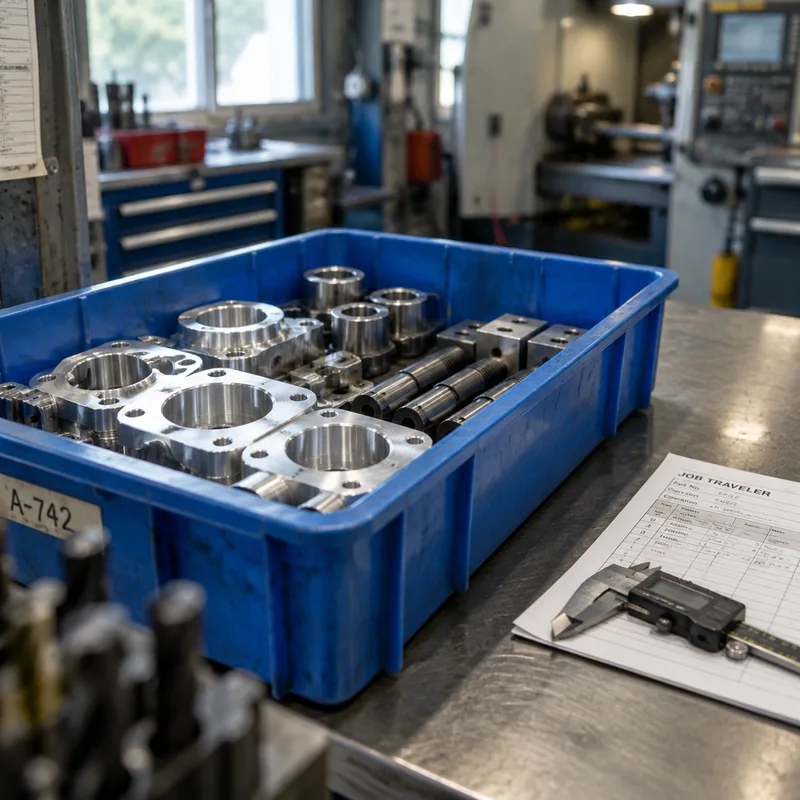
6063 is the architectural aluminum: the alloy of storefronts, curtain-wall framing, railings, furniture tube and trim, chosen not for peak strength but for two qualities the building world values more — it extrudes into intricate thin profiles beautifully, and it anodizes to the clearest, most even decorative finish of any aluminum in its family. Most 6063 reaches a machine shop as extrusion, and most machined 6063 parts are profile end-machining, drilling and fitting work on that stock.
The honest positioning is "moderate": strength sits clearly below the structural grades, which is fine for trim, enclosures and light frames and not fine for load-bearing members. In the T6 temper the gap narrows and the alloy handles more duty than its reputation suggests. The selection question is therefore rarely "is 6063 strong enough?" in the abstract — it is whether the part is an extrusion-family part at all, and if so which temper the drawing should carry.
Specifications
| Property | Value | Condition |
|---|---|---|
| Yield strength (0.2% offset) | 214 MPa typical (one source) / 172 MPa minimum (second source) | 6063-T6, 1/16" reference values (xometry, generalized) / T6 minimum (mechcodex) |
| Fatigue strength | 68.9 MPa | 6063-T6 (xometry, generalized) |
| Elongation | 12 % | 6063-T6 (xometry, generalized) |
| Hardness | 73 HB (Brinell) | 6063-T6, Brinell (two sources agree) |
| Density | 2.7 g/cm³ (≈2685 kg/m³, second source) | 6063-T6 (xometry generalized / mechcodex) |
| Youngs modulus | 69.0 GPa | 6063-T6 (mechcodex) |
| Tensile strength ultimate | 207 MPa | 6063-T6 (mechcodex) |
| Thermal conductivity | 200.8 W/m·K | 6063-T6 (mechcodex) |
| Max service temperature | 149 °C | 6063-T6 maximum service temperature (mechcodex) |
| Machined tolerance | Not established in the collected evidence — confirm at quotation. | |
Values above are rendered from the collected model-evidence layer, each carrying the heat-treatment condition it was reported under; fields without collected evidence are stated as not established rather than estimated. Requirements outside the table are confirmed for the specific geometry and batch at quotation.
Applications & Selection Points
Extruded-profile machining and architectural hardware
End-machined extrusions, machined connectors for railing and curtain-wall systems, furniture tube fittings and trim components are the alloy's home territory. Where the part begins as a stock extrusion, 6063 is usually what that stock is made of, and the machining conversation is about feature accuracy and finish protection rather than grade selection. Custom-profile extrusion plus machining is a natural pairing for volume architectural work.
Cosmetic anodized parts
When a machined aluminum part must anodize to a bright, clear, color-matched finish — consumer hardware, display fixtures, visible architectural trim — 6063 is the conventional answer precisely because its finish quality leads the family. Parts specified for cosmetic anodizing in other alloys often disappoint against samples; if the finish is the requirement, the alloy usually follows.
Where 6063 is the wrong call
Load-bearing structural members, high-strength machined fittings and any part whose specification descends from 6061 or 7075 drawings should stay on those grades — 6063 in the common tempers gives away real strength. Welded assemblies fare acceptably but the structural grades handle them with more margin. The failure mode to avoid is quoting 6063 as a cheaper substitute for a structural part: the price is real, and so is the strength you gave up.
Temper selection and machining behavior
T5 is the extrusion-house default — cooled and age-hardened in one flow, suited to most architectural duty — while T6 adds a full solution treatment and closes part of the strength gap at a small premium. Machining practice is standard aluminum: sharp carbide, flood coolant, attention to surface protection because the finish is usually the point. On anodized parts, mask critical dimensions before finishing; the anodic layer grows the part surface.
Frequently Asked Questions
6063 or 6061 for a machined part?
Follow the requirement, not the price. 6061 is the structural and mechanical default — higher strength, better welding behavior, the grade most machined-from-billet aluminum parts specify. 6063 wins when the part is an extrusion-family product or the cosmetic anodized finish is the requirement. Substituting one for the other trades strength against finish quality, and the drawing's origin (extrusion drawing or billet drawing) usually already answered the question.
Which temper should the drawing call out — T5 or T6?
T5 is the natural temper for extruded 6063 and covers most architectural and trim duty; T6 buys meaningfully higher strength for parts whose duty approached structural. The temper is part of the material specification, so the callout should reflect the load case rather than habit. If a drawing specifies 6063-T6 where an extrusion house would naturally deliver T5, expect the supply chain — and the price — to move.
What should I send for a 6063 machining quote?
The standard package — STEP model, 2D drawing with tolerances, quantity and batch intent — plus the inputs this alloy cares about: whether the part machines from stock extrusion or billet (or needs a custom profile), the temper callout, and the finish plan with emphasis on whether anodizing is cosmetic. State which surfaces are visible; on 6063 more than any other aluminum, the finish is a specification.
Ordering & Documentation
Documents
Send a STEP or IGES model with a 2D drawing carrying tolerances and the finish specification. Name the alloy and temper rather than writing "aluminum", and if the part machines onto an extruded profile, include the profile drawing or a sample — the machined features only mean something against the stock they land on.
Quotation
A quote is priced from the model and drawing, the named alloy and temper, the stock route (stock extrusion, custom profile, or billet), quantity and batch intent, and the finishing plan. Anodizing is quoted with masking requirements for critical dimensions; cosmetic expectations should be stated with a sample or a color standard, not assumed.
Sample & Supply
Prototype quantities from one piece are normal for machined aluminum and are the cheapest way to validate profile fit, finish quality and anodized color on the real geometry. First-article inspection is available on request; for anodized parts, agree the finish acceptance criteria at quotation — color and clarity are judged against agreed samples, not adjectives.
Storage & Shipping
Anodized and bare surfaces both ship protected: bare 6063 in ordinary warehouse conditions stays bright, but damp or salted storage dulls it, and finished architectural parts ship with surfaces separated and wrapped. Profile parts travel with end protection — a dinged extrusion end is the most common transit damage on machined profile work.