ADC12 Aluminum Die Casting
ADC12 aluminum die casting: the Japanese-standard high-silicon casting alloy, its property envelope, machining and finishing behavior, and where it sits against CNC-machined aluminum.
Last updated: 2026-10-31
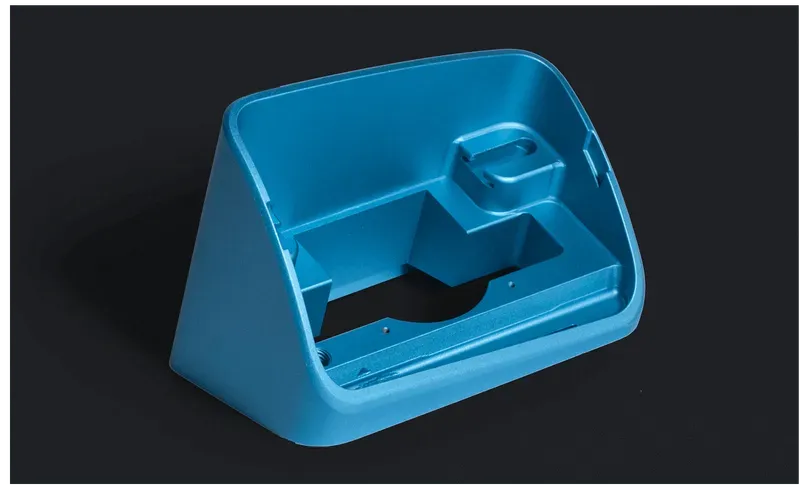
ADC12 is the dominant aluminum die-casting alloy of the Japanese standard — a high-silicon, copper-bearing alloy engineered for one job: filling thin, complex die cavities flawlessly at high cycle rates. Its fluidity is why it exists; the silicon content that makes it cast so well also makes it distinctly different metal from wrought grades like 6061 — excellent for net-shape volume parts, with its own rules for machining, finishing and anodizing.
Electronics housings, automotive components, motor and pump bodies, brackets and the enormous mid-volume world of cast aluminum hardware run on ADC12 and its close cousins (A380 in the North American standard). Most of that volume is cast to finish; the features a die cannot hold — precision bores, sealing flats, tapped threads — are added by CNC machining, and the two processes meet on nearly every serious ADC12 part.
Specifications
| Property | Value | Condition |
|---|---|---|
| Tensile strength | 310 MPa (as cast) | — |
| Melting point | 577–660°C (aluminum die-casting family band) | — |
| Min wall thickness | 1.0–1.5 mm (as-cast) | — |
Values above are rendered from the collected model-evidence layer, each carrying the heat-treatment condition it was reported under; fields without collected evidence are stated as not established rather than estimated. Requirements outside the table are confirmed for the specific geometry and batch at quotation.
Applications & Selection Points
Electronics and enclosure hardware
Router and amplifier chassis, motor drives, sensor bodies and communication enclosures are ADC12 heartland: thin walls, ribs and bosses cast to net shape, then machined on the interface faces that carry gaskets, connectors and PCBs. The castability of the alloy is what lets a housing be designed around function rather than around draft and fill limits — up to the residual porosity every die casting carries.
Automotive and mechanical components
Valve bodies, covers, pump housings, brackets and powertrain-adjacent hardware specify ADC12 for the volume economics: seconds per shot, decades of die life, and repeatable net shape. The strength of the alloy sits comfortably in the structural-light class — it carries housings and fittings, not primary structure — and its machinability is good enough that critical features are routinely cut after casting.
ADC12 versus machined wrought aluminum
The honest engineering split: die casting wins at volume on complex thin geometry and unit cost, and loses on strength, ductility, pressure-tightness assurance and anodizable finish — wrought 6061 machined from solid wins all of those and pays in material waste and machine time. Volume, wall complexity and finish decide; mid-volume parts commonly start die-cast and migrate, or the reverse, as quantities shift. The two processes are complements on the same part as often as alternatives.
Machining-behavior notes for planning
The high silicon that gives ADC12 its castability is abrasive on cutting tools — the alloy machines at good rates with correct (often PCD or fine-grain carbide) tooling, but tool-life budgeting differs from wrought aluminum. Porosity is the design constraint on machined features: keep critical bores and sealing faces away from known porosity zones, design the casting to feed them, and accept that leak-tested pressure duty needs explicit process control. Tapped threads in ADC12 are standard practice with the engagement allowances the lower ductility of the alloy requires.
Finishing boundaries worth knowing early
ADC12 paints, powders and plates well; it does not clear-anodize to a cosmetic finish — the silicon leaves the characteristic mottled grey. Anodizing on this alloy is functional (thin, protective), not decorative. Drawings that need a bright or uniform anodized surface are 6061-machined drawings, not die-cast drawings — a decision worth making before tooling, not after.
Frequently Asked Questions
Is ADC12 the same as A380?
They are close cousins, not twins: A380 is the North American workhorse with a similar role, ADC12 the Japanese-standard equivalent, and their compositions overlap but do not coincide — silicon and copper sit in neighboring bands. Cross-standard drawings should name the alloy they were designed around; most shops can pour to either with the tooling and process notes adjusted.
Why do machined ADC12 surfaces sometimes show pits?
Die castings carry inherent porosity — gas and shrink voids are part of the process. Machining into a porosity zone exposes it, which is why critical features are positioned with the casting design, and why pressure-tight parts carry impregnation or leak-test steps. It is a managed property of the process, not a defect when the drawing plans for it.
Can ADC12 parts be anodized?
Functionally, yes; cosmetically, no. The high silicon content leaves anodized ADC12 a mottled dark grey that cannot serve as a uniform decorative finish. Powder coating and painting are the standard finishing route; if the design needs clear or colored anodizing, that is a machined-wrought-aluminum decision.
What should I send for an ADC12 die-casting quote?
A STEP model, a 2D drawing separating as-cast from machined features with tolerances, quantity, alloy callout (ADC12 or the equivalent your standard uses) and finish. Tooling is a real line item in die casting — a good quote shows tooling amortization separately so the volume assumption behind the piece price is explicit.
Ordering & Documentation
Documents
Send a STEP or IGES model with a 2D drawing that marks as-cast surfaces against machined tolerances and names the alloy standard. Note any pressure-tightness or leak-test requirement explicitly.
Quotation
Pricing follows the model, drawing, quantity, finish and tooling scope, with machined features priced after the casting. Porosity-sensitive features deserve a callout at quotation, not a discovery at leak test.
Sample & Supply
First articles verify as-cast tolerance, machined features and finish together. Production follows the approved sample; material certification and, where specified, leak-test records accompany supply.
Storage & Shipping
ADC12 castings are stable in ordinary storage; machined sealing faces ship protected. As with any machined aluminum, bare machined surfaces may oxidize cosmetically in humid storage — finished parts carry their coating.