G10 CNC Machining
CNC machining of G10 glass-epoxy laminate: electrical and mechanical insulation applications, how the glass reinforcement shapes tooling and tolerances, and the G10-versus-FR4 specification question.
Last updated: 2026-10-29
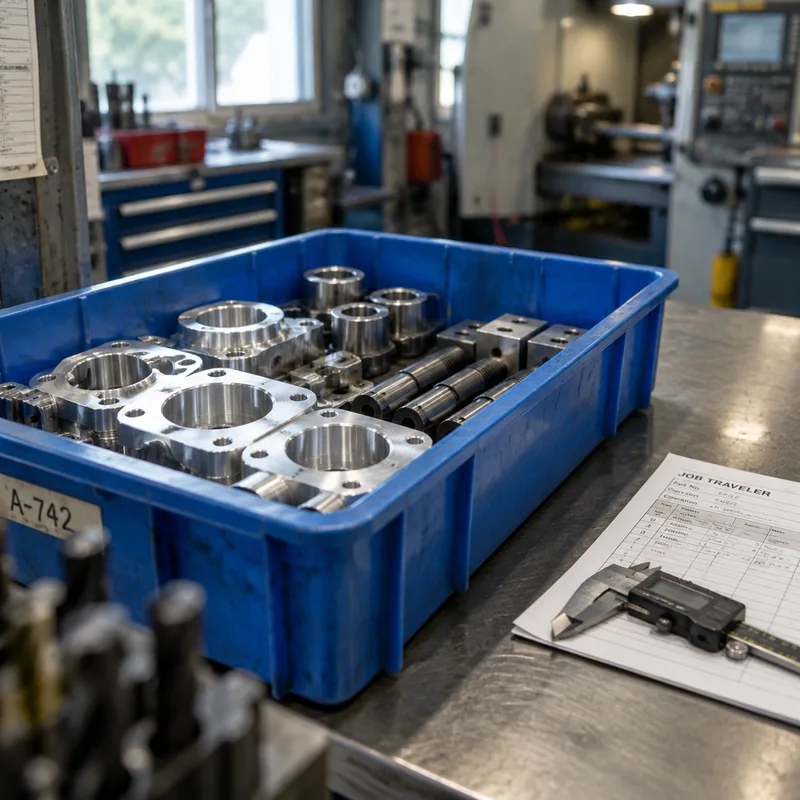
G10 is a continuous glass-fabric laminate bonded under pressure with epoxy resin: high strength for a plastic, an excellent electrical insulator, low water absorption, and dimensional behavior far steadier than the thermoplastics. Supplied as sheet, rod and tube, it is the standard machined answer for insulating components that must also carry mechanical load — test fixtures, terminal boards, standoff insulators, jig elements and structural insulation.
The glass fabric that gives G10 its strength also defines its machining character: it is abrasive to tooling, it wants carbide and preferably diamond-tooling on long runs, and it produces fine dust that wants extraction. Laminates are also directional — strength and machining behavior differ along and across the weave — so thick sections and grain-critical parts should be quoted with the stock orientation in mind rather than treated as homogeneous plastic.
Specifications
| Property | Value | Condition |
|---|---|---|
| Tensile strength | 275–320 MPa | G10 sheet, grade-dependent |
| Density | 1.7–1.9 g/cm³ | G10 sheet |
| Thermal expansion | 14–17×10⁻⁶/°C (x/y); 50–55×10⁻⁶/°C (z) | G10 sheet, directional |
| Machining parameters | 15,000–20,000 RPM spindle; 100–150 in/min feed; PCD or solid-carbide diamond-cut tooling (HSS dulls in minutes) | G10/FR4 laminate routing |
| Flexural strength | 380–480 MPa | typical |
| Dielectric strength | 20–25 kV/mm | typical |
| Compressive strength | Not established in the collected evidence — confirm at quotation. | |
Values above are rendered from the collected model-evidence layer, each carrying the heat-treatment condition it was reported under; fields without collected evidence are stated as not established rather than estimated. Requirements outside the table are confirmed for the specific geometry and batch at quotation.
Applications & Selection Points
Electrical insulation with mechanical duty
Standoff insulators, terminal boards, switchgear components and insulating spacers are G10's core assignment: the dielectric behavior of an insulation-grade material with enough strength to carry mounting loads and resist impact — a combination most plastics cannot offer. Low moisture uptake keeps the insulation performance stable in damp service, which is where cheaper phenolics and many thermoplastics fall away.
Test fixtures, jigs and tooling plates
Dimensional stability, flatness and low cost per sheet make G10 a fixture-shop staple: inspect fixtures, assembly jigs, drilling templates and insulating tooling plates that hold their dimensions through shop-life and resist oils and coolants. Where the fixture must not conduct — or must not scratch the parts it holds — G10 is usually the first material pulled from the rack.
G10 or FR4: settle the specification before the cut
The two laminates are twins in construction — glass fabric in epoxy — differing in the flame-retardant additives FR4 carries. A drawing that invokes a flammability requirement needs FR4 and its certification; a drawing with no fire requirement gets G10's slightly cleaner mechanical pedigree. The expensive mistake is assuming they are interchangeable in a regulated application: match the callout, then machine, because substitutions inside insulation families are a concession conversation.
Machining-behavior selection points
Expect aggressive tool wear — the glass is effectively cutting a fiber-reinforced abrasive — so sharp carbide with generous speeds, or diamond tooling on production volume, is standard practice, with dust extraction treated as a health requirement rather than an option. Delamination and fraying at edges are the quality watch-items: proper support, sharp tools and climb strategy keep cut edges clean. Tight internal features and very thin webs deserve a manufacturability look before quoting.
Frequently Asked Questions
Is G10 the same as FR4?
Structurally near-identical — woven glass fabric in an epoxy matrix — but FR4 adds flame-retardant chemistry, which is why electronics and regulated applications specify it. G10 is the non-flame-retardant variant, often preferred where pure mechanical and insulating performance matters and no fire requirement exists. Quote the grade the drawing names; when the drawing is silent and fire safety could matter, the requirement needs settling before production.
What tolerances can a machined laminate hold?
Better than thermoplastics, with caveats: the material is dimensionally stable and does not creep like nylon, but it is directional along and across the weave, and edge quality depends on tooling state. Practical practice reserves tight callouts for features machined in one setup, keeps laminate-thickness tolerance out of critical dimension chains, and specifies edge quality where insulation or mating matters. State the tight features on the RFQ rather than tightening the whole drawing.
What should I send for a G10 machining quote?
The standard package — STEP model, 2D drawing with tolerances, quantity and batch intent — plus the laminate-specific inputs: sheet thickness and stock form (sheet, rod or tube), the orientation that matters to strength, any flammability requirement that would switch the job to FR4, and edge-quality expectations on insulating surfaces. Laminate parts quote best when the stock form is decided before the price is.
Ordering & Documentation
Documents
Send a STEP or IGES model with a 2D drawing carrying tolerances and any governing insulation or flammability standard. Name the laminate grade — G10 versus FR4 is a real specification, not a style choice — and state stock thickness and form; a laminate part drawn without a stock thickness is missing its most important manufacturing input.
Quotation
A quote is priced from the model and drawing, the named grade and stock form, quantity and batch intent, and edge-quality requirements. Material utilization matters on sheet stock — parts nested across a sheet price very differently than parts cut one-per-blank — so quantity bands and sheet-size assumptions belong in the RFQ.
Sample & Supply
Prototype quantities from one piece are normal for machined laminate and are the cheapest way to validate edge quality, hole sizing and flatness on the real geometry. First-article inspection is available on request; for insulating parts, agree whether any dielectric testing rides with inspection at quotation, because that scope belongs to the supply commitment, not the machine.
Storage & Shipping
G10 is stable in ordinary warehouse conditions and resists moisture uptake, so finished parts ship plainly — separated to protect machined edges, since laminate edges chip on hard contact. Machining dust should be cleaned from packaging before shipment. No special climate handling is needed, unlike the moisture-managed thermoplastics.