Phenolic CNC Machining
CNC machining of phenolic laminate (paper, linen and glass grades, including Bakelite): where the thermoset earns its place, how it cuts, and what to specify at quotation.
Last updated: 2026-10-29
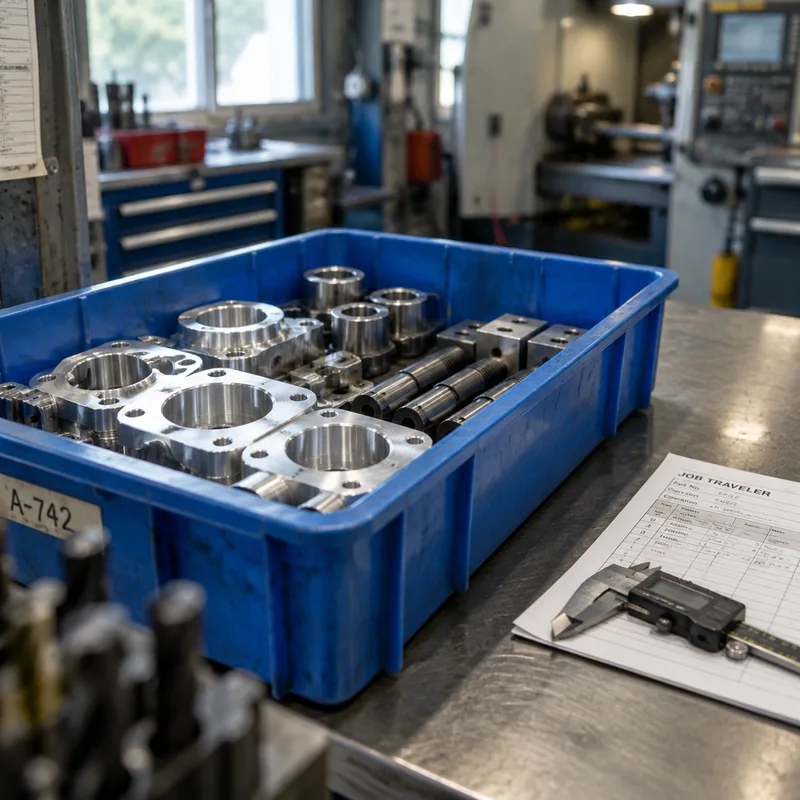
Phenolic is the thermoset laminate family — paper, cotton fabric or glass cloth reinforcement bonded with phenolic resin, and known historically by the Bakelite trade name. It does not melt the way thermoplastics do: it chars instead, which is why it keeps its shape under heat where nylon or acetal would creep, and why it has held electrical-insulation duty for a century.
Machining phenolic is a cutting problem, not a rubbing problem: the material is hard, dimensionally stable and dimensionally unforgiving of dull tooling. Sharp, high-rake cutters with a steady feed shear it cleanly; a worn edge crushes the laminate and shatters edges. It also produces fine abrasive dust, so extraction and sealing are part of the process plan rather than an afterthought.
Specifications
| Property | Value | Condition |
|---|---|---|
| Density | 1.30–1.40 g/cm³ | phenolic laminate, typical |
| Continuous service temperature | 120–150 °C continuous | laminate composite, continuous duty |
| Max operating temperature | 140 °C maximum operating temperature (referenced grade) | specific referenced phenolic grade |
| Hardness | Rockwell M100 | referenced phenolic laminate grade |
| Tensile strength | 13,000 PSI lengthwise / 9,000 PSI crosswise | referenced phenolic laminate grade, direction-dependent |
| Compressive yield strength | 37,000 PSI | referenced phenolic laminate grade |
| Machined tolerance | ±0.10 mm as-machined typical; ±0.005 in on milled features and ±0.003 in on drilled holes achievable with proper technique (paper grade) | grade- and process-dependent |
| Cutting parameters | surface speeds around 100–200 m/min with 0.05–0.10 mm per tooth feed, sharp high-rake tools | most laminate grades, milling/turning |
| Flammability rating | UL94 HB; thermal conductivity 7.0 x 10⁻⁴ cal/cm-sec-°C | referenced phenolic grade |
| Flexural strength | 22,000 psi (LW) / 16,000 psi (CW) | LE paper phenolic, lengthwise/crosswise |
| Dielectric strength | 625 V/mil | short time, 1/8 in thick |
| Water absorption | 1.8% | LE paper phenolic |
Values above are rendered from the collected model-evidence layer, each carrying the heat-treatment condition it was reported under; fields without collected evidence are stated as not established rather than estimated. Requirements outside the table are confirmed for the specific geometry and batch at quotation.
Applications & Selection Points
Electrical insulation and switchgear
Phenolic is still one of the reference materials for insulating components — terminal boards, switchgear parts and insulating spacers — because it combines high dielectric strength with dimensional stability across a useful temperature band. Grades are selected by reinforcement: paper grades for general insulation, fabric grades where mechanical strength joins the requirement, glass grades for the stiffest duty.
Wear parts and precision mechanical components
The laminate family carries high hardness, compressive strength and excellent wear resistance for its weight class — bearings, bushings, guides and high-wear components are classic assignments, particularly in linen-grade material where a fine weave supports close detail. The boundary is impact: phenolic is comparatively brittle and can crack under sudden load or shock, so duty with repeated impact belongs to tougher plastics or metals.
Where phenolic is the wrong call
Sustained high heat is the first boundary — the referenced grade tops out around ordinary industrial temperatures and under-hood or sustained high-heat service needs a higher-temperature polymer. Flammability is the second: standard phenolic carries a modest horizontal-burn rating, not a flame-retardant one, and regulated applications need the rating checked against the actual requirement rather than assumed.
Machining-behavior selection points
Plan the process around brittleness and direction: continuous feeds beat interrupted cuts, entry and exit deserve sharp geometry, and thin sections need support rather than clamping force. Waterjet and saw cutting handle blanking well on sheet, with milling and drilling finishing the features. Drilled holes tend to oversize slightly from laminate springback, so close-tolerance holes are reamed, not drilled, to size.
Frequently Asked Questions
Are Bakelite, phenolic and laminate the same material?
They overlap but are not interchangeable names. Bakelite is the historical trade name for phenol-formaldehyde resin; modern machined "phenolic" is usually a laminate — the resin reinforced with paper, cotton fabric or glass cloth — and the reinforcement changes the mechanical grade substantially. Procurement documents should name the reinforcement type and the governing standard (NEMA or MIL grade designations exist) rather than the trade name alone.
Which phenolic grade should my part use?
Decide from the duty, not the catalog: paper grades for general electrical insulation and economy, linen/cotton grades for mechanical strength and fine detail, glass grades for the highest strength and stiffness. If the environment is ambiguous — temperature, moisture or electrical duty — state it on the RFQ so the grade can be proposed against the real requirement instead of guessed.
What should I send for a phenolic machining quote?
The standard package: a STEP model plus a 2D drawing with tolerances and finish callouts, the reinforcement type or governing grade designation named explicitly, quantity and batch intent, and the electrical or temperature duty the part must survive. Edge-quality expectations belong on the drawing — laminate edges are where grade and technique show first.
Ordering & Documentation
Documents
Send a STEP or IGES model with a 2D drawing carrying tolerances, thread callouts and edge-quality requirements. Name the reinforcement type (paper, linen, glass) and any governing standard rather than writing "phenolic" — the family spans materials with genuinely different strength and insulation behavior.
Quotation
A quote is priced from the model and drawing, the named grade, quantity and batch intent, tolerance class on critical features, and edge-quality expectation. Sheet thickness and stock form matter: machining from laminate sheet versus rod changes both cost and grain direction of strength.
Sample & Supply
Prototype quantities from one piece are normal for machined phenolic and are the cheapest way to validate edge quality and hole sizing on the actual grade. First-article inspection is available on request; agree the scope — including any insulation tests — at quotation.
Storage & Shipping
Phenolic ships with as-machined edges unless a finish callout says otherwise; the material is dimensionally stable across ordinary warehouse conditions. Keep finished parts dry and separated from abrasive handling contact, and note that fine machining dust should be cleaned from packaging before shipment.