Gray Cast Iron CNC Machining
Machining gray cast iron (HT250 / GG25 class): the graphite-damped vibration absorber, how class numbers map to strength, the chip and dust discipline of machining it, and what to send for a quotation.
Last updated: 2026-10-31
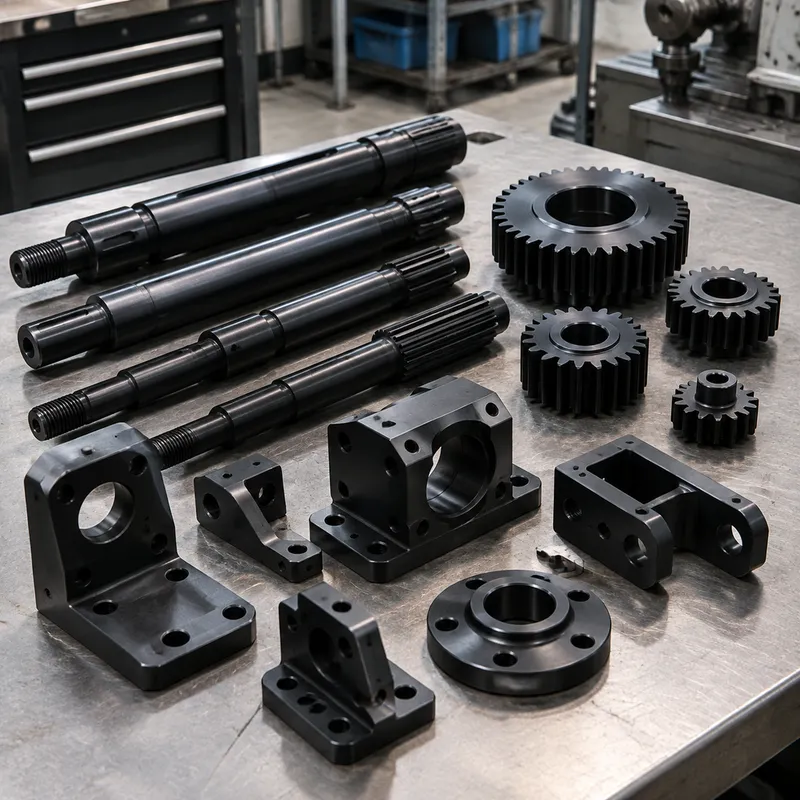
Gray cast iron is the classic machine-tool material: graphite flakes dispersed through an iron matrix give it damping behavior no steel matches, which is why machine bases, columns, gearbox housings and electric-motor frames have been cast in it for a century. The graphite also makes it one of the easiest irons to machine — the chips crumble rather than form — while compressive strength is the pride of the family and tensile strength is its known limit.
For buyers, gray iron arrives as castings: the near-net shape comes from the foundry, and CNC machining adds the precision faces, bores and mounting features a casting cannot hold. Class numbers (HT250, GG25 and equivalents) name the strength tier, and the machining conversation starts with knowing which surfaces were cast and which will be cut — the drawing that separates the two gets accurate quotes and straight parts.
Specifications
| Property | Value | Condition |
|---|---|---|
| Tensile strength | 170-250 MPa | gray cast iron (Class 25–35) |
| Hardness | 187-269 HB | gray cast iron (Class 25–35) |
| Compressive strength | 150-400 MPa | cast iron (graphite-forming, gray type per source context) |
Values above are rendered from the collected model-evidence layer, each carrying the heat-treatment condition it was reported under; fields without collected evidence are stated as not established rather than estimated. Requirements outside the table are confirmed for the specific geometry and batch at quotation.
Applications & Selection Points
Machine bases, columns and vibration-critical frames
Machine-tool bases, milling columns, press frames and CNC bed castings specify gray iron for damping: the graphite network converts vibration into heat where a steel frame would ring. Machining the ways, mounting faces and spindle bores of a gray-iron casting is the founding workflow of machine-tool building, and aged, stress-relieved castings hold their geometry for decades.
Gearbox, pump and motor housings
Housings that carry bearings, shafts and internal loads — gearboxes, pump bodies, motor frames and compressor casings — use gray iron for the combination of damping, compressive strength and easy casting of complex internal geometry. Machined bearing bores and sealed faces are the precision layer on a cast body; the alloy cuts freely enough that housing machining is routine volume work.
Where gray iron is the wrong call
Tensile and impact loading is its boundary: gray iron is brittle and does not bend before it breaks, so tension-dominated structures, impact service and pressure-containing thin sections step to ductile iron or steel. The class number is the guide — heavier tensile duty means a higher class or a different family, not a thicker gray-iron wall.
Machining behavior — chips, dust and tooling
Gray iron machines with crumbly, discontinuous chips and generally good tool life at economical parameters. The work is dry or minimally lubricated, which produces fine graphite-bearing dust — extraction and sealed machine ways are the discipline that keeps tooling and ways alive. Cast surfaces are also abrasive to cut through, so the first pass into skin is where inserts earn their keep.
The casting-to-machining interface
Every gray-iron part carries a casting skin with its own variation, and machining removes it where precision lives. Good drawings show which faces are datum-machined, how much stock the foundry leaves, and which bores are machined in one fixturing so their relationship stays true. Stress relief or natural aging before final machining is the standard defense against the internal stresses a casting carries.
Frequently Asked Questions
What does the class number on gray iron mean?
It names a minimum tensile strength tier — the way HT250 or GG25 identifies a class of gray iron expected to meet that tensile level in the standard test section. Class is not a complete specification: section size, cooling rate and foundry practice all move real properties, so drawings pair the class with the testing and certification expectations that matter to the part.
Why is gray iron used for machine bases instead of steel?
Damping. The graphite flakes that define gray iron absorb vibration as heat, so a gray-iron base settles a cutting process faster than a stiffer steel frame that rings. Steel wins on tension and weldability, which is why fabricated steel frames exist — but where vibration behavior is the spec, cast gray iron keeps its century of incumbency.
Can gray iron parts be welded or repaired?
Yes, but as a qualified procedure, not a field convenience: the graphite structure needs special electrodes, preheat and controlled cooling to avoid cracking at the repair zone. Design welded assemblies around steel instead. Repaired iron parts — usually brazed, pinned or stitched — are a maintenance technique for irreplaceable castings rather than a production route.
Is the dust from machining gray iron a problem?
It is a discipline item: dry machining gray iron produces fine graphite-bearing dust that is abrasive to machine ways and a housekeeping and exposure issue in the shop. Good extraction, enclosed machining and sealed ways handle it — from the buyer side, the practical point is that reputable shops already run this discipline, and machining castings is routine work.
What should I send for a gray iron machining quote?
The casting drawing plus a 2D machining drawing that marks machined faces, datum scheme, tolerances and thread callouts, the class designation and any pressure or leak requirements, and quantity. Castings usually arrive from the foundry side, so stating who supplies the casting is the first scoping question in the quote.
Ordering & Documentation
Documents
Send the machining drawing with tolerances and the datum scheme, the class designation (HT250 / GG25 or equivalent), and the casting supply arrangement — customer-castings machining and full cast-and-machine sourcing are different quotes.
Quotation
Pricing follows the machining scope, stock allowance on the casting, fixturing complexity, quantity and inspection. On cast-and-machine sourcing, tooling and pattern costs are their own line — the quote should show them separately so volume assumptions stay visible.
Sample & Supply
First articles verify machined dimensions against the casting datum scheme, surface finish, and — where specified — pressure-tightness or hardness. Stress-relief or aging state is part of the sample conversation, since it is what keeps geometry stable after final machining.
Storage & Shipping
Gray iron parts are dimensionally stable and ship in standard protective packing; machined faces are oiled against rust like any ferrous surface. Castings are heavy and brittle — supported packing that prevents impact loading in transit is the handling requirement, not corrosion control.