Magnesium CNC Machining
Machining magnesium (AZ91D): the collected property envelope, the chip-fire safety reality, corrosion management, and what to state on the RFQ.
Last updated: 2026-10-27
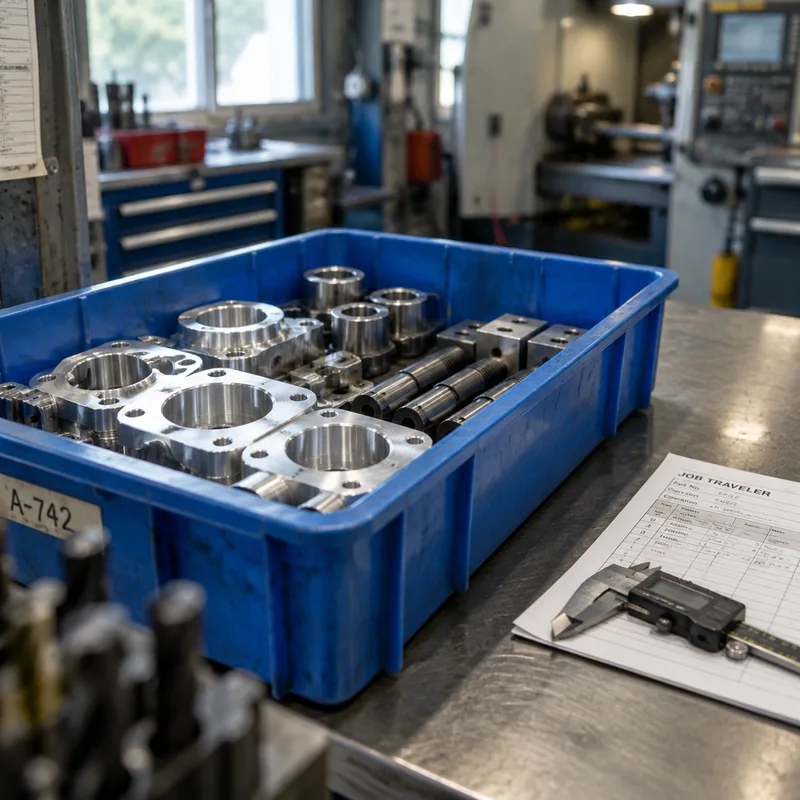
Magnesium is the lightest structural metal in common use: its standard casting alloy comes in at roughly a third lighter than aluminium, with strength-to-weight in the same conversation. Handheld electronics housings, aerospace and automotive components, and power-tool frames use it where every gram of swinging or carried mass is felt by a user or a fuel budget.
Two realities shape every magnesium job. First, the metal is most often delivered as a casting — die cast near-net, then machined on the functional surfaces — so the machining conversation usually starts from a cast blank. Second, fine magnesium chips are flammable, and any competent shop runs the discipline that goes with them: the right coolants, housekeeping and fire equipment. Neither is a reason to avoid the material; both are reasons to put the job with a shop that does it routinely.
Specifications
| Property | Value | Condition |
|---|---|---|
| Common alloy | AZ91D | the most common magnesium alloy, known for strength-to-weight ratio |
| Density | ≈ 1.8 g/cm³ | about 35% lighter than aluminum and 75% lighter than zinc per the same source |
| Melting point | ≈ 600 °C | AZ91D; chip fire risk means machining cells need appropriate safety equipment per the source |
| Tensile strength | Not established in the collected evidence — confirm at quotation. | |
| Hardness | Not established in the collected evidence — confirm at quotation. | |
| Corrosion coating requirement | Not established in the collected evidence — confirm at quotation. | |
Values above are rendered from the collected model-evidence layer, each carrying the heat-treatment condition it was reported under; fields without collected evidence are stated as not established rather than estimated. Requirements outside the table are confirmed for the specific geometry and batch at quotation.
Applications & Selection Points
Weight-critical moving and handheld parts
Where the part accelerates, swings or gets carried, magnesium’s density advantage over aluminium converts directly into product value: lighter drones and gimbal frames, thinner wearable housings, lower unsprung mass. The strength-to-weight ratio, not absolute strength, is the selling point — design accordingly.
Cast-then-machined housings
The standard production route is die casting to near-net shape, then machining datum faces, bores and threads. The machining scope is where tolerances live, so the RFQ should define which surfaces are as-cast and which are machined — the same discipline as any casting-and-machining plan, with a lighter alloy.
Corrosion management as a specification
Magnesium corrodes readily; the common alloy improves on pure metal but service in harsh environments still expects protective coating — paint or powder coat as standard, with conversion treatments under cosmetic finishes. Galvanic pairs matter too: direct contact with steel or carbon fibre in wet service needs isolation. State the environment; the coating plan follows.
Choosing it over aluminium
The comparison is rarely close in both directions: magnesium wins weight decisively and costs more per kilogram with a stricter safety regime; aluminium wins on stiffness per unit cost and forgives more design errors. Where weight is the paid-for property — portable, airborne, reciprocating — the premium returns its value every cycle.
Frequently Asked Questions
Is machining magnesium dangerous?
Fine magnesium chips are flammable, and the discipline around them — proper coolant use, chip collection, housekeeping and fire equipment rated for metal fires — is real and non-negotiable. It is routine, industrialized discipline: thousands of magnesium parts are machined daily. What it is not, is a material to hand to a shop that has never run it. Ask about magnesium experience alongside the quote.
Why is my magnesium part usually a casting first?
Because the alloy’s economics favour forming the shape by casting and machining only what needs tolerance: the casting buys the complex geometry cheaply, and the machining spends effort where function lives. Buying the whole part from machined billet is possible but pays for metal removal that casting would have provided for free.
What should I send for a magnesium machining quote?
The STEP model and drawing with tolerances, the alloy, the intended finish and service environment, and — critically — whether the part starts from a casting or billet. Name any galvanic-couple neighbours in the assembly; isolation details are cheaper to design in than to retrofit.
Ordering & Documentation
Documents
Send a STEP model with a 2D drawing carrying tolerances, the alloy callout, and a clear split between as-cast and machined surfaces where the route is cast-then-machine. State the service environment for the coating plan.
Quotation
A quote is priced from the blank route (cast or billet), machining scope, finish and quantity. Shops with magnesium experience will quote the safety and chip-handling discipline into the plan — treat that as a competence signal, not a premium to shop away.
Process & Safety
Expect flood coolant or equivalent chip management, segregated chip collection, and fire watch discipline in the cell. Confirm the shop’s magnesium-specific practice as part of supplier qualification — it is a standard question on this material.
Finishing & Supply
Finished parts ship coated as specified — conversion treatment plus paint or powder coat for most service. Agree inspection criteria and any weight documentation at quotation; on weight-critical parts, the as-shipped mass is often a specified number.