Molybdenum CNC Machining
CNC machining of molybdenum: the refractory metal behind furnace hardware, glass tooling and sputtering targets — machining behavior, oxidation limits, and RFQ guidance.
Last updated: 2026-10-30
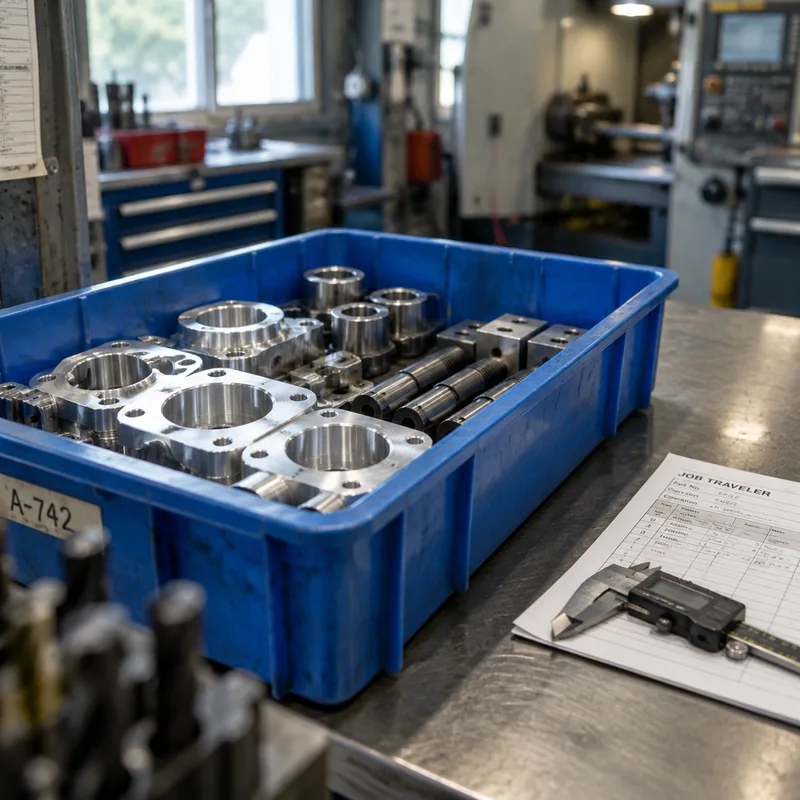
Molybdenum is a refractory metal — its melting point sits far above any steel or nickel alloy — and it carries useful strength to temperatures where most structural metals have already surrendered. That is the buying argument: furnace boats and shields, glass-melting tooling and electrodes, sputtering targets, hot-work dies and resistance-heating elements. In pure form it is also hard and brittle at room temperature, which shapes everything about machining it.
The honest machining story is that molybdenum is cut with tungsten-carbide tooling the way hard alloy steels are, at modest speeds with rigid setups — and that its real enemy is not the machine but the atmosphere. Above its oxidation threshold it attacks rapidly in air, so service temperature in oxidizing environments is the design limit that matters, and it belongs on the RFQ in explicit numbers.
Specifications
| Property | Value | Condition |
|---|---|---|
| Melting point | 2,623 °C | |
| Density | 10.223 g/cm³ | at 20 °C |
| Hardness | 5.5 Mohs | pure form |
| Max service temperature | 760 °C | rapidly oxidizes above this temperature in air |
Values above are rendered from the collected model-evidence layer, each carrying the heat-treatment condition it was reported under; fields without collected evidence are stated as not established rather than estimated. Requirements outside the table are confirmed for the specific geometry and batch at quotation.
Applications & Selection Points
Furnace hardware and hot-zone components
Boats, trays, shields, heating-element supports and radiation shields in vacuum and inert-atmosphere furnaces are the classic molybdenum portfolio — in the absence of air, its temperature capability is extraordinary. Machined-from-sheet and -bar covers most hardware; drawn and rolled forms come from the refractory mills. The RFQ should state atmosphere explicitly: vacuum or hydrogen service is the alloy at home, and air is the alloy at its limit.
Glass industry tooling and electrodes
Glass melting electrodes, stirring rods, mold components and matching seals use molybdenum because it wets and resists molten glass while surviving the temperature — no steel or nickel alloy competes here. Machined electrode tips and tooling interfaces are standard shop work in glass-adjacent regions. Glass chemistry varies; the specific glass and process temperature belong in the RFQ.
Sputtering targets and semiconductor hardware
Molybdenum sputtering targets, backing plates, clamp rings and chamber hardware serve thin-film deposition, where purity and flatness dominate the specification. Machining these parts is precision work on a difficult material — flatness, surface finish and cleanliness requirements should be explicit, because the deposition process inherits every defect.
Where molybdenum is the wrong call
If the temperature never leaves the range ordinary superalloys cover, molybdenum is expensive metallurgy the duty does not use — Inconel or a tool steel solves it cheaper. If the service is oxidizing at high temperature, its rapid oxidation in air disqualifies it unless coated or the atmosphere is controlled — tungsten-ceramic composites or coated refractories take those duties. And where thermal conductivity with corrosion resistance is the need, copper alloys are the honest answer.
Machining behavior and process planning
Molybdenum machines like a hard, abrasive alloy steel at perhaps half the cutting speed: sharp carbide tooling, rigid setups, flood coolant, and steady engagement — it work-hardens and it is temperature-sensitive in the cut. Its brittleness at room temperature means clamping and edge breakouts deserve care: avoid shock loads, support thin sections fully, and expect edge chipping on interrupted cuts. It cuts genuinely well for a refractory metal — better than tungsten by a wide margin — but tooling budgets should assume carbide wear.
The oxidation wall — the one number that matters
In air, molybdenum oxidizes rapidly above its service threshold and the oxide is volatile, so the material consumes itself — this, not melting point, is the real service limit in oxidizing environments. Vacuum, inert gas and reducing atmospheres remove the ceiling entirely. Design conversations should settle atmosphere and temperature together: a molybdenum part specified for air service above its threshold is a scheduled failure regardless of how well it was machined.
Joining, threading and design-for-manufacture
Molybdenum welds under inert atmosphere with matching filler for non-critical joints; critical structural joints often use mechanical fastening or brazing instead, and threading is done in the cut at modest sizes with careful tapping practice. Riveting and stem-formed joints appear in sheet assemblies. Design-for-manufacture guidance: generous radii, avoid knife edges, and put the precision where inspection can verify it — refractory metal rework is expensive.
Frequently Asked Questions
Is molybdenum machinable at all, or is it purely a grinding job?
It machines conventionally with carbide tooling — better than tungsten, harder than most alloy steels. The practical regime is moderate speeds, sharp tools, flood coolant and rigid setups. What it does not forgive is shock: brittle edges chip on interrupted cuts and abusive clamping. Shops that cut hard steels adapt quickly; the surprises are edge breakout and tool wear, both manageable with planned tool changes.
Why does molybdenum fail in air above a temperature that its melting point says it should survive?
Because oxidation, not melting, is the limit. Above its oxidation threshold in air, molybdenum forms an oxide that sublimates — the surface evaporates away and the part consumes itself. The enormous melting point only counts where air is absent: vacuum furnaces, hydrogen atmospheres, inert gas. If your duty is hot air, the honest options are coatings, a different refractory, or accepting a much lower service temperature.
Molybdenum or tungsten for my furnace part?
Molybdenum if machinability, cost and weight matter and the temperature band is within its envelope — it is far easier to machine and considerably lighter. Tungsten where the absolute temperature ceiling, density or erosion resistance is the argument — it outperforms at the extreme but is substantially harder to work. Many furnace designs use both, each where its physics earns it. State the true peak temperature and atmosphere; the choice usually follows mechanically.
Can molybdenum parts be welded or repaired?
Yes, under inert atmosphere shielding with matching filler, and furnace hardware repairs are routine in refractory-fabrication shops. Air welding is not possible — atmospheric contamination embrittles the joint. Design joints so critical geometry does not depend on weld quality alone: mechanical retention plus weld, or brazed joints, are the robust patterns. Repairs on precision parts usually return to the machine after joining rather than finishing at the joint.
What should I send for a molybdenum machining quote?
A STEP model and 2D drawing with tolerances and finish callouts, the material form — sheet, bar, or mill product — quantity, and above all the service atmosphere and temperature. Purity requirements matter on deposition hardware and should be stated. Flatness and surface finish on targets and shields belong as explicit callouts; on refractory metals those requirements are priced, not assumed.
Ordering & Documentation
Documents
Send a STEP or IGES model with a 2D drawing carrying tolerances, finish and flatness callouts, and purity requirements where they exist. State the service atmosphere and peak temperature on the RFQ itself — it is the design limit, not background.
Quotation
Quotes price from material form, geometry, tolerance class and inspection scope. Thin sections, knife edges and interrupted-cut geometry should be flagged — on a brittle refractory they are the risk lines. Certification from the refractory mill is standard supply.
Sample & Supply
Prototype quantities are normal and worth doing before batch work — first articles verify edge quality and flatness on the specific geometry. Mill certification traceable to the lot is the norm; agree its scope before production.
Storage & Shipping
Finished parts are stable in ordinary storage but should be kept clean and dry — surface contamination matters on deposition and furnace hardware. Pack with edge protection: refractory-metal edges chip on hard contact, and a chipped shield or target is rework at premium prices.