Tungsten CNC Machining
CNC machining of tungsten: the densest practical metal with the highest melting point of any metal — machining reality, oxidation limits, radiation shielding, and RFQ guidance.
Last updated: 2026-10-30
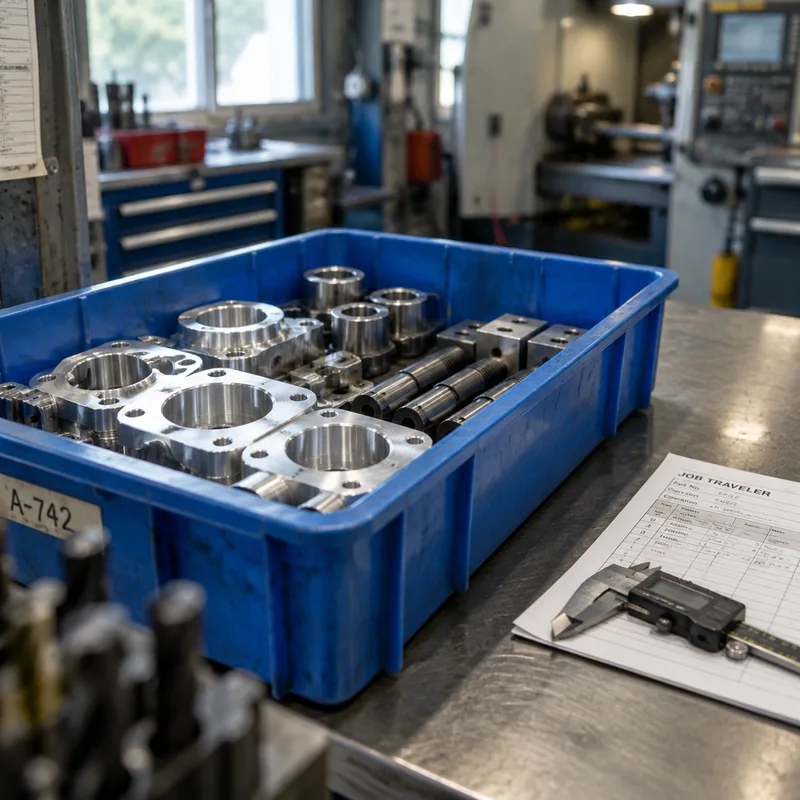
Tungsten holds the extremes of the metal table: the highest melting point of any metal, density in the range of gold and uranium, and strength that survives temperatures no other structural metal visits. That is why it lives in radiation shielding, kinetic weights and balance masses, vacuum-furnace elements, X-ray targets and the most demanding electrical contacts — duties chosen specifically because nothing cheaper survives them.
The machining reality deserves honesty up front: sintered tungsten is hard, brittle and abrasive, and it is cut slowly with carbide tooling or finished by grinding and EDM rather than machined the way steel is. Heavy-tungsten alloys — tungsten mixed with nickel-copper or nickel-iron binders — machine far more conventionally and cover most machined-part demand. Knowing which of the two the drawing means is the first RFQ question.
Specifications
| Property | Value | Condition |
|---|---|---|
| Melting point | 3422 °C | |
| Density | 19.254 g/cm³ | at 20 °C |
| Thermal conductivity | 173 W/(m·K) |
Values above are rendered from the collected model-evidence layer, each carrying the heat-treatment condition it was reported under; fields without collected evidence are stated as not established rather than estimated. Requirements outside the table are confirmed for the specific geometry and batch at quotation.
Applications & Selection Points
Radiation shielding and collimation
Gamma and X-ray shielding blocks, collimators, source holders and syringe shields use tungsten where lead is too soft, too bulky or too regulated — tungsten shields in a third the volume of lead. Machined-from-billet covers collimators and custom holders with precise apertures; heavy-alloy stock machines conventionally. Regulatory context matters: some jurisdictions restrict lead, making tungsten the compliant choice rather than the exotic one.
Balance weights, vibration masses and kinetic hardware
Aircraft control-surface balance weights, vibration dampers, crankshaft and flywheel compensators and counterweights use heavy tungsten alloys where mass must fit into small volume. The density argument is purely geometric — the same mass in a fraction of the space. Machined heavy alloy is standard work; certification of mass and dimensions is the usual inspection, and geometry tolerances matter because the mass distribution is the function.
Furnace, electrical contact and X-ray target duties
Vacuum-furnace heating elements and shields, resistance-welding electrodes, electrical contacts and X-ray rotating anode targets use pure tungsten at temperatures and duty cycles nothing else reaches. These parts are grinding- and EDM-finishing work as much as cutting work, on sintered or forged stock from the refractory mills. Purity, density and thermal requirements belong as explicit callouts — the function lives in them.
Where tungsten is the wrong call
If the duty is temperature within superalloy range, Inconel and the nickel alloys do it cheaper and vastly easier to make. If it is shielding without a volume constraint, lead is cheaper and simpler to work. If it is wear at moderate temperature, carbide composites and tool steels deliver at commodity prices. And molybdenum covers most refractory duties at better machinability and lower weight — tungsten is for where its specific extremes are the argument.
Machining behavior and process planning
Pure sintered tungsten machines at slow speeds with sharp carbide, tolerates almost no interrupted cut, and rewards grinding and EDM for finishing — its brittleness means edges chip before they wear out in the way steel edges do. Heavy tungsten alloys are a different world: conventional cutting with respectable tool life, though still abrasive and dense enough that fixturing and spindle loads deserve respect. Both versions demand rigid setups; the pure metal additionally demands the mill-form be chosen with the machining plan in mind.
Brittleness, thermal shock and design-for-manufacture
Tungsten is notch- and shock-sensitive: sharp internal corners, thin unsupported sections and abrupt temperature changes are the failure initiators. Design guidance is consistent across refractory metals — generous radii, supported geometry, threaded features at modest sizes or replaced by inserts, and precision located where grinding can deliver it. Thermal cycling in service should be reviewed: pure tungsten tolerates it in vacuum but brittle behavior at low temperature catches first-time buyers.
Certification, density and inspection
On shielding and mass parts, the function is density and mass distribution, so inspection usually combines dimensional verification with weight and, where specified, density or ultrasonic checks for sintered porosity. Mill certification from the refractory producer is standard supply. Buyers should state which property is function-critical — density, mass, aperture geometry — so inspection effort lands where the duty lives.
Frequently Asked Questions
Pure tungsten or a heavy tungsten alloy for my machined part?
Follow the duty. Heavy alloys — tungsten with nickel-copper or nickel-iron binder — machine conventionally and cover shielding, weights and balance hardware where ductility helps. Pure tungsten is for the thermal and electrical extremes: furnace elements, contacts, targets — where its full melting point and strength matter and machining is grinding-led. If the drawing says tungsten without naming the form, the price quotes will differ enormously; resolve it at RFQ.
Why choose tungsten shielding over lead?
Three practical reasons: volume — tungsten shields in roughly a third the space, which matters inside instrument housings and collimators; mechanics — tungsten holds threads, edges and precision features lead cannot; and regulation — lead handling and disposal restrictions push medical and industrial radiation hardware toward tungsten despite the higher material price. The machining cost is real, so the volume and compliance arguments need to be genuine.
Can tungsten be machined like steel with the right tools?
Not pure tungsten — it cuts perhaps an order of magnitude slower than steel, chips edges instead of wearing them, and finishing belongs to grinding and EDM. The heavy alloys are far more conventional and are what most machine shops mean by machinable tungsten. Either way the process plan differs from steel: slow, rigid, continuous cuts, and design features that respect brittleness. Quoting it as difficult metal is honest; quoting it as exotic is usually wrong.
Does tungsten rust or need surface protection?
Tungsten is stable in air at room temperature and ordinary humidity — no corrosion protection is needed in storage or transit. Its oxidation behavior at temperature mirrors molybdenum: rapid oxide formation in hot air, so service atmosphere matters as much as it does for any refractory. Surface condition matters for functional reasons — targets and contacts need clean, specified surfaces — rather than for corrosion.
What should I send for a tungsten machining quote?
A STEP model and 2D drawing with tolerances, the exact material form — pure versus heavy alloy and its specification — quantity, and the function-critical property: mass, density, aperture geometry or thermal performance. Mill certification is standard. Say whether finishing is cutting-led or grinding-led acceptable; on pure tungsten that choice drives both price and schedule.
Ordering & Documentation
Documents
Send a STEP or IGES model with a 2D drawing carrying tolerances and the function-critical callouts — mass, density, apertures, flatness. Name the material form and specification explicitly; tungsten is a family, not a grade.
Quotation
Quotes price from material form, geometry, tolerance class and inspection scope. On pure tungsten, the grinding and EDM content dominates; on heavy alloys, size and fixturing do. Thin sections and sharp corners should be flagged — brittleness makes them the risk lines.
Sample & Supply
Prototype quantities are normal and valuable here — first articles verify mass, aperture geometry and surface condition before batch. Mill certification traceable to the lot is standard supply; agree density verification scope when the duty depends on it.
Storage & Shipping
Tungsten parts store and ship stably — no corrosion, no moisture concerns — but they are heavy and brittle: pack with edge protection and strong enough containers that their own weight cannot damage delicate features in transit.