PP (Polypropylene) CNC Machining
CNC machining of polypropylene: the light, chemically tough, living-hinge commodity plastic — collected property envelope, cutting behavior, and RFQ guidance.
Last updated: 2026-10-31
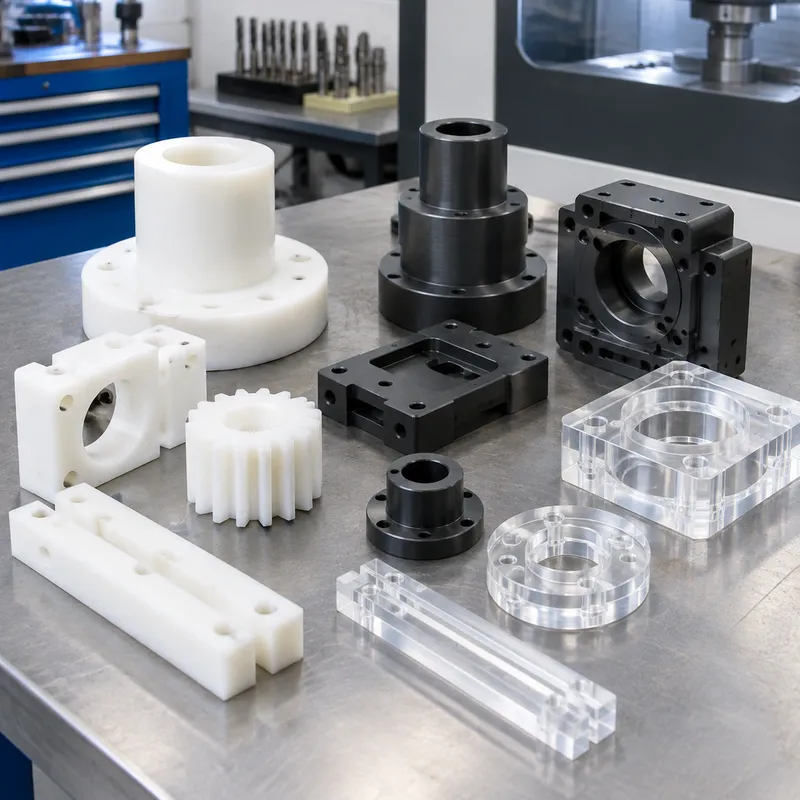
Polypropylene is the lightest of the commodity plastics and one of the most chemically capable: it shrugs off acids, alkalis and solvents that trouble other plastics, tolerates warmer service than HDPE or PVC, and famously survives flexing — the living-hinge behavior that makes flip-top caps possible. Between commodity price and that envelope, PP fills tanks, pump components, laboratory ware, autoclave-capable lab items and countless machine covers.
For machining it is friendly in the cutting and awkward in the tolerance: chips are clean, tools last, forces are low — but PP is soft and flexible, so walls deflect, edges burr if tools dull, and precision callouts should be honest about the material. The shop conversation is less about how to cut it and more about what tolerances and edge quality the design truly needs.
Specifications
| Property | Value | Condition |
|---|---|---|
| Density | 0.895–0.93 g/cm³ | |
| Youngs modulus | 1300–1800 N/mm² | |
| Melting point | 130–171 °C |
Values above are rendered from the collected model-evidence layer, each carrying the heat-treatment condition it was reported under; fields without collected evidence are stated as not established rather than estimated. Requirements outside the table are confirmed for the specific geometry and batch at quotation.
Applications & Selection Points
Chemical process components and tank fittings
Pump internals, tank fittings, spool pieces, pickling-line hardware and plating-rack components use PP where the chemical band is wider than PVC tolerates or the temperature runs warmer. Machined-from-rod and sheet covers valves, instrument bodies and retrofit fittings; welded fabrication owns the tank bodies. State the chemical, concentration and sustained temperature — the envelope is the reason the material is there.
Laboratory and medical-adjacent equipment
Lab fixtures, reagent handling components, sample racks and equipment liners use PP for chemical inertness and repeated cleaning — the resin is a staple of laboratory ware for good reason. Machined custom fixtures supplement molded lab items where geometry is special. Sterilization or autoclave expectations should be declared explicitly; they set the grade and the tolerance conversation.
Living hinges, snap features and flexible elements
Machined PP is unusual for production hinges — those belong to molding — but prototype hinges, flexure elements and snap-fit test articles machined from PP behave like their molded descendants, which makes the material valuable for design validation before tooling. It also serves as gasket and cover material where mild flex and chemical resistance matter more than stiffness.
Where PP is the wrong call
If the part needs stiffness or precision under load, it will frustrate: acetal, nylon or PPS deliver rigidity at modest cost. If it needs wear life under load, UHMW-PE outperforms in the same family. If it needs flame performance, PP is flammable unless modified. And if the duty is strictly room temperature and simple chemistry, HDPE or PVC may be cheaper. PP earns its slot on chemical breadth, temperature headroom and flex behavior.
Machining behavior and process planning
PP cuts with low forces and clean chips — sharp, positive-rake tooling at conventional speeds, air or light coolant, and the material behaves. The realities are mechanical: soft, flexible sections deflect under clamping and cutting, so support the work, use sharp edges throughout, and expect burrs when tools pass their best. Thin walls machine successfully but need gentle clamping. Thread cutting works at modest sizes; inserts are the honest answer under load.
Joining and assembly
PP bonds poorly — polyolefin surface inertness again — so mechanical fastening and welding are the assembly routes. It welds beautifully by hot-air and extrusion methods, which is why machined PP fittings integrate into fabricated tanks and ducts so readily. Living-hinge and snap features can eliminate fasteners entirely where the design allows; prototypes machined in PP validate those features before tooling.
Tolerance, inspection and surface finish
Tolerance expectations should respect the material: PP is the least dimensionally ambitious of the machinable commodity plastics — soft, thermally expansive, and creep-prone under sustained load. Supported geometry at room temperature holds useful tolerances; precision callouts on unsupported walls are asking the material to be something else. Surface finish from sharp tools is good; smeared finishes are the dull-tool signature worth inspecting for.
Frequently Asked Questions
Is PP or HDPE the right polyolefin for my part?
PP is stiffer, handles warmer sustained service, and flexes without fatigue — hinges, snaps and spring elements. HDPE is tougher under impact, machines a bit more stably, and costs less. Both share the wide chemical band. If the duty is chemical containment at ambient temperature, either works and price decides; if heat, flex or stiffness sets the design, PP usually earns the slot.
What tolerances are realistic on machined PP?
Useful tolerances on supported geometry at room temperature are routine; precision callouts are the wrong instrument on a soft, thermally expansive, creep-prone material. The practical route is stating which dimensions are function-critical and the service temperature and load — the shop quotes what the material can honestly hold, and the design accommodates movement where it can.
Can PP parts be glued?
Not reliably — polyolefin surfaces resist adhesion by design. Surface treatments and polyolefin-specific adhesives exist but add process cost and variability. The proven routes are welding (where PP excels) and mechanical fastening, plus design features — snaps, hinges, capture grooves — that avoid fasteners altogether. If bonding is central to the design, raise it at quotation; it may redirect the material choice.
Does machined PP survive autoclaving or repeated cleaning?
PP tolerates repeated hot cleaning and is a laboratory-ware staple, but autoclave-grade performance is a specification question — resin grade, cycle count and part geometry all matter, and machined parts may behave differently from molded lab items. Declare the sterilization or cleaning cycle explicitly so the grade is confirmed against it rather than assumed from the polymer name.
What should I send for a PP machining quote?
A model or drawing with tolerances, quantity, and the service description: chemical and temperature for process duty, cleaning or sterilization cycles for lab duty, load and counterpart for flex or wear duty. Name the stock form where geometry depends on it. On commodity plastics, the honest tolerance and service statement is what makes a quote accurate rather than optimistic.
Ordering & Documentation
Documents
Send a model or 2D drawing with tolerances and the service description. Name the stock form — rod, sheet or welded-fabrication interface — and declare any cleaning, sterilization or chemical certification the duty requires.
Quotation
Quotes price from geometry, tolerance class and stock selection. Thin walls, large flat parts and delicate flex features are the cost movers — declare them at RFQ so the route reflects them instead of rediscovering them.
Sample & Supply
Prototype quantities from one piece are normal, and prototypes in PP double as design-validation articles for hinge and snap behavior. Resin-grade confirmation is available when a duty or certification depends on it — agree scope at quotation.
Storage & Shipping
Finished PP ships and stores without corrosion or moisture concerns. The care points are mechanical: flexible walls and delicate edges pack with support, and finished parts should avoid sustained heat sources that could relax flatness or geometry.