Zamak 3 Zinc Die Casting
Zamak 3 zinc die casting: the general-purpose zamak, its as-cast property envelope, where the ductility premium over Zamak 5 pays, and how machined features meet cast geometry.
Last updated: 2026-10-30
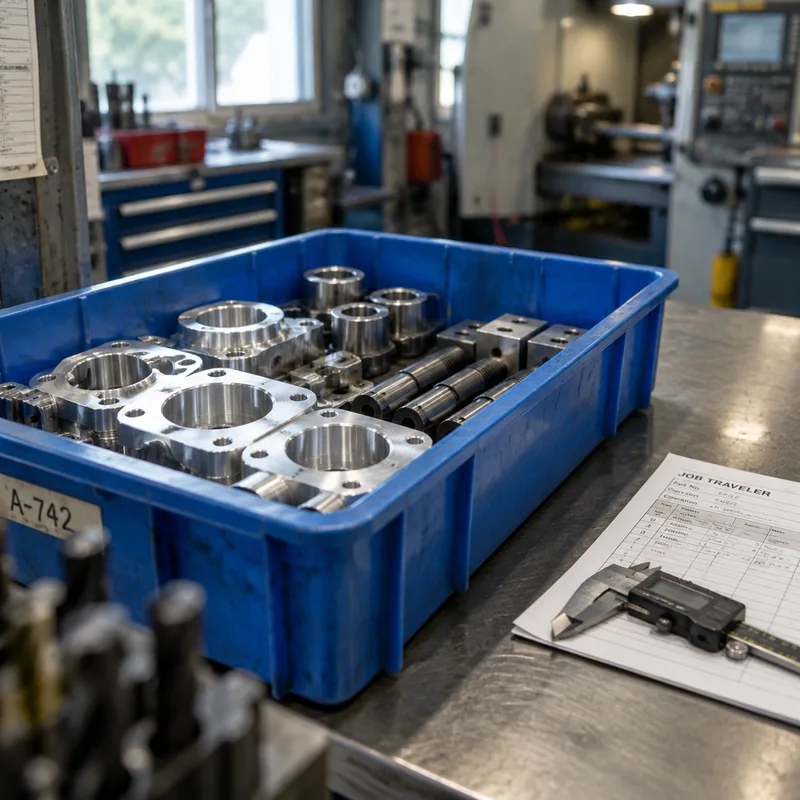
Zamak 3 is the default zinc die-casting alloy — the one a drawing means when it says zinc without qualification. Its copper-free composition trades a little strength for better ductility and corrosion behavior than Zamak 5, and it fills thin, detailed die cavities at cycle rates that make it the economy choice for housings, hardware, trim and the enormous mid-range of consumer and automotive small parts.
Like every zamak, it lives in the cast-then-machine split: the die delivers net-shape geometry with crisp detail, and CNC machining adds the precision bores, sealing flats and threads the casting process cannot hold. Buyers who treat Zamak 3 as a finished-surface material and plan the machined features explicitly get the alloy at its best — full cast economy on the bulk, machining only where it earns its cost.
Specifications
| Property | Value | Condition |
|---|---|---|
| Density | 6.6 g/cm³ | |
| Tensile strength | ~280 MPa | |
| Yield strength (0.2% offset) | ~210 MPa | |
| Elongation | ~10% | |
| Hardness | 82 HB | Brinell |
| Melting point | ~380°C |
Values above are rendered from the collected model-evidence layer, each carrying the heat-treatment condition it was reported under; fields without collected evidence are stated as not established rather than estimated. Requirements outside the table are confirmed for the specific geometry and batch at quotation.
Applications & Selection Points
General housings, hardware and trim
Enclosure halves, gear and pulley housings, lock and latch hardware, decorative trim and sporting-goods components are the standard Zamak 3 population. The alloy fills thin ribs and fine detailing better than aluminum can, takes plating and paint directly on the as-cast surface, and delivers complex geometry at a piece price that machining whole parts from wrought stock cannot approach.
Where the ductility premium over Zamak 5 pays
Parts that snap together, flex in assembly, or survive impact and drop duty favor Zamak 3: its higher elongation absorbs assembly and service abuse that cracks the harder, stronger Zamak 5. Snapping clips, press-fit hardware, and components handled roughly at low load are classic placements. Strength-led drawings stay on the 5-series; everything else defaults here.
Where Zamak 3 is the wrong call
Load-bearing parts whose duty exceeds the strength of the copper-free alloy step up to Zamak 5 — a drawing-line change, not a process change. Parts living at elevated service temperature leave zinc entirely for aluminum die casting or machined aluminum, because zinc alloys lose strength quickly as temperature rises. And parts that must stay dimensionally exact under sustained load meet the creep boundary that all zamaks share.
The cast-then-machine split
As-cast Zamak 3 carries its own tolerance band, fine but not precision-grade. Bores for bearings, sealing surfaces, threaded features in load paths and datum faces are added by CNC machining after casting — an easy, fast cutting job on zinc. The efficient drawing distinguishes as-cast surfaces from machined tolerances so neither process overreaches its natural accuracy.
Finishing and corrosion behavior
Zamak 3 plates and paints cleanly, which is why so much of it appears finished in chrome, nickel or powder coat. The copper-free chemistry also ages with better corrosion behavior than the 5-series in aggressive atmospheres. Uncoated zamak in direct contact with some acids or moist organic packing can discolor — ordinary dry packing and normal finishes avoid it.
Frequently Asked Questions
When should a drawing specify Zamak 3 instead of Zamak 5?
Default to Zamak 3 for general duty: it is the more ductile, more corrosion-tolerant alloy and the economy choice. Move to Zamak 5 only when strength, hardness or wear response genuinely needs the copper addition — usually after a Zamak 3 part showed a strength or wear failure. The two share casting practice, so the switch costs a material callout, not a new tool.
Can Zamak 3 parts be CNC machined?
Yes, and easily — zinc alloys machine fast with excellent finishes. The standard pattern is die-cast to near-net, then machine only the features the casting tolerance cannot hold: precision bores, flat sealing faces, tapped threads. Fully machined Zamak 3 from bar is unusual; the alloy exists to be cast.
How does Zamak 3 handle temperature?
Room temperature is home territory. As service temperature climbs, strength falls away faster than aluminum alloys lose it, and sustained load at temperature raises the creep question. Under-hood-adjacent environments deserve an explicit check at design time; beyond that envelope the standard move is aluminum die casting or machined aluminum.
Is Zamak 3 suitable for plated consumer hardware?
Yes — it is the base alloy behind a large share of plated knobs, handles and trim. The fine as-cast surface takes nickel and chrome plating without heavy pre-finishing, and the alloy stays dimensionally stable through normal plating baths. State the finish system on the RFQ so the quote covers the plating line, not just the casting.
What should I send for a Zamak 3 die-casting quote?
A STEP model, a 2D drawing marking as-cast surfaces against machined tolerances, quantity and batch intent, alloy callout, and the finish system. Tooling is a line item in die casting — a good quote separates tooling amortization from piece price so volume assumptions stay visible.
Ordering & Documentation
Documents
Send a STEP or IGES model with a 2D drawing that distinguishes as-cast from machined features and states the alloy explicitly — Zamak 3 and Zamak 5 share dies but not properties, and the callout is the whole difference.
Quotation
Pricing follows the model, drawing, quantity and finish system, with tooling as its own line and machined features quoted into the piece price after the casting. Flag machined features early so the process split is engineered rather than discovered.
Sample & Supply
First articles verify as-cast tolerance, plating quality where specified, and any machined features. Production follows the approved sample; alloy certification accompanies supply on request.
Storage & Shipping
Zamak 3 castings are stable in ordinary storage; plated parts ship in standard protective packaging. Avoid long-term contact with acids and moist wood or organic packing, which can discolor zinc — dry packing avoids the issue entirely.