Nitronic 60 CNC Machining
CNC machining of Nitronic 60 (UNS S21800): the galling-resistant austenitic stainless for wear and seizure service — collected property envelope, machining behavior, RFQ guidance.
Last updated: 2026-10-31
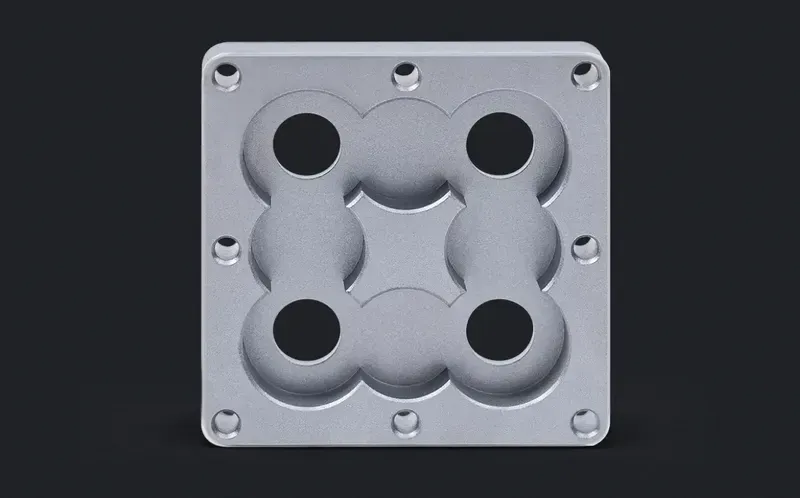
Nitronic 60 — UNS S21800 — is the galling-resistant austenitic stainless steel: a chromium-manganese-silicon-nitrogen balance whose claim to a place on drawings is that mating stainless surfaces slide against each other without seizing. Conventional stainless grades gall under fretting and sliding contact; hardware and valve stems made from them are notorious for seizing thread-to-thread. Nitronic 60 was engineered against exactly that failure, and its AMS 5848 specification governs the bar most machining stock comes in.
It is not the strongest stainless and not the most corrosion-resistant one either — its niche is wear and galling, plus respectable corrosion behavior and strength near or above the common austenitics. For machining it presents as a tough, work-hardening austenitic: slower than carbon steel, abrasive on tooling, and happiest with the same discipline the other nitrogen-strengthened austenitics demand.
Specifications
| Property | Value | Condition |
|---|---|---|
| Density | 7.62 g/cm³ | annealed, room temperature |
| Tensile strength | ≥724 MPa (105 ksi) | AMS 5848 bar up to 1/2 in. dia., minimum |
| Yield strength (0.2% offset) | ≥379 MPa (55 ksi) | 0.2% offset, AMS 5848 bar up to 1/2 in. dia., minimum |
| Hardness | 95–100 HRB | annealed, typical |
| Elastic modulus | 180 GPa | annealed, room temperature |
| Composition | Mn 7.00–9.00 %, Si 3.50–4.50 %, Cr 16.00–18.00 % | weight %, UNS S21800 limits |
Values above are rendered from the collected model-evidence layer, each carrying the heat-treatment condition it was reported under; fields without collected evidence are stated as not established rather than estimated. Requirements outside the table are confirmed for the specific geometry and batch at quotation.
Applications & Selection Points
Valve stems, trim and seating surfaces
Stems, seats, stems-nuts and wear rings in globe, gate and control valves are the classic Nitronic 60 duty — stainless internals that cycle against each other for decades without seizure. Machined-from-bar covers repair and specialty volumes; high-volume stems often start from bar and see turning plus thread rolling. Quotes should state the mating counterpart material, because galling resistance is a pairing property, not a metal property alone.
Fasteners and sliding hardware
Studs, nuts, pins and bushings that assemble into stainless structures use the grade where disassembly is a lifetime requirement — a seized stainless fastener is a maintenance story every plant knows. Machined specialty fasteners and pin hardware in Nitronic 60 hold torque values across repeated assembly cycles. Thread quality dominates performance here; thread milling or rolled threads beat cut tapping on small sizes.
Wear rails, guides and fixture elements
Sliding guides, wear pads, bushings and fixture contact elements use the grade where stainless cleanliness and anti-seizure behavior arrive together — food, pharmaceutical and marine equipment share this profile. Its elevated-temperature oxidation behavior extends the duty to hot slides and oven hardware. Dimensional wear life, not strength, is the buying argument; state the contact geometry and motion type on the RFQ.
Where Nitronic 60 is the wrong call
If the part never sees sliding contact, a common austenitic — 304 or 316 — delivers the same corrosion class cheaper, and 303 machines far better for the same atmospheric duty. If the wear is abrasive rather than adhesive contact, hardened tool or wear steels win. And if galling resistance must pair with severe chloride or acid duty, the duplex and nickel families take over. Nitronic 60 is a specific answer to a specific failure mode; specifying it as generic stainless costs money for nothing.
Machining behavior and process planning
The nitrogen strengthening that gives the grade its elevated annealed strength also makes it a tough, work-hardening cut: chips are stringy, edges wear steadily, and light passes harden the surface against the next tool. The austenitic playbook applies — sharp positive-rake tooling, cuts under the work-hardened layer rather than on it, rigid setups and real coolant. It machines harder than 304 and easier than the nickel alloys; threading small sizes is where planning pays.
Welding and post-processing
The grade welds with austenitic practice, and its wear behavior survives welding well enough that overlay and repair work on valve parts is routine. No hardening transformation exists — the annealed condition is stable through any thermal cycle short of re-solution treatment. Post-weld cleaning on corrosion-critical faces follows ordinary stainless discipline; on wear surfaces, the finishing step that matters is edge and surface condition at contact points.
Tolerance, inspection and surface finish
Dimensional behavior is standard austenitic: stable condition, movement driven by heat and fixturing. Surface finish on mating faces is function here, not cosmetics — galling resistance degrades with damaged or roughened contact surfaces, so finishing calls on wear faces deserve real callouts and real process steps. AMS 5848 material certification is the normal bar-supply expectation.
Frequently Asked Questions
What exactly is galling, and why does the grade matter for it?
Galling is adhesive seizure: under pressure and sliding, microscopic contact points weld together and tear, and the surface builds until the parts lock — the seized stainless bolt that destroys its thread on removal. Nitronic 60 resists the mechanism through its silicon-manganese-bearing austenite, which does not form the adhesive junctions ordinary stainless does. If your assembly ever includes stainless-on-stainless sliding or threaded contact under load, this is the failure the alloy is priced against.
Can I substitute 316 for Nitronic 60 on a drawing that names it?
No — not because 316 is a bad alloy, but because the drawing is specifying a wear behavior, not a corrosion class. A 316 stem or fastener in the same duty can gall in service regardless of how well it resists chlorides. If cost pressure is real, the honest move is asking the designer whether the contact duty still exists in the current design — deleting the specification is legitimate; quietly substituting it is not.
How does Nitronic 60 compare to hardened steel bushings for wear?
Different mechanisms. Hardened steels resist abrasive wear but gall and corrode in stainless environments; Nitronic 60 resists adhesive seizure and corrosion but will not out-wear a hardened bushing against hard abrasives. Clean, wet or chemical environments favor the Nitronic answer; grit and dry abrasion favor hardened steel or a different family entirely. State the environment and the counterpart material — that decides it, not a hardness table.
Does Nitronic 60 need heat treatment?
Normally no — it is supplied and used annealed, and its strength comes from nitrogen in solid solution rather than any hardening transformation. Heavier-strength requirements can be met by cold work on some product forms, agreed case by case. For machining buyers the practical meaning is a simpler route: machine, clean, ship — no quench sequencing, no distortion management beyond ordinary practice.
What should I send for a Nitronic 60 machining quote?
A STEP model and 2D drawing with tolerances, the specification — AMS 5848 or the relevant standard — quantity, and the contact description: what it slides against, under what load, in what environment. Mark wear faces and their finish expectations explicitly. Certification scope should be stated at quotation; retrofitting traceability after the fact is not possible.
Ordering & Documentation
Documents
Send a STEP or IGES model with a 2D drawing carrying tolerances, the material specification, and wear faces marked with finish callouts. Name the mating counterpart where relevant — anti-galling performance is a pairing question.
Quotation
Quotes price from model, drawing, bar stock size, quantity and certification scope. Small threads and deep bores should be flagged — the work-hardening cut makes them the process risk — and thread-milling alternatives may be quoted where tapping is marginal.
Sample & Supply
Prototype quantities from one piece are normal for stem and fastener work. A first article should verify thread quality and wear-face finish, which carry the function. AMS 5848 traceable certification is standard supply — agree scope before production.
Storage & Shipping
Finished parts resist transit corrosion, but wear faces should be protected from contact and abrasion — a scored bushing bore or damaged stem surface defeats the purpose of the grade before first use. Pack with separation, store dry, preserve the finished contact surfaces.