PPS CNC Machining
CNC machining of PPS (polyphenylene sulfide): the high-temperature engineering thermoplastic, its chemical and thermal envelope, machining behavior, and where it beats metal or other plastics.
Last updated: 2026-10-31
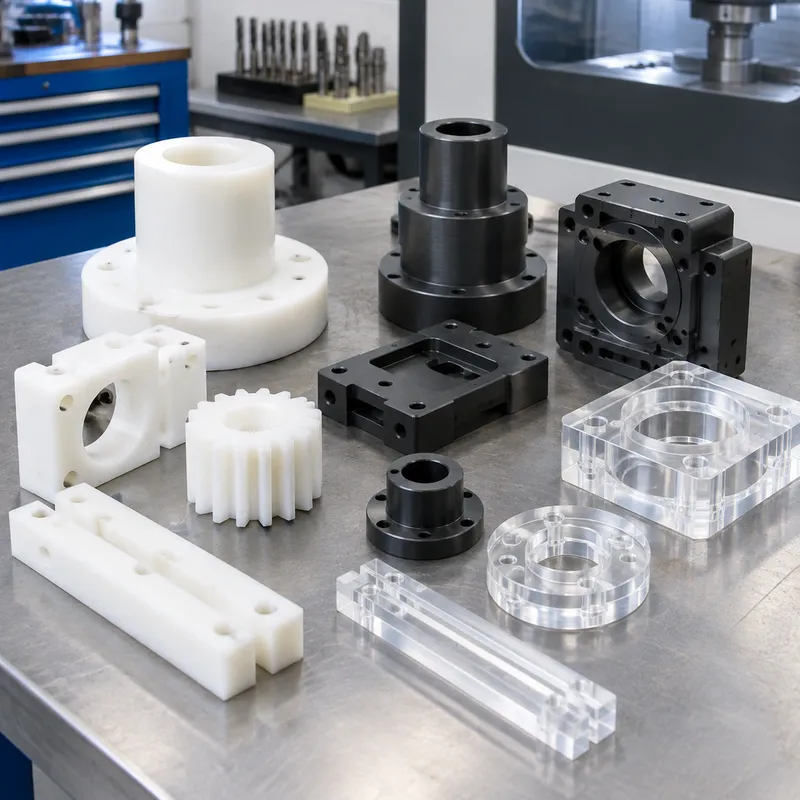
PPS — polyphenylene sulfide — is the engineering thermoplastic specified when a plastic part has to live where most plastics die: continuous service at elevated temperature, immersion in aggressive chemistry, and dimensionally demanding precision hardware. It is intrinsically flame-resistant, nearly nothing dissolves it below its softening range, and glass- or mineral-filled grades hold tolerances that make it a metal-substitution material rather than a cheap alternative. Automotive under-hood components, chemical pump parts, electronics insulation and aerospace interior hardware are its territory.
As a machining stock it arrives as rod, plate and block in unfilled and filled formulations, and it machines cleanly with sharp metalworking practice — the filled grades are abrasive on tooling in exchange for their stiffness and dimensional discipline. Compared with molding, machining wins on prototypes, low volumes, thick-wall parts and design iterations; the resin itself is the same, so machined PPS carries the material datasheet into production without tooling amortization.
Specifications
| Property | Value | Condition |
|---|---|---|
| Tensile strength | 90–110 MPa | — |
| Flexural modulus | 3.0–4.0 GPa | — |
| Max operating temperature | 200°C | — |
| Density | 1.35–1.40 g/cm³ | — |
Values above are rendered from the collected model-evidence layer, each carrying the heat-treatment condition it was reported under; fields without collected evidence are stated as not established rather than estimated. Requirements outside the table are confirmed for the specific geometry and batch at quotation.
Applications & Selection Points
High-temperature service hardware
Under-hood brackets, sensor and actuator components, hot-fluid handling parts and processing-equipment details specify PPS for its continuous service temperature — far above the range where nylon, acetal or most engineering plastics relax and creep. Where a metal part was chosen only because plastics softened, PPS reopens the substitution: weight drops, corrosion disappears, and machining delivers the geometry without mold tooling.
Chemical exposure duty
Pump housings internals, valve seats, seals-adjacent hardware and lab and process equipment parts in contact with fuels, solvents, acids and bases are classic PPS. Its chemical resistance is near the top of the thermoplastic chart — few solvents attack it below its softening range — which is why it survives service where nylon swells and acetal cracks.
Electrical insulation components
Inherently flame-resistant and a strong electrical insulator, PPS serves connector housings, insulator blocks, coil bobbins and electronics structural parts — including aerospace interiors where the flame-smoke-toxicity requirements eliminate most plastics outright. The filled grades add the dimensional stability thin insulating walls need.
Machining-behavior notes for planning
Unfilled PPS cuts like a stiff, mildly abrasive engineering plastic: sharp uncoated or diamond-polished carbide, positive geometry, air or minimal coolant to keep chips evacuating rather than melting onto the tool. Glass-filled grades are genuinely abrasive — expect hard-tooling life budgets and design finished surfaces knowing the filler. Fixturing must be firm but not crushing; the material takes precision threads and flatness well when the cut stays cool.
PPS versus the neighboring plastics
Against PEEK, PPS trades top-end temperature and some mechanical headroom for a far lower material price — a large share of PEEK drawings are over-specified for their actual duty. Against nylon and acetal, PPS wins temperature, chemistry and flame behavior decisively. The honest decision tree starts from the service temperature and the media, not from brand familiarity with the premium resin.
Frequently Asked Questions
Can PPS really replace metal in structural-ish parts?
Within its envelope, yes — that is what it was formulated for. Where service temperature, chemical exposure and creep loads sit inside its datasheet range, machined PPS replaces aluminum and zinc hardware with weight, corrosion and insulation gains. Outside that range — sustained high structural load at temperature — filled PPS is the better candidate and metals still win. Send the service conditions and let the envelope decide.
Does filled or unfilled PPS machine better?
Unfilled machines more gently and gives the best surface finish; filled grades machine acceptably but abrade tooling and are the right choice where stiffness, CTE control and dimensional stability matter more than tooling budget. Most precision machined PPS work in electronics and fluid handling uses the filled grades and plans tooling accordingly.
Why choose PPS over PEEK when PEEK is stronger?
Because strength beyond the duty is cost without return. PPS covers continuous service in the low-to-mid hundreds of Celsius and essentially all common chemical media at a fraction of PEEK pricing; drawings specify PEEK when the duty genuinely exceeds that envelope. The substitution audit should be per-application, not per-material-reputation.
What should I send for a PPS machining quote?
A STEP model, a 2D drawing with tolerances and finish, quantity, and the formulation — unfilled, glass-filled or mineral-filled, since stock availability and tooling plans differ. Include the service temperature and chemical media so the formulation callout is validated rather than copied.
Ordering & Documentation
Documents
Send a STEP or IGES model with a 2D drawing carrying tolerances and finish. Name the PPS formulation explicitly — unfilled and filled grades are different stock with different machining plans.
Quotation
Pricing follows the model and drawing, quantity and formulation. Plastic machining quotes hinge on stock size versus part size — blanks carry the cost, so geometry that nests efficiently into standard rod and plate prices markedly better.
Sample & Supply
First articles verify finish and flatness on the actual formulation before production runs. Filled grades show filler texture on surfaces — agree the finish expectation on a sample rather than discovering it in inspection.
Storage & Shipping
Machined PPS ships dry with standard packaging; the material is dimensionally stable in ordinary storage. Avoid sustained point-loading of thin finished features in packing, as with any rigid plastic.