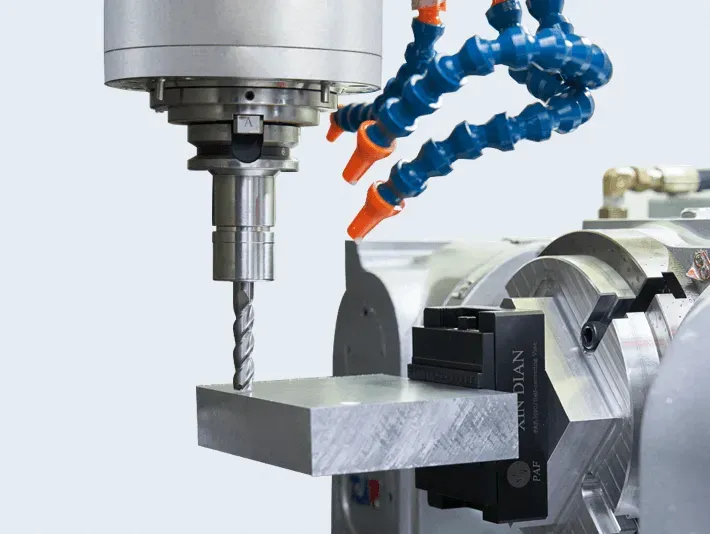
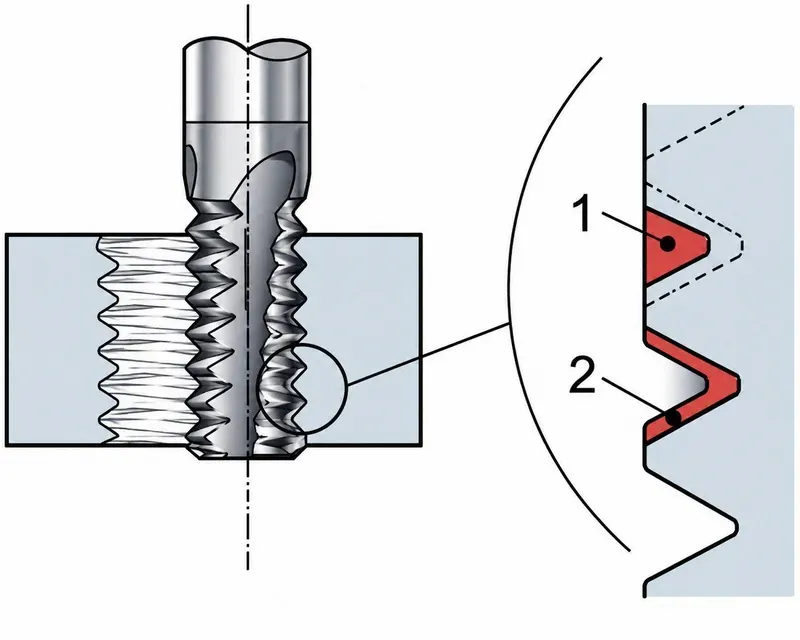
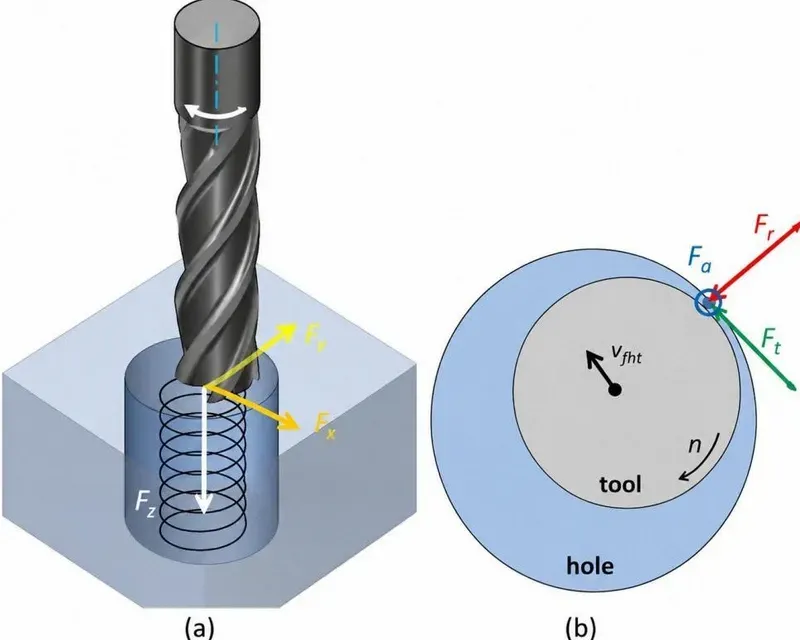
당사의 CNC 밀링 서비스는 프리즘 형상 부품(하우징, 브래킷, 매니폴드, 지그, 정밀 플레이트)의 3축, 4축, 5축 가공을 다룹니다. 모든 작업은 도면 검토로 시작되어, 딥포켓, 박벽, 나사 홀 같은 형상이 생산 전에 확인됩니다.
표준 공구는 대부분의 밀링 형상을 커버하며, 특수 성형 공구는 예외적인 경우에만 필요합니다 — 이로써 비용과 납기가 예측 가능하게 유지됩니다.
생산 역량
- 프리즘 형상 부품용 3축 밀링
- 4축 언더컷 및 인덱싱 형상
- 복잡한 형상용 5축 동시 가공
- 중요 형상에서 ±0.01 mm까지의 밀링 공차
대표 소재
알루미늄 6061/7075, 스테인리스강 304/316, 탄소강, 황동, PEEK, 델린, 나일론.
| 재질 / 등급 | 일반적인 상태 | 절삭 가공성 | 적합한 용도 |
|---|---|---|---|
| Aluminium 6061 | T6(용체화 처리 및 시효 경화) | 용이함: 절삭성이 좋고 칩 배출이 안정적 | 브래킷, 하우징, 지그, 시제품부터 양산까지 |
| Aluminium 7075 | T6 / T651 | 다소 어려움: 공구 마모가 크고 강성 높은 셋업이 필요 | 고강도·경량이 중요한 부품. 용접에는 부적합 |
| Stainless 304 / 304L | 어닐링 | 가공 경화됨: 저속 절삭, 플러스 레이크 방식 | 일반 내식성. 식품·공정 설비 |
| Stainless 316 / 316L | 어닐링 | 304보다 점성이 높음: 공구 마모 증가 | 염화물 환경, 해양, 의료·제약 용도 |
| Carbon steel 1018 / 1045 | 압연 / 노멀라이징 | 보통: 녹 방지 처리 필요 | 축, 판재, 용접 구조물, 공구 바디 |
| Brass C360 | H02 반경질 | 매우 용이함: 고속 절삭에서 깔끔한 표면 마감 | 피팅, 부싱, 커넥터, 장식 부품 |
| Copper C110 | 어닐링 / H02 | 점착성: 날카로운 공구와 큰 경사각 필요 | 전도성, 부스바, 열 관리 |
| Titanium Grade 5 (Ti-6Al-4V) | 밀 어닐링 | 어려움: 저속 절삭, 열 관리, 공구 마모 | 항공우주, 의료, 경량 고강도 부품 |
| 엔지니어링 플라스틱(POM, PEEK, PA) | 압출 / 어닐링 | 용이함부터 점착성까지: 소프트 조와 날카로운 공구 | 절연, 저마찰, 내화학·내마모 부품 |
표면처리
밀링 그대로, 양극산화(Type II/III), 비드 블라스팅, 분체 도장, 연마.
| 표면 처리 | 효과 | 지정하면 좋은 경우 |
|---|---|---|
| 절삭 마감 그대로 | 공구 자국이 남음. Ra 통상 1.6-3.2 µm | 기능만 충족하면 되는 부품 |
| 비드 블라스트 | 균일한 무광 표면. 공구 자국을 흐려 줌 | 양극산화 전의 외관 부품 |
| 양극산화 Type II | 산화 피막을 형성. 색상 선택 가능 | 알루미늄 외관과 중간 수준의 내식·내마모가 필요할 때 |
| 경질 양극산화 Type III | 더 두껍고 단단한 산화 피막 | 미끄러지거나 마모되는 알루미늄 표면 |
| 크로메이트 처리 | 도전성을 유지하는 얇은 보호 피막 | 알루미늄의 전기적 접속 또는 접지 |
| 무전해 니켈 도금 | 균일하고 단단하며 내식성 있는 피막 | 마모와 부식 모두에 대응. 보어 내면 포함 |
| 아연 도금 | 경제적인 희생 양극 방식의 방식 처리 | 실내 또는 보호된 환경의 강재 부품 |
| 분체 도장 | 두껍고 내구성 있는 장식 피막 | 외관이 요구 사항일 때 |
| 부동태 처리 | 유리 철을 제거하고 산화 피막을 회복 | 가공 후 스테인리스 부품 |
| 잔류 응력 제거 / 열처리 | 가공 전후의 잔류 응력을 제거 | 가공을 견뎌야 하는 박육·조공차 부품 |
공차
ISO 2768-m 표준; 검토 후 중요 치수에서 ±0.01 mm 구현 가능.
| 도면 공차 표기 | 필요한 조건 | 비용과 납기에 미치는 영향 |
|---|---|---|
| 일반: ±0.25 mm / ±0.010 in | 표준 공구, 치수 검사 | 기준선: 추가 비용 없음 |
| 표준: ±0.13 mm / ±0.005 in | 양호한 상태의 공작기계, 초기 품질 검사 | 소폭 추가. 일반적인 견적 기준 |
| 조밀: ±0.025 mm / ±0.001 in | 연삭 또는 다이아몬드 공구, 온도 관리, CMM | 단계적 상승: 절삭 속도 저하 및 전수 검사 |
| 정밀: ±0.013 mm / ±0.0005 in | 마감 패스, 게이지, 환경 관리 | 가공 비용이 가격을 지배. 별도 공정인 경우가 많음 |
| 위치도 / 각도 공차 (GD&T) | 데이텀 관리, 관련 형상은 한 번의 셋업에서 가공 | 데이텀이 걸치는 셋업 수에 따라 달라짐 |
| 표면 조도 Ra 0.8 µm 이하 | 더 미세한 패스, 연마 또는 마감 패스 | 가공 시간만이 아니라 공정이 하나 추가됨 |
공정 옵션
- CNC machining is a subtractive manufacturing process.
- Finishing Options: Black Oxide, Electropolishing, ENP, Media Blasting, Nickel Plating, Passivation, Powder Coating, Tumble Polishing, Zinc Plating, Vibratory Tumbling
- EPX 82 is processed using Carbon DLS
- MUD is a type of mold that uses a standard injection molding frame.
- Different taper turning methods suit different jobs. Compound slides often handle short tapers, while CNC interpolation and taper attachments improve repeatability on longer parts
- G92 is used by programming one or more G92's right after the G76 threading cycle
- Estimates are provided through an auto-quoted method.
- EDM relies on a voltage and a thin wire
- Advanced machining processes like micro-machining and EDM are used to create small, precise mold cavities and cores
Surface Finish Reference
- The finish of MoldTech MT11010 is a fine matte texture.
- The finish of MoldTech MT11020 is a medium matte texture.
- The finish of MoldTech MT11030 is a coarse matte texture.
- SPI A-1 has a surface roughness of 0.012–0.025 µm.
- SPI B-2 has a finish of Medium semi-gloss.
- SPI B-2 has a surface roughness of 0.10–0.15 µm.
- SPI C-3 has a surface roughness of 0.63–0.70 µm.
- Super high gloss, polished with a Grade #3 (6000-grit) diamond buff to Ra 0.012–0.025 µm.
- Medium semi-gloss, finished with 400-grit paper to Ra 0.10–0.15 µm.
- Normal matte, polished with 320-grit stone to Ra 0.63–0.70 µm.
Tolerance Reference
- The tolerance with drawing for CNC Milling is as low as +/- 0.005 mm.
- FDM 3D printing offers a low-cost component with average accuracy and uses thermoplastics for 3D printing.
- Wire Cut EDM is highly accurate.
- The U6 H.E.A.T machine achieves tight tolerances.
- Die sinker EDM is capable of maintaining tight tolerances
- The shop needs to have CNC machines that can achieve a specific tolerance.
Industries We Serve
- antennas
- automotive
- CNC machined parts
- custom parts
- electronics
- medical diagnostic
- optical displays
- optical_systems
Material Reference
- ABS
- Austenitic Stainless Steel
- Carbon steel
- ceramic
- composites
- Copper - T2
- copper or graphite
- Hardened Materials
- High Impact Polystyrene
- Low-density polyethylene
- MDF
- metal
- Polybutylene Terephthalate
- SUS304
- thermoplastics
- thick metal sheets
- tungsten carbide
Common Applications
- Car Chassis
- Driveshafts
- Medical Implants
- Surface Finish
- Suspension Component
- injection molding dies
- rods
- Aerospace
- Automotive
- CNC
Ordering, Lead Times & MOQ
Custom CNC parts carry no forced MOQ; ordering from a single prototype piece is standard industry practice.
Instant-quote platforms publicly advertise prototype lead times of 1-3 business days.
Online RFQ is the industry-standard flow: upload a 3D model (STEP/STP/DWG/DXF), receive an instant quote or engineer review, then production, inspection, and delivery.
자주 묻는 질문
가공 가능한 최대 부품 크기는 얼마인가요?
일반적인 가작업 범위는 최장 축 기준 약 1000 mm까지입니다. 그 이상의 부품은 도면 검토 후 견적합니다.
What is the minimum order quantity (MOQ)?
Prototypes from 1 pc. Low-volume production typical 50-500 pcs. No forced MOQ on custom parts; unit price drops with volume.
What is the typical lead time?
Industry benchmark: instant-quote platforms deliver prototypes in 1-3 business days. Our own production: prototypes 5-10 working days, including in-house QC and shipping. Production: 2-4 weeks depending on quantity/finishing. Express options exist; finishing adds days.
How do I get a quote and what information do you need?
3D files (STEP/IGS) + 2D drawing with tolerances. Material, quantity, finish, destination country. Quote turnaround: 24-48h typical.
What tolerance should I specify?
Specify tight tolerances only on critical features. Standard ±0.1 mm covers most features. Tighter tolerance = cost multiplier; apply selectively via drawing GD&T.
How is quality controlled?
First-article inspection in our own shop before the first production order. In-process checks. Final inspection report (dimensions) with shipment. Material certs (mill test reports) on request.
Is my design protected?
NDA before file exchange. Files used only for your production. No resale of custom designs.
Which material should I choose?
Function first: strength, weight, corrosion, cost. Common pairings: 6061 general, 304/316 corrosive env., PEEK medical. See materials guide pages.
Which surface finish do I need?
Anodizing for aluminum corrosion/wear/color. Passivation for stainless. Plating for conductivity/steel protection. Cosmetic vs functional distinction.
How do you ship and what terms?
DHL/FedEx/UPS express for samples and small batches. Air/sea freight for production volumes. Incoterms: EXW/FOB/DAP/DDP options.
Sources · 4
- emachineshop.comIndustry peer technical page
- cnccookbook.comEngineering reference
- lincolntech.eduEngineering education reference
- rapiddirect.comIndustry peer technical page
Technical references cited for verifiability — not supplier recommendations. Browse the research library.
Related Knowledge
Capability commitments on this page are owner-confirmed (2026-09-21).