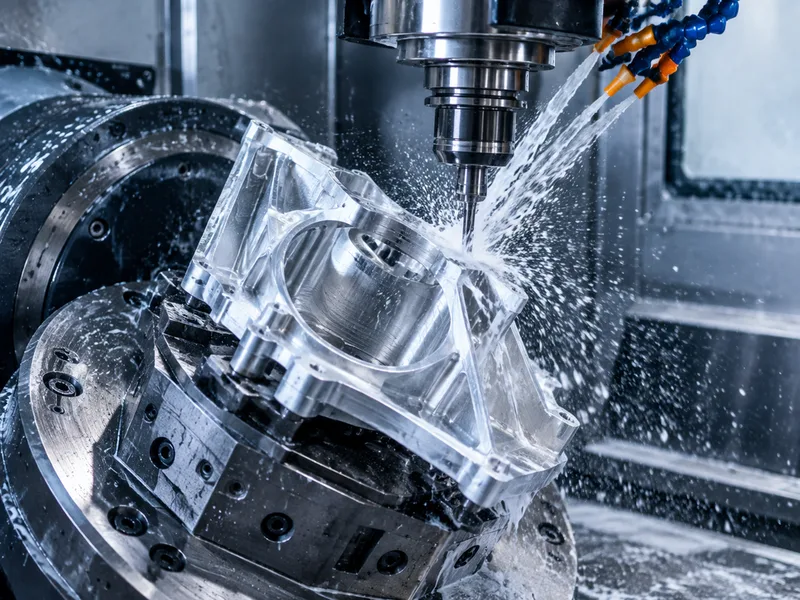
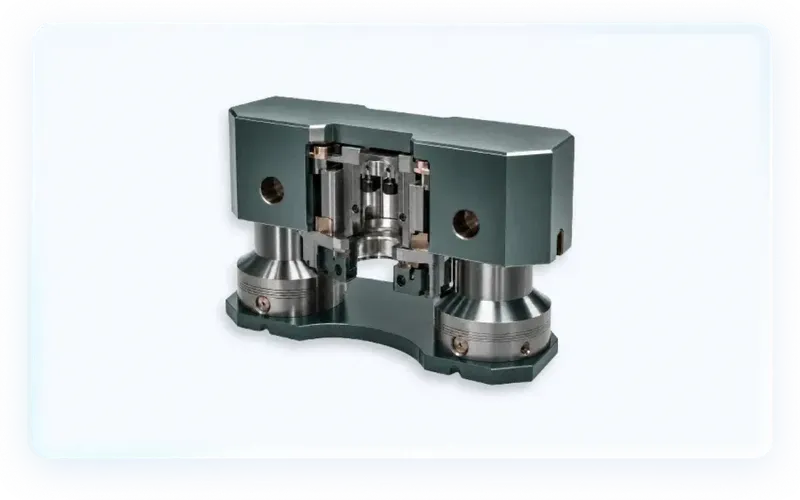
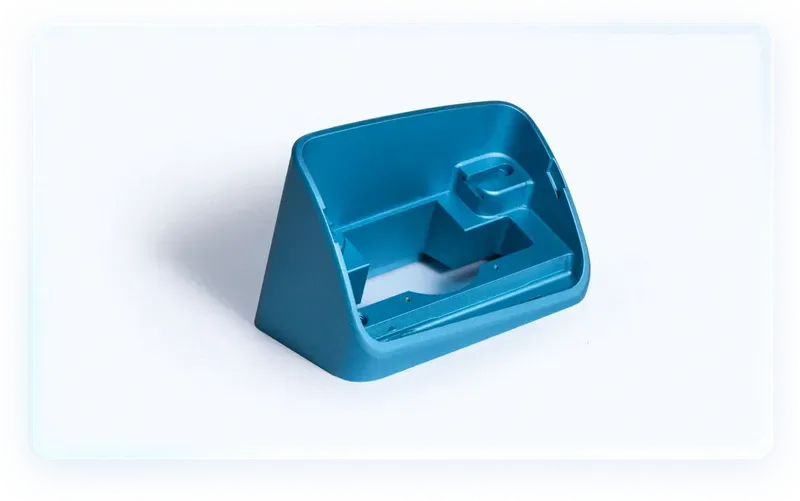
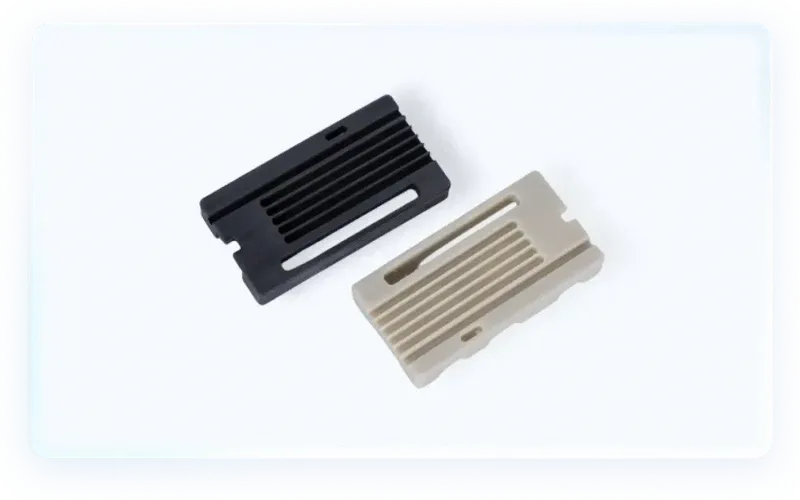
Chúng tôi sản xuất chi tiết gia công CNC theo yêu cầu từ tệp STEP, IGS hoặc DWG của bạn. Một quy trình duy nhất bao gồm phay CNC, tiện CNC và gia công đa trục, với phản hồi DFM trên mọi bản vẽ trước khi đường cắt đầu tiên được thực hiện.
Từ bản mẫu đơn lẻ đến các lô lượng nhỏ và trung bình lặp lại được, chi tiết xuất kèm biên bản kiểm tra kích thước và bao bì chuẩn xuất khẩu.
Process Overview
CNC (computer numerical control) machining is a subtractive manufacturing process: cutting tools guided by programmed instructions remove material from a solid block to produce a finished part. Because the toolpaths are programmed from a 3D CAD model, CNC machining produces accurate, repeatable parts in metals and plastics without hard tooling — ideal for prototypes and production runs alike.
The two core processes are CNC milling, which uses rotating cutting tools to remove material from a stationary workpiece, and CNC turning, which rotates the workpiece against a stationary tool. Multi-axis machines combine both motions to reach complex geometries in a single setup.
Năng lực
- Phay CNC tới 5 trục
- Tiện CNC với dao quay (live tooling)
- Kích thước chi tiết từ vài milimet đến vỏ máy cỡ lớn
- Kiểm tra kích thước tại chỗ ở mọi lô hàng
Vật liệu điển hình
Nhôm, thép không gỉ, thép carbon, đồng thau, đồng, titan, nhựa kỹ thuật (PEEK, Delrin, nylon).
| Vật liệu / mác | Tình trạng tiêu chuẩn | Khả năng gia công | Ứng dụng điển hình |
|---|---|---|---|
| Aluminium 6061 | T6 (tôi dung dịch và ram già) | Dễ gia công: phoi dễ kiểm soát tốt | Tay đỡ, vỏ máy, đồ gá, bản mẫu đến sản xuất |
| Aluminium 7075 | T6 / T651 | Khó hơn: mòn dao nhiều hơn, cần lòng bàn cứng vững | Chi tiết chịu lực cao, nhạy trọng lượng; không hàn được |
| Stainless 304 / 304L | Ủ | Biến cứng khi gia công: tốc độ thấp hơn, ăn dao dương | Chống ăn mòn nói chung, thiết bị thực phẩm và công nghệ |
| Stainless 316 / 316L | Ủ | Cứng hơn 304: mòn dao nhiều hơn | Môi trường chloride, hàng hải, y tế và dược phẩm |
| Carbon steel 1018 / 1045 | Lăn nóng / ram thường | Từ dễ đến trung bình; cần chống gỉ | Trục, tấm, kết cấu hàn, thân đồ gá |
| Brass C360 | H02 bán cứng | Xuất sắc: tốc độ cao, bề mặt sạch | Phụ kiện nối, ống lót, đầu nối, chi tiết trang trí |
| Copper C110 | Ủ / H02 | Dính dao: dao sắc và góc cắt trước lớn | Dẫn điện, thanh dẫn điện, quản lý nhiệt |
| Titanium Grade 5 (Ti-6Al-4V) | Ủ sau cán | Khó: tốc độ thấp, kiểm soát nhiệt, mòn dao | Hàng không vũ trụ, y tế, chi tiết nhẹ chịu lực cao |
| Nhựa kỹ thuật (POM, PEEK, PA) | Ép đùn / ủ | Từ dễ đến dính dao: má kẹp mềm, dao sắc | Cách điện, ma sát thấp, chi tiết chống hóa chất và mài mòn |
Xử lý bề mặt
Anod hóa, thụ động hóa, mạ kẽm/kền, oxit đen, đánh bóng, phun hạt, sơn tĩnh điện.
| Xử lý bề mặt | Tác dụng | Chỉ định khi |
|---|---|---|
| Ngay sau gia công | Vết dao còn nhìn thấy; Ra thường 1.6-3.2 µm | Chi tiết chỉ cần hoạt động |
| Phun hạt | Bề mặt nhám đồng đều, che vết dao | Chi tiết thẩm mỹ trước khi anod hóa |
| Anod hóa Type II | Tạo lớp oxit; nhiều lựa chọn màu | Cần ngoại quan nhôm cùng khả năng chống ăn mòn và mài mòn nhẹ |
| Anod hóa cứng Type III | Lớp oxit dày hơn, cứng hơn | Bề mặt nhôm trượt hoặc chịu mài mòn |
| Chuyển hóa chromate | Màng bảo vệ mỏng vẫn dẫn điện | Mối nối điện hoặc tiếp địa trên nhôm |
| Mạ kền hóa học | Lớp đồng đều, cứng, chống ăn mòn | Chống mài mòn cộng ăn mòn, kể cả trong lỗ khoan |
| Mạ kẽm | Bảo vệ hy sinh kinh tế khỏi ăn mòn | Chi tiết thép trong nhà hoặc nơi che mưa nắng |
| Sơn tĩnh điện | Lớp dày, bền, trang trí | Khi ngoại quan là yêu cầu |
| Thụ động hóa | Loại bỏ sắt tự do và phục hồi màng oxit | Chi tiết thép không gỉ sau gia công |
| Ram khử ứng suất / xử lý nhiệt | Giải phóng ứng suất dư trước hoặc sau khi cắt | Thành mỏng và dung sai khít phải chịu được gia công |
Dung sai
Dung sai tiêu chuẩn theo ISO 2768-m; dung sai khít hơn được báo giá sau khi rà soát bản vẽ.
| Dung sai trên bản vẽ | Yêu cầu gì | Ảnh hưởng đến chi phí và thời gian |
|---|---|---|
| Chung: ±0.25 mm / ±0.010 in | Đồ gá cắt tiêu chuẩn, kiểm tra kích thước | Mức nền: không phụ phí |
| Tiêu chuẩn: ±0.13 mm / ±0.005 in | Máy ở tình trạng tốt, kiểm tra mẫu đầu tiên | Phụ phí nhỏ; mặc định thường dùng khi báo giá |
| Khít: ±0.025 mm / ±0.001 in | Dao mài tinh hoặc kim cương, kiểm soát nhiệt độ, máy đo CMM | Bước nhảy: cắt chậm hơn cộng kiểm tra toàn phần |
| Chính xác: ±0.013 mm / ±0.0005 in | Đường tinh, thước giới hạn, môi trường kiểm soát | Gia công quyết định giá; thường là công đoạn riêng |
| Vị trí / độ vuông góc (GD&T) | Kiểm soát chuẩn (datum), một lần kẹp cho các chi tiết liên quan | Phụ thuộc vào số lần kẹp mà chuẩn trải qua |
| Độ nhám bề mặt Ra 0.8 µm hoặc mịn hơn | Bước ăn dao nhỏ hơn, đánh bóng hoặc đường hoàn thiện | Thêm một công đoạn, không chỉ thêm thời gian cắt |
Thông số kỹ thuật chính
| Specification | Value |
|---|---|
| tolerance | ISO 2768 (Class M) |
| tolerance | 0.0001 in |
| tolerance | ±0.001" |
Tùy chọn gia công
- CNC machining is a subtractive manufacturing process.
- Finishing Options: Black Oxide, Electropolishing, ENP, Media Blasting, Nickel Plating, Passivation, Powder Coating, Tumble Polishing, Zinc Plating, Vibratory Tumbling
- EPX 82 is processed using Carbon DLS
- MUD is a type of mold that uses a standard injection molding frame.
- Different taper turning methods suit different jobs. Compound slides often handle short tapers, while CNC interpolation and taper attachments improve repeatability on longer parts
- G92 is used by programming one or more G92's right after the G76 threading cycle
- Estimates are provided through an auto-quoted method.
- EDM relies on a voltage and a thin wire
- Advanced machining processes like micro-machining and EDM are used to create small, precise mold cavities and cores
Surface Finish Reference
- The finish of MoldTech MT11010 is a fine matte texture.
- The finish of MoldTech MT11020 is a medium matte texture.
- The finish of MoldTech MT11030 is a coarse matte texture.
- SPI A-1 has a surface roughness of 0.012–0.025 µm.
- SPI B-2 has a finish of Medium semi-gloss.
- SPI B-2 has a surface roughness of 0.10–0.15 µm.
- SPI C-3 has a surface roughness of 0.63–0.70 µm.
- Super high gloss, polished with a Grade #3 (6000-grit) diamond buff to Ra 0.012–0.025 µm.
- Medium semi-gloss, finished with 400-grit paper to Ra 0.10–0.15 µm.
- Normal matte, polished with 320-grit stone to Ra 0.63–0.70 µm.
Tolerance Reference
- The tolerance with drawing for CNC Milling is as low as +/- 0.005 mm.
- FDM 3D printing offers a low-cost component with average accuracy and uses thermoplastics for 3D printing.
- Wire Cut EDM is highly accurate.
- The U6 H.E.A.T machine achieves tight tolerances.
- Die sinker EDM is capable of maintaining tight tolerances
- The shop needs to have CNC machines that can achieve a specific tolerance.
Industries We Serve
- antennas
- automotive
- CNC machined parts
- custom parts
- electronics
- medical diagnostic
- optical displays
- optical_systems
Material Reference
- ABS
- Austenitic Stainless Steel
- Carbon steel
- ceramic
- composites
- Copper - T2
- copper or graphite
- Hardened Materials
- High Impact Polystyrene
- Low-density polyethylene
- MDF
- metal
- Polybutylene Terephthalate
- SUS304
- thermoplastics
- thick metal sheets
- tungsten carbide
Related Processes
Injection Molding
used for
Laser Marking
used for
mass_production
used for
Common Applications
- plastic molded parts
- Aerospace
- Robotics
- consumer goods
- energy
Ordering, Lead Times & MOQ
Custom CNC parts carry no forced MOQ; ordering from a single prototype piece is standard industry practice.
Instant-quote platforms publicly advertise prototype lead times of 1-3 business days.
Online RFQ is the industry-standard flow: upload a 3D model (STEP/STP/DWG/DXF), receive an instant quote or engineer review, then production, inspection, and delivery.
Câu hỏi thường gặp
Quý vị cần những tệp nào để báo giá?
Một tệp 3D (STEP hoặc IGS) cùng bản vẽ 2D ghi dung sai và yêu cầu xử lý bề mặt nếu có. Bản vẽ PDF cũng phù hợp cho chi tiết đơn giản.
Số lượng đặt hàng tối thiểu của quý vị là bao nhiêu?
Không có MOQ cho bản mẫu. Quý vị có thể đặt một chiếc duy nhất và mở rộng sang các lô sản xuất sau khi phê duyệt.
Tôi nhận chi tiết nhanh được đến mức nào?
Thời gian giao hàng điển hình là 5–15 ngày làm việc tùy độ phức tạp, xử lý bề mặt và phương thức vận chuyển. Lựa chọn gấp được báo giá theo từng trường hợp.
What is the minimum order quantity (MOQ)?
Prototypes from 1 pc. Low-volume production typical 50-500 pcs. No forced MOQ on custom parts; unit price drops with volume.
What is the typical lead time?
Industry benchmark: instant-quote platforms deliver prototypes in 1-3 business days. Our own production: prototypes 5-10 working days, including in-house QC and shipping. Production: 2-4 weeks depending on quantity/finishing. Express options exist; finishing adds days.
How do I get a quote and what information do you need?
3D files (STEP/IGS) + 2D drawing with tolerances. Material, quantity, finish, destination country. Quote turnaround: 24-48h typical.
What tolerance should I specify?
Specify tight tolerances only on critical features. Standard ±0.1 mm covers most features. Tighter tolerance = cost multiplier; apply selectively via drawing GD&T.
How is quality controlled?
First-article inspection in our own shop before the first production order. In-process checks. Final inspection report (dimensions) with shipment. Material certs (mill test reports) on request.
Is my design protected?
NDA before file exchange. Files used only for your production. No resale of custom designs.
Which material should I choose?
Function first: strength, weight, corrosion, cost. Common pairings: 6061 general, 304/316 corrosive env., PEEK medical. See materials guide pages.
Which surface finish do I need?
Anodizing for aluminum corrosion/wear/color. Passivation for stainless. Plating for conductivity/steel protection. Cosmetic vs functional distinction.
How do you ship and what terms?
DHL/FedEx/UPS express for samples and small batches. Air/sea freight for production volumes. Incoterms: EXW/FOB/DAP/DDP options.
Sources · 4
- rapiddirect.comIndustry peer technical page
- jlccnc.comIndustry peer technical page
- fictiv.comIndustry peer technical page
- norck.comIndustry peer technical page
Technical references cited for verifiability — not supplier recommendations. Browse the research library.
Dịch vụ liên quan
Related Knowledge
Machines by Industry
Capability commitments on this page are owner-confirmed (2026-09-21).