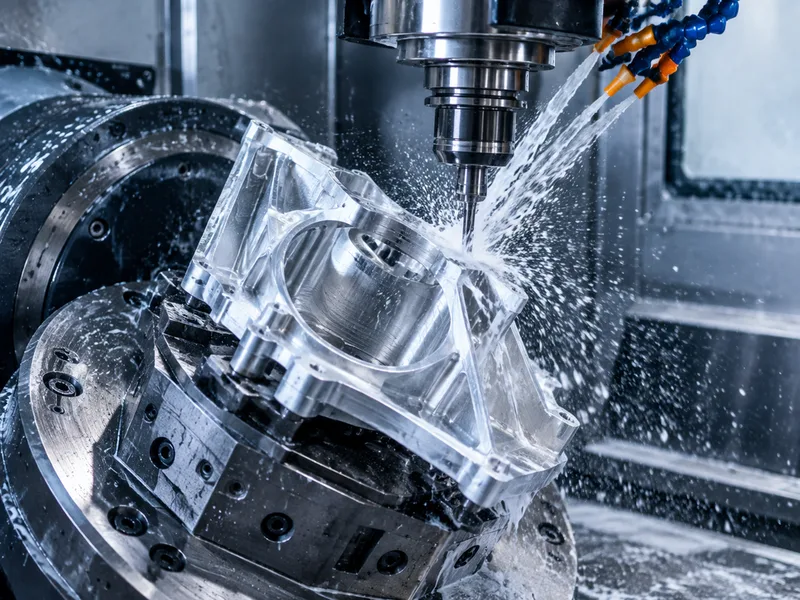
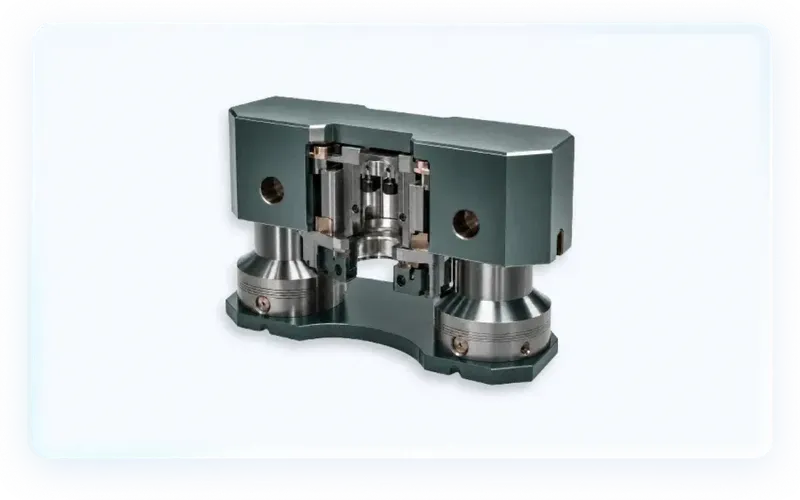
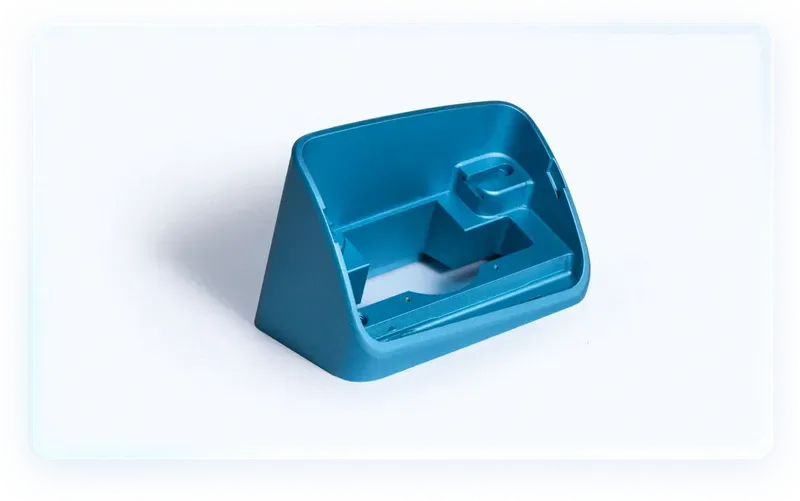
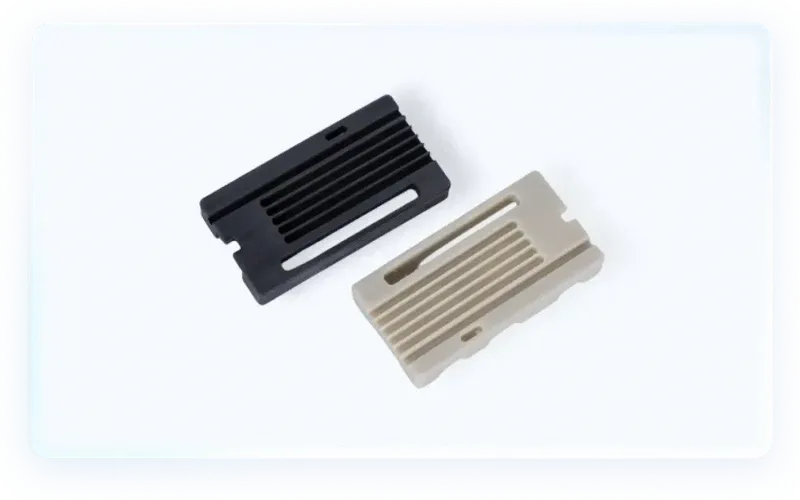
Ми виготовляємо замовні деталі обробки з ЧПУ за вашими файлами STEP, IGS або DWG. Один процес охоплює фрезерування з ЧПУ, токарну обробку з ЧПУ та багатоосеву обробку, з рекомендаціями DFM за кожним креслеником до першого різу.
Від одиничних прототипів до повторюваних мало- і середньосерійних партій — деталі відвантажуються зі звітом про розмірний контроль та експортним пакуванням.
Process Overview
CNC (computer numerical control) machining is a subtractive manufacturing process: cutting tools guided by programmed instructions remove material from a solid block to produce a finished part. Because the toolpaths are programmed from a 3D CAD model, CNC machining produces accurate, repeatable parts in metals and plastics without hard tooling — ideal for prototypes and production runs alike.
The two core processes are CNC milling, which uses rotating cutting tools to remove material from a stationary workpiece, and CNC turning, which rotates the workpiece against a stationary tool. Multi-axis machines combine both motions to reach complex geometries in a single setup.
Можливості
- Фрезерування з ЧПУ до 5 осей
- Токарна обробка з ЧПУ з привідним інструментом
- Розміри деталей від кількох міліметрів до великих корпусів
- Власний розмірний контроль кожної партії
Типові матеріали
Алюміній, нержавіюча сталь, вуглецева сталь, латунь, мідь, титан, конструкційні пластики (PEEK, Delrin, нейлон).
| Матеріал / марка | Типовий стан постачання | Оброблюваність | Де застосовується |
|---|---|---|---|
| Aluminium 6061 | T6 (гартування зі старінням) | Легко: вільно ріжеться, хороший контроль стружки | Кронштейни, корпуси, оснащення, прототипи з переходом у серію |
| Aluminium 7075 | T6 / T651 | Важче: більший знос інструменту, потрібні жорсткі налагодження | Високоміцні деталі з критичною масою; не для зварювання |
| Stainless 304 / 304L | Відпалений | Наклепується: менші швидкості, позитивна подача | Загальна корозійна стійкість, харчове та технологічне обладнання |
| Stainless 316 / 316L | Відпалений | Міцніший за 304: більший знос інструменту | Хлориди, морське середовище, медичне та фармацевтичне обладнання |
| Carbon steel 1018 / 1045 | Гарячекатаний / нормалізований | Від легкого до середнього; потрібен захист від корозії | Вали, плити, зварні конструкції, корпуси оснащення |
| Brass C360 | H02 напівтвердий | Відмінно: високі швидкості, чиста поверхня | Фітинги, втулки, з'єднувачі, декоративні деталі |
| Copper C110 | Відпалений / H02 | В'язкий: гострі інструменти та великі передні кути | Електропровідність, струмопроводи, термоменеджмент |
| Titanium Grade 5 (Ti-6Al-4V) | Міцність у стані поставки (mill annealed) | Важко: малі швидкості, контроль нагріву, знос інструменту | Аерокосмічна галузь, медицина, легкі високоміцні деталі |
| Конструкційні пластики (POM, PEEK, PA) | Екструдований / відпалений | Від легкого до в'язкого: м'які губки, гострий інструмент | Ізоляція, низьке тертя, хімічно- та зносостійкі деталі |
Покриття
Анодування, пасивація, цинкування/нікелювання, воронення, полірування, дробеструйна обробка, порошкове фарбування.
| Покриття | Що воно дає | Коли вказувати |
|---|---|---|
| Після обробки | Сліди інструменту залишаються видимими; Ra зазвичай 1.6-3.2 µm | Деталь має просто виконувати свою функцію |
| Дробеструйна обробка | Рівномірна матова поверхня, приховує сліди інструменту | Декоративні деталі перед анодуванням |
| Анодування Type II | Створює оксидний шар; варіанти кольору | Вигляд алюмінію плюс помірна корозійна та зносостійкість |
| Тверде анодування Type III | Більш товстий і твердий оксидний шар | Зковзуючі або зношувані алюмінієві поверхні |
| Хроматне конверсійне покриття | Тонка захисна плівка, що зберігає провідність | Електричне з'єднання або заземлення на алюмінії |
| Хімічне нікелювання | Рівномірний, твердий, корозійностійкий шар | Знос плюс корозія, зокрема всередині отворів |
| Цинкування | Економічний жертовний захист від корозії | Сталеві деталі в приміщеннях або під навісом |
| Порошкове фарбування | Товстий, довговічний, декоративний шар | Коли вимогою є саме зовнішній вигляд |
| Пасивація | Видаляє вільне залізо та відновлює оксидну плівку | Деталі з нержавіючої сталі після обробки |
| Відпуск для зняття напружень / термообробка | Знімає залишкові напруження до або після різання | Тонкі стінки та жорсткі допуски, що мають пережити обробку |
Допуски
Стандартні допуски за ISO 2768-m; жорсткіші допуски розраховуються після аналізу кресленика.
| Допуск на кресленику | Що він вимагає | Вплив на вартість і термін |
|---|---|---|
| Загальний: ±0.25 mm / ±0.010 in | Стандартний інструмент, розмірна перевірка | Базовий рівень: без надбавки |
| Стандартний: ±0.13 mm / ±0.005 in | Верстат у доброму стані, перевірка першої деталі | Невелика надбавка; звичайна база для розрахунку |
| Жорсткий: ±0.025 mm / ±0.001 in | Шліфований або алмазний інструмент, контроль температури, КВМ | Стрибок: повільніші проходи плюс повний контроль |
| Точний: ±0.013 mm / ±0.0005 in | Чистові проходи, калібри, контрольоване середовище | Обробка визначає ціну; часто окрема операція |
| Позиція / кутовість (GD&T) | Контроль баз, одне встановлення для пов'язаних елементів | Залежить від того, скільком встановленням охоплюється база |
| Шорсткість поверхні Ra 0.8 µm або дрібніше | Дрібніші кроки, полірування або чистовий прохід | Додає етап процесу, а не лише час обробки |
Ключові характеристики
| Specification | Value |
|---|---|
| tolerance | ISO 2768 (Class M) |
| tolerance | 0.0001 in |
| tolerance | ±0.001" |
Варіанти обробки
- CNC machining is a subtractive manufacturing process.
- Finishing Options: Black Oxide, Electropolishing, ENP, Media Blasting, Nickel Plating, Passivation, Powder Coating, Tumble Polishing, Zinc Plating, Vibratory Tumbling
- EPX 82 is processed using Carbon DLS
- MUD is a type of mold that uses a standard injection molding frame.
- Different taper turning methods suit different jobs. Compound slides often handle short tapers, while CNC interpolation and taper attachments improve repeatability on longer parts
- G92 is used by programming one or more G92's right after the G76 threading cycle
- Estimates are provided through an auto-quoted method.
- EDM relies on a voltage and a thin wire
- Advanced machining processes like micro-machining and EDM are used to create small, precise mold cavities and cores
Surface Finish Reference
- The finish of MoldTech MT11010 is a fine matte texture.
- The finish of MoldTech MT11020 is a medium matte texture.
- The finish of MoldTech MT11030 is a coarse matte texture.
- SPI A-1 has a surface roughness of 0.012–0.025 µm.
- SPI B-2 has a finish of Medium semi-gloss.
- SPI B-2 has a surface roughness of 0.10–0.15 µm.
- SPI C-3 has a surface roughness of 0.63–0.70 µm.
- Super high gloss, polished with a Grade #3 (6000-grit) diamond buff to Ra 0.012–0.025 µm.
- Medium semi-gloss, finished with 400-grit paper to Ra 0.10–0.15 µm.
- Normal matte, polished with 320-grit stone to Ra 0.63–0.70 µm.
Tolerance Reference
- The tolerance with drawing for CNC Milling is as low as +/- 0.005 mm.
- FDM 3D printing offers a low-cost component with average accuracy and uses thermoplastics for 3D printing.
- Wire Cut EDM is highly accurate.
- The U6 H.E.A.T machine achieves tight tolerances.
- Die sinker EDM is capable of maintaining tight tolerances
- The shop needs to have CNC machines that can achieve a specific tolerance.
Industries We Serve
- antennas
- automotive
- CNC machined parts
- custom parts
- electronics
- medical diagnostic
- optical displays
- optical_systems
Material Reference
- ABS
- Austenitic Stainless Steel
- Carbon steel
- ceramic
- composites
- Copper - T2
- copper or graphite
- Hardened Materials
- High Impact Polystyrene
- Low-density polyethylene
- MDF
- metal
- Polybutylene Terephthalate
- SUS304
- thermoplastics
- thick metal sheets
- tungsten carbide
Related Processes
Injection Molding
used for
Laser Marking
used for
mass_production
used for
Common Applications
- plastic molded parts
- Aerospace
- Robotics
- consumer goods
- energy
Ordering, Lead Times & MOQ
Custom CNC parts carry no forced MOQ; ordering from a single prototype piece is standard industry practice.
Instant-quote platforms publicly advertise prototype lead times of 1-3 business days.
Online RFQ is the industry-standard flow: upload a 3D model (STEP/STP/DWG/DXF), receive an instant quote or engineer review, then production, inspection, and delivery.
Часті запитання
Які файли потрібні для розрахунку ціни?
3D-файл (STEP або IGS) плюс 2D-кресленик з допусками та позначками покриттів, де це застосовно. Для простих деталей підходять і PDF-кресленики.
What is the minimum order quantity (MOQ)?
Prototypes from 1 pc. Low-volume production typical 50-500 pcs. No forced MOQ on custom parts; unit price drops with volume.
What is the typical lead time?
Industry benchmark: instant-quote platforms deliver prototypes in 1-3 business days. Our own production: prototypes 5-10 working days, including in-house QC and shipping. Production: 2-4 weeks depending on quantity/finishing. Express options exist; finishing adds days.
How do I get a quote and what information do you need?
3D files (STEP/IGS) + 2D drawing with tolerances. Material, quantity, finish, destination country. Quote turnaround: 24-48h typical.
What tolerance should I specify?
Specify tight tolerances only on critical features. Standard ±0.1 mm covers most features. Tighter tolerance = cost multiplier; apply selectively via drawing GD&T.
How is quality controlled?
First-article inspection in our own shop before the first production order. In-process checks. Final inspection report (dimensions) with shipment. Material certs (mill test reports) on request.
Is my design protected?
NDA before file exchange. Files used only for your production. No resale of custom designs.
Which material should I choose?
Function first: strength, weight, corrosion, cost. Common pairings: 6061 general, 304/316 corrosive env., PEEK medical. See materials guide pages.
Which surface finish do I need?
Anodizing for aluminum corrosion/wear/color. Passivation for stainless. Plating for conductivity/steel protection. Cosmetic vs functional distinction.
How do you ship and what terms?
DHL/FedEx/UPS express for samples and small batches. Air/sea freight for production volumes. Incoterms: EXW/FOB/DAP/DDP options.
Sources · 4
- rapiddirect.comIndustry peer technical page
- jlccnc.comIndustry peer technical page
- fictiv.comIndustry peer technical page
- norck.comIndustry peer technical page
Technical references cited for verifiability — not supplier recommendations. Browse the research library.
Related Knowledge
Machines by Industry
Capability commitments on this page are owner-confirmed (2026-09-21).