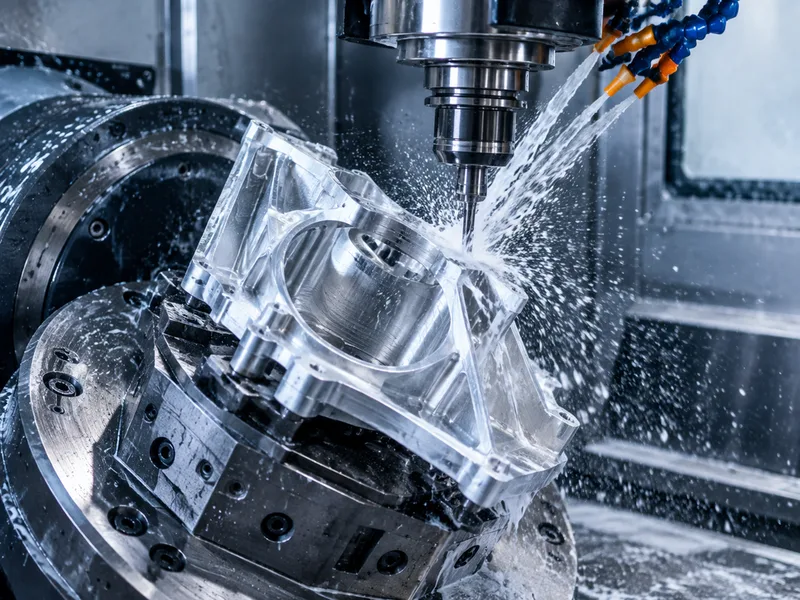
电火花加工用受控的电火花而非切削刀具去除金属,因此能到达铣削和车削止步之处:热处理后的淬硬钢、硬质合金、薄壁、真正的清根内角和深窄槽。电火花按特征在图纸上指定,并与周边机加工工序一起报价。
三种工艺覆盖大多数需求。线切割用往复运动的黄铜丝切穿整个工件,加工轮廓和锥度。电火花成形机用成形电极在淬硬钢上烧蚀型腔和沉孔。电火花打孔以高深径比加工深的小直径起始孔。
加工能力
- 线切割加工淬硬钢和硬质合金的轮廓与锥度
- 电火花成形加工淬硬工装的型腔、沉孔和肋条
- 电火花打孔加工深的小直径起始孔
- 刀具无法到达的清根内角和深窄槽
- 热处理后加工,无重新装夹变形
- 每个订单附尺寸检测报告
常用材料
电火花加工适用于任何导电材料:淬硬态工具钢(D2、A2、H13)、不锈钢、铝合金、黄铜、紫铜、硬质合金和钛。
| 材料 / 牌号 | 常见供货状态 | 切削加工性 | 典型用途 |
|---|---|---|---|
| 铝合金 6061 | T6(固溶处理并时效) | 易切削:切削性能好,切屑控制良好 | 支架、壳体、夹具、从样件到量产的零件 |
| 铝合金 7075 | T6 / T651 | 较难:刀具磨损大,需刚性装夹 | 高强度、重量敏感零件;不适合焊接 |
| 不锈钢 304 / 304L | 退火态 | 加工硬化:需降低切削速度、采用正前角进给 | 一般耐腐蚀场合,食品与过程设备 |
| 不锈钢 316 / 316L | 退火态 | 比304更粘韧:刀具磨损更大 | 氯化物、海洋、医疗和制药环境 |
| 碳钢 1018 / 1045 | 热轧态 / 正火态 | 易至中等;需防锈保护 | 轴类、板类、焊接结构件、工装本体 |
| 黄铜 C360 | H02 半硬态 | 优良:高切削速度,表面光洁 | 接头、衬套、连接件、装饰件 |
| 紫铜 C110 | 退火态 / H02 | 粘韧:需锋利刀具和大前角 | 导电件、母排、热管理部件 |
| 钛合金 Grade 5(Ti-6Al-4V) | 退火态 | 难加工:低转速、控温、刀具磨损大 | 航空航天、医疗及轻量化高强度零件 |
| 工程塑料(POM、PEEK、PA) | 挤出态 / 退火态 | 易至粘韧:用软爪装夹、锋利刀具 | 绝缘件、低摩擦件、耐化学与耐磨零件 |
表面处理
电火花表面带有一层细小的重铸层,工装件通常保留烧蚀原表面,密封与成形特征则做抛光;按表面在图纸上指定处理方式。
| 表面处理 | 作用 | 适用情形 |
|---|---|---|
| 机加工原表面 | 可见刀痕;Ra 通常 1.6-3.2 µm | 零件只需满足功能 |
| 喷砂 | 均匀哑光表面,遮盖刀痕 | 阳极氧化前的外观件 |
| 阳极氧化 II型 | 生成氧化膜;可选颜色 | 铝合金外观并兼有中度防腐与耐磨性 |
| 硬质阳极氧化 III型 | 更厚、更硬的氧化层 | 铝合金滑动面或磨损面 |
| 铬酸盐转化膜 | 薄保护膜,保持导电 | 铝合金电搭接或接地 |
| 化学镀镍 | 均匀、硬度高、耐腐蚀的镀层 | 耐磨加防腐,包括孔内表面 |
| 镀锌 | 经济的牺牲性防腐蚀保护 | 室内或有遮蔽场合的钢件 |
| 粉末喷涂 | 厚实、耐久、装饰性涂层 | 以外观为主要要求时 |
| 钝化处理 | 去除游离铁并恢复氧化膜 | 不锈钢件机加工后 |
| 去应力退火 / 热处理 | 在切削前或切削后消除残余应力 | 必须经受住加工的薄壁和严苛公差零件 |
公差
线切割轮廓精度通常为±0.005–0.01 mm;电火花成形和打孔的公差带略宽。更严的数值在报价时按图纸逐项评审确认。
| 图纸标注 | 所需条件 | 对成本和交期的影响 |
|---|---|---|
| 一般公差:±0.25 mm / ±0.010 in | 标准刀具,尺寸抽检 | 基础水平:不加价 |
| 标准公差:±0.13 mm / ±0.005 in | 机床状态良好,首件检验 | 小幅加价;报价的常规默认档 |
| 严苛公差:±0.025 mm / ±0.001 in | 磨制或金刚石刀具,温度控制,三坐标测量 | 台阶式上升:切削更慢且需全检 |
| 精密公差:±0.013 mm / ±0.0005 in | 精加工走刀、量规检具、环境受控 | 加工占价格主导;常作为独立工序 |
| 位置度 / 倾斜度(GD&T) | 基准控制,关联特征尽量一次装夹 | 取决于基准跨越多少次装夹 |
| 表面粗糙度 Ra 0.8 µm 或更优 | 更小的步距、抛光或精加工走刀 | 增加一道工序,而不只是加工时间 |
工艺选项
- CNC machining is a subtractive manufacturing process.
- Finishing Options: Black Oxide, Electropolishing, ENP, Media Blasting, Nickel Plating, Passivation, Powder Coating, Tumble Polishing, Zinc Plating, Vibratory Tumbling
- EPX 82 is processed using Carbon DLS
- MUD is a type of mold that uses a standard injection molding frame.
- Different taper turning methods suit different jobs. Compound slides often handle short tapers, while CNC interpolation and taper attachments improve repeatability on longer parts
- G92 is used by programming one or more G92's right after the G76 threading cycle
- Estimates are provided through an auto-quoted method.
- EDM relies on a voltage and a thin wire
- Advanced machining processes like micro-machining and EDM are used to create small, precise mold cavities and cores
Surface Finish Reference
- The finish of MoldTech MT11010 is a fine matte texture.
- The finish of MoldTech MT11020 is a medium matte texture.
- The finish of MoldTech MT11030 is a coarse matte texture.
- SPI A-1 has a surface roughness of 0.012–0.025 µm.
- SPI B-2 has a finish of Medium semi-gloss.
- SPI B-2 has a surface roughness of 0.10–0.15 µm.
- SPI C-3 has a surface roughness of 0.63–0.70 µm.
- Super high gloss, polished with a Grade #3 (6000-grit) diamond buff to Ra 0.012–0.025 µm.
- Medium semi-gloss, finished with 400-grit paper to Ra 0.10–0.15 µm.
- Normal matte, polished with 320-grit stone to Ra 0.63–0.70 µm.
Tolerance Reference
- The tolerance with drawing for CNC Milling is as low as +/- 0.005 mm.
- FDM 3D printing offers a low-cost component with average accuracy and uses thermoplastics for 3D printing.
- Wire Cut EDM is highly accurate.
- The U6 H.E.A.T machine achieves tight tolerances.
- Die sinker EDM is capable of maintaining tight tolerances
- The shop needs to have CNC machines that can achieve a specific tolerance.
Industries We Serve
- antennas
- automotive
- CNC machined parts
- custom parts
- electronics
- medical diagnostic
- optical displays
- optical_systems
Material Reference
- ABS
- Austenitic Stainless Steel
- Carbon steel
- ceramic
- composites
- Copper - T2
- copper or graphite
- Hardened Materials
- High Impact Polystyrene
- Low-density polyethylene
- MDF
- metal
- Polybutylene Terephthalate
- SUS304
- thermoplastics
- thick metal sheets
- tungsten carbide
Ordering, Lead Times & MOQ
Custom CNC parts carry no forced MOQ; ordering from a single prototype piece is standard industry practice.
Instant-quote platforms publicly advertise prototype lead times of 1-3 business days.
Online RFQ is the industry-standard flow: upload a 3D model (STEP/STP/DWG/DXF), receive an instant quote or engineer review, then production, inspection, and delivery.
常见问题
什么时候应该用电火花而不是铣削?
当材料已经淬硬、内角必须真正清根(铣刀总会留下圆角)、深窄槽加工,或硬质合金用常规刀具无法经济切削时,应选用电火花。许多零件两者结合:大部分几何形状用铣削,需要的特征用电火花。
电火花只能加工淬硬金属吗?
不是。电火花适用于任何导电材料,包括铝合金、黄铜和紫铜。它只是在淬硬钢和硬质合金上最经济——常规加工在那里困难甚至不可能,电火花较慢的去除率仍是更快的路线。
电火花任务报价需要哪些文件?
请发送3D CAD(STEP或IGES)加2D图纸,注明材料与硬度状态、哪些表面做电火花、烧蚀后的表面粗糙度要求,以及穿丝孔的位置和直径。我们的工程师在报价前确认可行性及机加工与电火花工序的划分。
电火花的精度与CNC加工相比如何?
线切割轮廓精度与精密铣削相当——通常±0.005–0.01 mm——并且因为没有刀具半径需要补偿,能保持更尖锐的内角。电火花成形部分取决于电极损耗,按特征的具体公差带报价。
What is the minimum order quantity (MOQ)?
Prototypes from 1 pc. Low-volume production typical 50-500 pcs. No forced MOQ on custom parts; unit price drops with volume.
What is the typical lead time?
Industry benchmark: instant-quote platforms deliver prototypes in 1-3 business days. Our own production: prototypes 5-10 working days, including in-house QC and shipping. Production: 2-4 weeks depending on quantity/finishing. Express options exist; finishing adds days.
What tolerance should I specify?
Specify tight tolerances only on critical features. Standard ±0.1 mm covers most features. Tighter tolerance = cost multiplier; apply selectively via drawing GD&T.
How is quality controlled?
First-article inspection in our own shop before the first production order. In-process checks. Final inspection report (dimensions) with shipment. Material certs (mill test reports) on request.
Is my design protected?
NDA before file exchange. Files used only for your production. No resale of custom designs.
Which material should I choose?
Function first: strength, weight, corrosion, cost. Common pairings: 6061 general, 304/316 corrosive env., PEEK medical. See materials guide pages.
Which surface finish do I need?
Anodizing for aluminum corrosion/wear/color. Passivation for stainless. Plating for conductivity/steel protection. Cosmetic vs functional distinction.
How do you ship and what terms?
DHL/FedEx/UPS express for samples and small batches. Air/sea freight for production volumes. Incoterms: EXW/FOB/DAP/DDP options.
Sources · 4
- emachineshop.comIndustry peer technical page
- rapiddirect.comIndustry peer technical page
- xometry.comIndustry peer technical page
- jlccnc.comIndustry peer technical page
Technical references cited for verifiability — not supplier recommendations. Browse the research library.
Capability commitments on this page are owner-confirmed (2026-09-21).